Border Crossings A+ Donald has done exceptionally well in reducing illegal border crossings by 99%
Deportation of Illegal Immigrants A Doing well so far, but efforts have been impeded by sanctuary cities and by opposition district courts insisting that immigrants who avoided due process entering the country are entitled to it before deportation. This will likely be escalated to the Supreme Court.
Gender and Title IX A- His executive orders established two key provisions: first, they formally recognized only two genders, and second, they required high school athletes to compete on teams corresponding to their biological sex. The latter requirement is being contested in several states.
DOGEA DOGE has found billions in federal government fraud, abuse, and waste, but Democratic judges have challenged the downsizing of executive branch departments. This will probably go to the Supreme Court.
Ukraine WarC- He promised to end this war on day one, but has made little progress. Ending the war will require Ukraine to cede territory to Russia, which seems unfair since Russia was the aggressor.
Israel War B He continues to support Israel in its quest to eliminate Hamas. He proposed the US playing a role as a buffer in Gaza, which would require the deportation of the Palestinians. No country has agreed to accept them.
Acting Against Anti-Semitism on Campus A He pressured universities to act against anti-semitism on their campuses.
DEI Programs B He has threatened to withhold funding from universities that support DEI, which he considers equivalent to racial and gender discrimination. Some universities are resisting and will challenge in court.
Withdrawal from Paris Climate Accord and WHO B He withdrew from the Paris Climate Accord for a few reasons. The U.S. is ahead of its earlier climate commitments to the group. The Accord members, many of whom are far behind the U.S. in their climate efforts, would have the U.S. fund climate remediation globally, not just in the U.S. Exit from the WHO was based on its poor and biased performance during COVID.
Controlling Abrasive Speech F Donald has a way of making enemies with this speech and behavior.
* Proposing that Canada should be the 51st state was undiplomatic and contributed to the defeat of the Conservative candidate in the Canadian Prime Minister election.
* Denmark was unhappy that Donald asked Greenland to join the U.S. as a territory.
* Donald wanted the Federal Reserve to reduce interest rates in April, but when it did not, he called Jerome Powell, the Fed Chairman, an “idiot”.
Diplomacy and statesmanship have been longstanding areas for improvement.
Tariff Policies F He imposed tariffs on imports to achieve a reciprocal trade outcome. He also wants to encourage companies to return manufacturing to the U.S. to increase domestic employment and ensure that the U.S. has all of the competencies it would require in the case of a war with China. These are sound objectives, but his planning and implementation have been abysmal.
He announced tariffs on over 200 countries simultaneously, leaving no time for negotiation. He should have announced the tariffs in stages of perhaps 25 countries at a time, leaving time for negotiation until moving to the next stage. As it is, it may take two years or more to close deals with all countries. He needs a remedial course in project management. True to his personality, he seemed more interested in making a big spectacle than solving the problem.
Tariffs will result in higher consumer prices. No one is in favor of paying higher prices.
Tariffs will encourage countries to use currencies other than the U.S. dollar as their reserve currency, causing the dollar to decline relative to other currencies.
Tariffs could reduce demand for U.S. Treasuries, increasing the interest rate and raising federal government interest expenses. That has already happened.
The chaotic management of the tariff roll-out has caused uncertainty in the stock and bond markets. The stock market has dropped significantly, and bond interest rates have increased.
Building new factories in the U.S. will take at least a year and, depending on the type of factory, as long as several years.
His objectives may be well-founded, but his planning and analysis of the tariff program were amateurish.
Improvement Plan Donald should consult with advisors before making decisions and spend more time considering the effects of his speech and actions. He should especially try to be more diplomatic in his remarks. He has alienated many people for no good reason.
Remember Milton Friedman and Paul Samuelson? Could they help us today?
From 1966 to the early 1980s, two renowned economists, Milton Friedman and Paul Samuelson, wrote alternating columns in Newsweek magazine, representing opposing views on economics. This was a time when economics, often referred to as the “dismal science,” gained significant interest from politicians and the public due to the economic problems faced by the U.S. and other countries.
During the 1970s, the global economy experienced stagflation, a period of stagnant economic growth and high inflation rates. This posed a significant challenge for policymakers and economists. No existing economic theory provided an effective solution. Many policymakers looked to Friedman and Samuelson for answers or, at the very least, clues on how to proceed.
Today, the U.S. faces different circumstances, including a $36 trillion national debt growing at a rate of $2 trillion a year. Besides the growing debt, the country has a significant trade deficit, largely due to outsourcing manufacturing and other activities to countries with lower labor costs.
Like stagflation, no existing economic theory offers a pat solution to the national debt. One political party advocates for increasing taxes, while the other argues for reducing government expenditures; for the past 25 years, no significant action has been taken. Moreover, without drastic, politically undesirable changes, neither of these paths would lead to a balanced federal budget.
The Trump administration believes that the current trade balance is a significant part of the problem. In his first two months in office, President Trump has used tariffs and threats of tariffs to convince trading partners to change their policies. Democrats and even some Republicans think tariffs will raise prices in the U.S. and damage the economy.
Background: Friedman and Samuelson
A few commentators have asked what Milton and Paul would advise if they were still with us. Friedman, a professor at U. of Chicago, is best known for his ideas on the money supply and free trade. He said the quantity of money in circulation was directly related to the inflation rate. He also favored free trade, so he would be against using tariffs as a weapon. Interestingly, Friedman was an economic advisor to Ronald Reagan, so he is generally considered to be a Republican or at least to lean to the right.
Samuelson, a professor at MIT, called himself a cafeteria Keynesian, meaning that he accepted those parts of Keynesian economics that he found most desirable. John Maynard Keynes was a British economist whose ideas became popular during and after WWII—his most well-known theory concerned fiscal policy. According to Keynesian theory, governments should use deficit spending to spur economic growth during recessions or when the economy is operating below full capacity. In contrast, when an economy is operating at full capacity or when inflation is too high, the government should use a combination of tax increases and expenditure reductions to run a surplus budget, dampening economic activity. The deficit spending component of Keynesian economics has been widely employed during recessions and periods of economic growth, resulting in price inflation and increasing debt. Samuelson advocated for the deficit spending part of Keynesian theory.
Samuelson, who favored centralized economic planning and was accused by the right of being a socialist, predicted that the Soviet economy would surpass that of the U.S. He was partly right. A communist country will surpass the U.S., but it’s China, not Russia.
Samuelson served as an advisor to Presidents Kennedy and Johnson.
Both Friedman and Samuelson were awarded the Nobel Prize in Economics.
Current Economic Challenges
In 2024, the United States had deficits with all its major trading partners. The largest imbalance was with China at $295.4 billion, followed by Mexico at $171.9 billion.
It’s worth noting that the U.S. had trade surpluses with certain countries, including the UK ($11.8 billion) and the Netherlands ($55.5 billion). However, these partners had lower total trade volumes (e.g., the UK at $148 billion and the Netherlands at $123.7 billion).
Like Milton Friedman, some contemporary economists advocate for free and unobstructed international trade. Free trade advocates argue that markets are more efficient when free of government interference and that free markets lead to better resource allocation.
Textbooks on international economics often discuss the idea of comparative advantage. If China and other countries have a comparative advantage because of a much lower labor rate, then producing goods in China leads to lower prices in the U.S. Indeed, U.S. companies have outsourced manufacturing and other activities to China since China joined the World Trade Organization in 2021 leading to much lower consumer prices domestically.
In theory, another benefit of outsourcing labor-intensive tasks is that it leaves U.S. companies free to focus on activities in which they have a comparative advantage. However, one could argue that the U.S.’s comparative advantages over China are quickly shrinking.
The downside of a large trade deficit
There are also important reasons why too much importing of goods from other countries can have negative domestic consequences.
Loss of jobs – This argument must be qualified. If the U.S. had not already outsourced manufacturing to Mexico and China, outsourcing would lead to the loss of jobs. However, under the current circumstances, bringing manufacturing back to the U.S. would result in higher prices and the need for ongoing tariffs to protect against competition from Mexico and China. So, the U.S. has lost jobs by offshoring, but it is unclear whether many of these jobs could ever be regained.
Loss of domestic competency—This is an important reason why some activities should be performed within or by the U.S. For example, over the past 30 years, most semiconductor manufacturing has been outsourced to Taiwan. The U.S. has all but lost this critical competency in manufacturing semiconductors and other important products.
Outsourcing key competencies and depending on other countries for key resources gives countries like China bargaining leverage. If a war were to ensue, the U.S. would be disadvantaged.
Currency value – The trade balance impacts a country’s exchange rate. A trade surplus often strengthens the national currency because foreign buyers need it to pay for imports, increasing demand for the currency. A stronger currency can make imports cheaper but might reduce export competitiveness. Conversely, a trade deficit can weaken the currency, making exports more affordable abroad but increasing the cost of imports.
However, the exchange rate is also influenced by the demand for U.S. dollars to use for investments and international trade between other countries. The U.S. dollar has been the reserve currency for international trade for the past fifty years. This may soon change as the BRIC countries (Brazil, Russia, India, and China) plan to use a different currency for trade between their group. If successful, this will reduce demand for dollars, weaken the dollar exchange rate, and make imports more expensive. The international currency exchange rate shapes a country’s global trade position.
National debt and financial stability – Persistent trade deficits indicate that a country is spending more abroad than it earns from exports, which may necessitate borrowing from other nations or selling assets to foreigners to finance the gap. Over time, this can increase national debt and make the economy more vulnerable to external shocks, such as shifts in investor confidence. However, deficits aren’t always harmful—countries with substantial foreign investment, such as the U.S., can sustain them without immediate harm. For example, much of China’s currency from its exports to the U.S. is invested in U.S. Treasuries to finance our debt. The balance of trade thus ties into a nation’s long-term financial stability.
The balance of trade influences real-world outcomes, such as job opportunities, the cost of goods, and a country’s economic independence. Whether a surplus that boosts wealth or a deficit that signals potential challenges, it’s vital for understanding and managing an economy’s role in the global marketplace.
The Tariff Effect
When the U.S. imposes a tariff on Chinese goods, the U.S. company that imports the goods from China pays the tariff at the border. The U.S. importer must decide whether to pass the tariff on to consumers by raising their prices or reducing their margins. Generally no company could absorb a 25% tariff without raising prices. The U.S. importer could also try to pressure the Chinese company to reduce their price, but studies show that in the past, this hasn’t worked well. Data from past tariffs, like those during the U.S.-China trade war starting in 2018, backs this up—studies showed U.S. importers bore the brunt of the costs, with some estimates suggesting they absorbed over 90% of the tariff burden rather than it being fully passed back to Chinese firms.
The most likely outcome is that the U.S. importer raises the price to its U.S. customers by the amount of the tariff or perhaps slightly less.
That means the tariff’s effect is to provide revenue to the federal government and raise U.S. prices by a similar amount. In effect, it is a tax on U.S. consumers and businesses.
Trump’s Tariff Strategy
President Trump has imposed tariffs on major trading partners, including China, Mexico, and Canada. He explains that he wants to return offshored jobs to the U.S. and reduce dependence on foreign countries. He also points out that some trading partners are using tariffs to restrict exports from the U.S., so he is simply trying to create a reciprocal policy. Getting specific information about current tariffs imposed by other countries is difficult, so verifying Trump’s claim is not easy.
What would Milton Friedman say about this? In general, Milton favored free international trade and strongly opposed tariffs. Although, he may acknowledge that tariffs could be used as a lever to bring about more balanced, reciprocal trading agreements. The problem he would probably raise is that tariffs reduce competition and, therefore, the drive for innovation. A U.S. company protected from foreign competitors by tariffs is not forced to innovate as it would be by global competitors. Milton would say this is one of the main flaws of tariff strategies.
For the past 20 years, the U.S. consumer has grown accustomed to finding low-priced bargains from China at Amazon, Costco, or Temu. Tariffs on Chinese imports will likely change the prices of consumer goods at these and other outlets.
In addition, retaliatory tariffs would negatively affect exports, so the net effect on the balance of trade is unknowable. It’s a risky game.
How about Paul Samuelson? Samuelson, who generally favored government intervention, was not opposed to using tariffs in some cases. Samuelson recognized that under certain economic conditions, tariffs could have specific effects. For example, he acknowledged that in situations where an economy is operating below full capacity, tariffs might, in the short term, stimulate domestic production and employment.
Samuelson also understood the potential negative consequences of tariffs, such as their impact on consumer prices and the risk of retaliatory tariffs from other countries. Given the circumstances, Samuelson may have been more likely to support at least some of Trump’s tariffs.
Trump claims he is trying to create a level playing field with other countries. China has complex requirements for selling specific products within its borders. For technology products, China may require a U.S. company to form a joint venture with a Chinese company to manufacture or sell products in China. This allows the knowledge and expertise to be transferred to the Chinese partner and, in some cases, even the intellectual property.
China has used intelligent “China first” strategies to leverage its position. In contrast, U.S. companies are primarily concerned with expanding their markets and increasing sales revenue, and they may make decisions that are not in the best interests of the U.S. Communist, centrally-planned economies do have certain advantages.
Instead of the current tariff war, which may cause prices to increase domestically and eventually prove politically impossible to continue, Trump may be better off renegotiating the NAFTA agreement with Canada and Mexico and imposing reciprocal restrictions on Chinese companies seeking to sell their products in the U.S.
Summary
The U.S. does indeed have a large trade balance deficit with its top five trading partners, totaling about half a trillion dollars in 2024. But the question remains: How can this be remedied without breaking too many eggs?
The U.S. stock market has already declined by over 10%, and the NASDAQ by about 15%. Consumer sentiment is also at a multi-year low, and the country is skeptical of Trump’s strategy.
As many television commentators have observed, Trump’s tariffs will not be politically sustainable. The leaders of China, Mexico, and Canada know this, so they may just wait it out rather than come to the negotiating table.
Milton Friedman would likely oppose Trump’s strategy. Paul Samuelson would likely support it, but we do not have the advantage of asking him.
Trump is correct in stating that the trade deficit is a drag on the economy, but his current strategy may not effectively address the problem. We will have to wait and see and hope that the country emerges from this drama without too much damage.
“We’re not going back. America is ready for a new way forward.”
The election is now a little over a month away. Vice President Harris leads most of the polls and is the Las Vegas favorite to win, but the country still knows little about her. Before President Biden’s withdrawal from the race, Harris had an approval rating of around 30%. Still, without the benefit of a primary election, Democrats have rallied around her, and she appears to be on her way to becoming our next President.
When Kamala ran in the 2020 Democratic Primary for President, she garnered only 1% of the vote, primarily because of her radical policy positions. However, since entering the race against Trump, she has modified many of her earlier positions, frequently repeating, “Let us think of what can be, unburdened by what has been…” Political observers wonder whether her beliefs have changed or if her handlers have formulated a platform to make her more electable. When asked why Kamala has changed so many of her positions, Bernie Sanders explained, “She has an election to win.”
Let’s review her background and some of her earlier policy positions to understand her better.
Her Family Background
Kamala comes from parents with stellar academic credentials. Her father, Donald Harris, originally from Jamaica, obtained a Ph.D. in Economics from the University of California at Berkeley. He held faculty positions at several universities before receiving tenure at Stanford, the first black professor to receive tenure in the Economics Department. His writing and teaching criticized traditional economic theory and market economies, arguing that capitalism leads to economic inequality and uneven development. He taught Marxist Economics as part of his teaching responsibilities and wrote that Marx influenced his views. Donald J. Harris – Wikipedia
Kamala’s mother, Shyamala Gopalan Harris, immigrated from India to pursue doctoral studies in Biology at the University of California at Berkeley, where she met Donald Harris. The couple met in 1962 at a meeting of the Afro-American Association at Berkeley. This far-left group originally proposed the Kwanza holiday and played a part in organizing the Black Panthers.
Both parents were political activists, and some commentators have suggested that this must have influenced Kamala’s views from an early age.
The couple had two daughters, Kamala and Maya. For a short time, they lived in Zambia, where Shyamala’s father was working. In 1971, they divorced, leaving Shyamala to raise the two girls.
Kamala’s younger sister, Maya, is also a lawyer. She attended Berkeley as an undergraduate and Stanford for her law degree. Maya was a student activist at Stanford University. She was closely associated with Steve Phillips, one of the leading Marxist-Leninists on campus, and a long-time affiliate with the League of Revolutionary Struggle, a pro-Chinese Communist group.
Like her parents and sister, Maya is a political activist. She was the Racial Justice Political Director when she worked for the ACLU. During the 2016 campaign, she was Hilary Clinton’s representative to the Democratic Party Platform Committee.
Kamala attended middle school and high school and her freshman year of college in Montreal. For the last three years of college, she transferred to Howard University, a traditionally black college in Washington, D.C. She attended Hastings College of the Law in San Francisco and passed the Bar Exam on her second try in 1990. Kamala arguably has the least impressive academic credentials in her family. Since she attended high school in Canada, is it possible Kamala never took a course in American History?
Kamala’s Career
In 1990, a year after graduating, Harris served as Alameda County Deputy District Attorney.
In 1994, she became the mistress of 60-year-old married Speaker of the California Assembly Willie Brown. Brown appointed her to the Unemployment Insurance Appeals Board and the California Medical Assistance Commission. Harris’s connection to Brown was noted in media reportage as part of a pattern of California political leaders appointing “friends and loyal political soldiers” to lucrative commission positions. Harris has defended her work.
In 1998, she became San Francisco County Assistant District Attorney and ran the Family and Children’s Services Division in the San Francisco City Attorney’s Office. She served two terms as District Attorney of San Francisco from 2004 to 2010. She was elected Attorney General of California in 2010, U.S. Senator from California in 2016, and Vice President in 2020.
Kamala has given several speeches contrasting equality and equity. (See links to videos.) This is one of the most troubling parts of her ideology.
Politicians used to say that everyone should have equal opportunity. That was what they meant by Equality or economic justice.
Kamala has a different, more extreme definition of equality. She says equality means everyone should have not just equal opportunity but equal amounts of money. She explains further that since everyone did not start with the same amount, some should get more than others. In other words, we should take from some and give to others until everyone has the same amount.
The idea that everyone should have the same amount of money is radical. It’s a core Marxist idea, but Harris gets away with saying this because she always implies that the concept is an answer to racism. I am surprised the media has not asked her about this. Everyone should be concerned about this communist idea coming from the next President.
Harris took several progressive stances on immigration when she sought the Democratic presidential nomination in 2020. She wanted immigrants who were in the country illegally to be eligible for government healthcare, and she wanted to decriminalize border crossings.
Illegal crossings began to spike soon after President Biden took office in January 2021. That spring, Biden tasked Ms. Harris with tackling the root causes of migration from northern Central America. It was a thankless assignment – a long-term solution for a problem that was making daily headlines. (CSMonitor)
In Guatemala that June, where she bluntly warned migrants, “Do not come,” Ms. Harris sat for an interview with Lester Holt, NBC News Anchorman. Asked if she planned to visit the border, she answered, “We’ve been to the border.” And when Holt noted that she hadn’t been there, she retorted defensively, “And I haven’t been to Europe.” (CSMonitor)
Given her history, it’s hard to believe that she now says she would seal the border. As Bernie says, “She has an election to win.”
Kamala says that she would not raise taxes on households with less than $400,000 in annual income, but households below this income threshold would be affected if the 2017 tax reduction were allowed to expire.
Harris’s campaign has endorsed all of the proposed tax increases from Biden’s most recent budget.
Under that plan, the top marginal income-tax rate for individuals would climb to 44.6% across almost all income types, compared with today’s lower top rates (23.8% on capital gains, 29.6% on some business income, and over 39% on wages). High-income people would still pay lower rates on some of their income, but those marginal rates at the top matter because they can affect investment decisions.
Harris, adopting Biden’s plan, would create a novel system that would tax the unrealized capital gains of people with net worth exceeding $100 million. Currently, capital gains aren’t taxed until assets are sold, and they are exempt from income tax at death, giving people an incentive to hold assets and pass them to heirs.
Under the Harris plan, that top slice of households (about 0.01%) would pay an annual minimum tax of 25% of their income—using a broader definition of income that includes unrealized gains.
Corporations would face a 28% tax rate, up from 21% today, and large companies would pay a 21% minimum tax instead of the current 15%. They also would pay higher taxes on foreign profits. The higher corporate rate would apply on a broader tax base because the 2017 law removed some breaks, and the increase would push the U.S. back toward the high end of countries’ tax rates.
“Vice President Harris’s campaign pledge to raise the federal corporate tax rate to 28% would have devastating consequences, resulting in higher prices, lower wages, and fewer jobs,” said a statement from the RATE Coalition, a group of companies that includes Target and Altria.
Kamala seems to be obsessed with race, or at least she knows how to leverage the issue for her benefit. As Senator, she co-sponsored a federal bill to study race-based reparations. As a candidate in 2019, she promised Rev. Al Sharpton’s National Action Network that, as president, she would sign a reparations-study bill into law.
When asked recently about her position on reparations at the Black Journalists Conference, she dodged the question with her signature word salad response.
“We need to speak truth about the generational impact of our history, in terms of the generational impact of slavery, the generational impact of redlining, of Jim Crow laws.” Harris said.
“I could go on and on and on,” she added. “These are facts that have impact, and we need to speak the truth about it. And we need to speak truth about it in a way that’s about deriving solutions.”
Several academics who favor reparations say it’s not so much about compensation related to slavery but more about closing the income and wealth gap between blacks and other ethnic groups. It’s associated with Kamala’s position on equity.
When Kamala was the District Attorney of San Francisco, she had a reputation for being tough on crime, but since George Floyd died in 2020, she has taken a 180-degree turn. She repeatedly said that police should be defunded. In a radio interview, she suggested that law enforcement should be reimagined or that police may not be needed at all. Lately, she has touted her earlier role as a prosecutor who was tough on crime, so it’s unclear what she really believes.
Harris would likely continue Biden’s efforts to forgive student loans.
Abortion Rights
Harris has been a strong supporter of abortion rights. She once proposed legislation that would have banned states from placing restrictions on abortion and voted against a bill that would have banned abortions after 20 weeks of pregnancy. It’s unclear whether she would support abortion restrictions of any kind. Kamala Harris’ Views on Abortion, the Economy, and More | TIME
Changing the Supreme Court and Making D.C. a State
Kamala has only briefly discussed her foreign policy priorities. She’s said she supports Ukraine and favors a two-nation solution to Israel. She tends to favor globalism as opposed to Trump’s America First agenda.
Priorities as Senator
Ms. Harris churned out more than 130 bills and resolutions; only four became law. Her bills reflected her interests: legal representation for detained unauthorized immigrants, the inclusion of gender identity and sexual orientation in the census, a tax credit for overburdened renters, and aid for working parents by helping elementary schools stay open longer. A version of her bill defining lynching as a federal hate crime was eventually signed into law in a slightly different form.
Harris, notoriously, had the most left-wing voting record in the Senate when she was there, more left-wing even than socialist Sen. Bernie Sanders (I-VT), but she does not want to be burdened by that. She wants voters to accept her shallow pretense that she arrived on the political scene only six weeks ago when President Joe Biden was dethroned by Rep. Nancy Pelosi (D-CA) and former President Barack Obama. Kamala Harris’s burdens of the past – Washington Examiner
When she was elected to the Senate, Kamala appointed Karine Jean-Pierre as her Chief of Staff. That’s the same Jean-Pierre who has performed poorly as Biden’s Press Secretary. But she checks some essential boxes for Kamala – immigrant, female, black, and lesbian. Jean-Pierre, who immigrated from Haiti, worked closely with the pro-Communist China/Communist North Korea Workers World Party. This group supported Jean-Bertrand Aristide, the former far-left Communist president of Haiti, and the radical Lavalas movement. Hiring Jean-Pierre gives us a clue what criteria Kamala will use in filling critical positions in her administration.
What would a Harris Presidency Mean for the Country?
Some commentators say a Harris Presidency would be a little left of the Biden years. Of course, it would depend on Congress. If the Democrats controlled both houses of Congress, Kamala could push through more of her initiatives and steer the country further toward socialism.
Based on her history, her priorities would be –
Income redistribution to achieve equity
Abortion rights
Promoting women, LGBT+, and non-whites
Open borders
Kamala wants to change the country. She often says, “Let us look forward, unburdened by what has been.” She also says, “We are not going back. America is ready for a new way forward.” This is also the slogan of the American Communist Party.
Kamala has no history with America. Her parents were immigrants, both with radical anti-U.S. beliefs. She attended middle school and high school in Montreal and has probably never taken a course in American History. Her college training was at Howard, a black college with many radical professors.
She’s held public office but she has no roots in America. Everyone is shaped by their family, schooling, and developmental years and America has not shaped Kamala.
Everyone should ask, but especially a straight white dude in his 70’s – how would a Kamala presidency affect me?
Kamala and I have absolutely nothing in common. My family has been here for many generations, and family members have fought and died in wars. We have deep roots in America, but Kamala has no allegiance to the America I have known from my youth. She probably hates it. In her eyes, people like me are part of the problem.
It’s entirely possible that during a Kamala Presidency, old white people with a bit of money would be targets. After all, where does most of the wealth reside in this country? With billionaires? No, it’s with older individuals who have saved a little.
Is anyone excited about the prospect of a rematch between these two? I’m not.
Before discussing the election, I will open my political kimono to reveal my conservative/libertarian underpinnings. I like fiscal responsibility, good management, citizens first, personal freedom, merit-based evaluations, patriotism, science, the law, education, and truth. I don’t like lies, cheating, globalism, wokeness, big government, racial bias, “progressive ideas,” one-sided media, or politicians who tell you to “reject the evidence of your eyes”1.
With that mindset, you may not be surprised that I am not a Joe Biden fan, but you may be surprised that I don’t like Trump either. I dislike them for different reasons. In an attempt to alienate everyone (i.e., all three people who read this blog), I’ll tell you why.
First, let’s talk about Trump. He would probably be a fun golf partner, but I don’t like his Presidential personality. Let’s discuss his negatives.
Snarky names for his opponents. Like Crooked Hillary, Bird Brain, Sleepy Joe, DeSanctimonious, and many more. It can be a little funny, but it’s not Presidential. Everyone knows that people who are mean and degrading are not well-liked. Remember when he mocked a reporter with a neurological disorder? That was mean and did not win him any admirers.
January 6. I’m not sure what role Trump played, but the misguided individuals who entered the Capitol could not have done more damage to Trump. The country has an image of Republicans wearing bison hats like the so-called Shaman. The Democrat commentators and Biden are delighted to use the term “MAGA extremists” to describe anyone who is not a Democrat and to evoke images of January 6. A schoolteacher might say about the people who entered the Capitol, “They made some bad choices.” Trump’s association with the Jan. 6 people will haunt him in the 2024 election.
Trump superlatives. Despite all the practice, Trump is not a good speaker. He speaks more like a mediocre standup comic than a President. He often uses multiple superlatives to describe himself, his followers, and his accomplishments. He’s done an excellent, fantastic, perfect job, and he’s a genius.
Trump tends to lie about issues that may affect public perception of him. On many occasions Trump was caught telling untruths that seemed to be related to his ego. Other statements that received multiple Pinocchios indicate he was operating with wrong information. Here’s a small sample of his whoppers: – It didn’t rain on the day of his inauguration, and he drew bigger crowds than Obama – Coronavirus was under control, (long before it was.) – The trade deficit with China before his Presidency was $500 billion (an exaggeration) – He did not know about the payment to Stormy Daniels – He stopped separating families at the border – He was once Michigan’s Man of the Year – He lost the popular vote because of millions of illegal ballots – Many other exaggerations
The fake tan and dyed hair. Should a man in his late 70s be so concerned about his appearance? Maybe. Getting old is scary, but his attempts at looking younger have been too obvious and are easy for his opponents to mock.
His history with women. Who knows how many of the stories are true? We know that Trump seems to think of himself (maybe his younger self) as a real studmuffin. That cost him in the Stormy Daniels trial and, more recently, the lawsuit brought by E. Jean Carroll, who claimed he sexually abused her in a department store dressing room in 1996. She was awarded $5 million.
Foot in mouth. Trump tends to say dumb things that provide ammunition to those who already hate him. Many of his off-script statements could be described as cringeworthy. Many of his regrettable statements are his tendency to speak in extremes. Things are either very bad, very good or extremely something or other. He does this repeatedly.
But often, the media twist his words to generate anti-Trump news segments. Recently, Trump used the term “bloodbath” in a sentence. He was talking about Chinese auto manufacturing in Mexico and claimed that if he is not elected and the Chinese are not stopped, there’d be a bloodbath in the U.S. auto industry. Morning Joe and other MSNBC reporters jumped on the poor choice of words and claimed he was threatening a massacre in the country if he is not elected. That’s very typical.
Presidents should be magnanimous. I admire Presidents who can rise above the fray and not get into heated exchanges with reporters or others. Reagan was excellent at this. Reagan used humor to defuse tense situations. Trump is unwilling to let anything pass without a fight. A wise person once advised to choose one’s battles wisely.
His behavior with world leaders. I know Democrats claim that Trump was too complimentary to Putin and Kim Jung Un. That’s not what bugs me. I remember the video taken at a G20 meeting when he pushed his way through the group to be in the front of the photo. It made him look like the neighborhood bully. In his defense, I suppose the official photographer should have positioned the U.S. in the front rather than behind Indonesia and Mexico.
Polarizing personality. Trump’s personality divides the country. The leftist media hates him, and he hates the press. Devout liberals hate him with a passion.
Trump has a low popularity rating with the general public for all these reasons. He’s not a likeable candidate, and he’s his own worst enemy. Kathy Griffin, a comedian, gained attention by holding a severed head that resembled Trump in a photo. That’s how deep the hatred is among Democrats.
Now, what I like about him – he has some good ideas about government policy.
Immigration and the Southern Border. Trump stopped the massive immigration across the southern border with a few good policies: -Creating the Remain in Mexico agreement, -Eliminating the catch-and-release policy, -Making proof of asylum a more rigorous process, -Building a border wall -Forcing Mexico to cooperate by threatening trade tariffs -Creating the “safe third country” rule, which denies asylum to anyone who has passed through a safe country like Mexico on the way to the U.S.
Biden reversed all of these policies in his first week in office.
America First. He thinks America and American voters and taxpayers come first. I’m not sure why this is controversial. Trump’s America First philosophy stands in contrast to the ideas of globalists like the World Economic Forum and, to some extent, U.S. liberals. Globalists believe in global socialism, a leveling of the playing field within and between countries, and open borders. And, with the U.S. on top of the heap economically, if other countries must move up, guess who moves down?
Respect for American institutions. He believes in patriotism and old-fashioned values. This is in contrast to young progressives who, in surveys, express little emotional attachment to the country. A significant percentage dislike the U.S. That should be concerning to older people. If we go to war, who will fight for our side? When the time comes for a wealth tax, guess whose wealth will be taxed.
Sanctions on Iran. The Iranian leaders say publicly that they want to eliminate Israel and the U.S. They believe an international war will be the catalyst for the ushering in of the Mahdi, the Islamic Messiah. According to Islamic teaching, the Mahdi appears at the End of Time to rid the world of evil and injustice.
Trump reversed the nuclear agreement with Iran, which he felt did not have sufficient verification measures. At the same time, he strengthened the economic sanctions on Iran. Biden reversed Trump’s Iran policies. He also released $6 billion in frozen Iranian funds as part of a hostage deal.
China. Trump was the first President to recognize China as America’s main adversary. Many criticized his tariff policy because it caused Chinese import prices to increase. He encouraged U.S. companies to repatriate manufacturing operations.
Inflation. Although the President does not entirely control inflation, price inflation was very low during the first three years of Trump’s Presidency. In 2020, spending on Covid and supply constraints caused inflation to tick up. More on that later.
Oil and Gas. During the Trump years, the U.S. achieved energy independence. We no longer depended on oil imports from Saudi Arabia, Venezuela, or Russia. Trump’s policies encouraged exploration and drilling.
Now, let’s discuss Biden. Joe has a low approval rating in polls. I think I know why. First, let’s talk about the negatives.
Putting Citizens First. This should be obvious, but it’s not to Biden and many Dems. The government works for the citizens and especially for the taxpayers. Too many politicians, once elected, pay attention only to those who contribute to their campaigns. Results of opinion surveys show that the vast majority of citizens do not approve of the government funding housing, food, and health care for non-citizens. Yet, Biden continues to do so.
The House Committee on Homeland Security recently released a report illustrating that from the estimated $451 billion in annual costs stemming from the U.S. border crisis, a significant portion is going to health care for illegal immigrants. Tens of thousands of illegal immigrants are flooding into U.S. hospitals for treatment and leaving billions in uncompensated healthcare costs in their wake.
The children of the migrants, most of whom don’t speak English, go to our schools. That must be disruptive to the other students. It also requires bilingual teachers in many schools. Is that one of the reasons our test scores are so low?
Some Dems say, “We are a country of immigrants, so how do we have a right to keep new immigrants out?”
That would be a good Internet meme, but it doesn’t make sense. First, are we a country of immigrants? Yes and no. Some families have been here for 300-400 years. Their ancestors, their fathers, grandfathers, uncles and cousins have fought and died in wars defending the U.S. At what point do we stop counting them as immigrants? If we were to track immigration over the past 1000-2000 years, a case could be made that all countries are made up of immigrants. The claim that “we are a country of immigrants” is weak.
Second, does the second clause, “How do we have a right to keep new immigrants out” logically follow the first? It doesn’t. Our country has immigration laws. There’s a big difference between legal and illegal immigrants. Our ancestors immigrated legally. The millions wishing to cross the southern border should be directed to designated ports of entry and be required to comply with our laws.
Motives for encouraging illegal immigration. Some commentators say the Dems have facilitated the entry of millions of Latino migrants because they see them as future Dem voters. If that’s true, that is unethical. Our elected representatives take an oath of office to defend the country. Instead, they place party above country and citizenry. That’s what Dem politics (and maybe GOP to some extent) are all about – winning elections regardless of the number of eggs that must be broken in the process. Dems may rule over the U.S. forever, but it won’t be the same country. In the first three years of Biden’s Presidency, 7.6 million people have crossed the southern border. An unknown number of additional “got aways” crossed the border without apprehension by the Border Patrol.
On March 11, 2024, Director of the FBI, Christopher Wray, warned that the open border has caused the threat of terrorist attacks within the U.S. to rise to a “whole new level”. According to Wray, the cartels who move immigrants into the U.S. have ties to ISIS.
Inflation. Biden and the Dems have caused the CPI to increase by 18% in the first three years of Joe’s administration. By the time Joe completes his term the CPI will have increased by at least 21%. That has enormous consequences for American families, retirees, and especially the poor.
Dems argue it’s all Trump’s fault. In 2020, inflation started because of COVID-related supply bottlenecks. But in early 2021, Janet Yellen, Biden’s Secretary of Treasury, stated that inflation was transitory and would soon subside. So, instead of dealing with it, the administration denied it. The Dems poured fuel on the fire with massive deficit spending, and citizens are paying the price.
Weaponizing the DOJ and Dem prosecutors. This is a problem with the Dem Party, not just Biden. They have weaponized the justice system against an opponent. Biden, VP Harris, and liberal TV commentators repeatedly state that if Trump were elected, he would pose a “threat to democracy.” They invoke images of January 6.
Yet, a more significant threat to our form of government is when the ruling party uses power to 1. Disqualify opponents from participating in elections as several states have tried to do, 2. Indict opponents on phony charges in highly partisan jurisdictions like NYC or D.C.
There are several examples, but the best example is the suit brought by Leticia James, the New York State AG, who ran her election campaign on a promise to “get Trump” without any idea how. After she gained election, she indicted Trump on the charge that his company overestimated the value of real estate in its application for a loan from Deutsche Bank. Yet, Deutsche Bank had never complained to the government. Deutsche Bank’s due diligence team examined the application before granting the loan, and the Bank was paid the amount due. So, what does this have to do with the NY State government, and how could they possibly impose a fine of $350 million? This is banana-republic corruption.
Writing off student loans. This is an example that infuriates many people. Biden is willing to use taxpayer money to buy votes. That’s sleazy.
Making it easy for Voting Cheats. The Dems favor mail-in voting and authentication by signature only. This makes cheating easier than if real authentication were required. The Dems oppose voter IDs or strong forms of authentication as racist. The argument is illogical, but the R-word can quiet debate.
‘Republicans are Fascists’ Claim. This one drives me crazy. Fascism and Nazism sound bad, so the Dems are eager to apply those labels to their opponents without much thought or understanding. They reason that “Make America Great Again” sounds nationalistic. The desire for a closed border also seems to be contrary to globalism. Weren’t Nazi Germany and Fascist Italy also nationalistic? Weren’t the leaders of Nazi Germany and Fascist Italy also bombastic, like Trump? Bingo, there’s the connection. But this logic has a few flaws. Aren’t other countries that are not Fascist also highly nationalistic? China, Russia, North Korea, Japan, and Switzerland all fit the description. I could go on. Also, the primary characteristics of Nazism or Fascism are much different than Republican principles or even MAGA principles. The Dems would like to believe that the label applies, but it’s based on emotion rather than facts.
Diversity, Equity, and Inclusion vs. Merit. He has surrounded himself with a diversified, hyper-partisan, incompetent team, which makes his administration even more polarizing.
The Military Embarrassments. The withdrawal from Afghanistan was a national disgrace. Billions of dollars in military equipment and ammunition were left behind and quickly acquired by the Taliban. U.S. Intelligence and the Department of Defense must have been uninformed, or they miscalculated badly.
Demise of the American education system. Maybe Biden does not bear responsibility for this, but the Dems and their buddies in the teacher’s union certainly do. The U.S. once had the highest test scores in the world and the most coveted universities. Not anymore. The U.S. test scores now rank 38th. https://www.pewresearch.org/short-reads/2017/02/15/u-s-students-internationally-math-science/
Energy policy. From the start, Joe’s administration has discouraged oil exploration, drilling, and refining. Only when the price of gas at the pump rose to over $5 per gallon did Joe react to public pressure and loosen the noose around the industry a bit.
The Cheerleader Media. Almost all media employees are Democrats and supporters of Biden. They don’t publish everything that is newsworthy, but report news selectively and put their own spin on news that they publish.
The 1984ish groupthink is apparent to even some traditional Democrats. Is a single political party really what liberal media commentators want? If asked point blank, most would probably deny it, but many hyperpartisans (e.g., members of The View, and MSNBC commentators) say they want to eliminate the GOP.
Recently, an illegal immigrant from Venezuela murdered a nursing student in Georgia. Biden mentioned it in his 2024 State of the Union address (only after a member of the audience interrupted his speech to call him on it) and referred to the murderer as an illegal. The liberal press could not abide by the grave faux pas. Their follow-up questions were not about the murder but about use of the word illegal. So, in their mind it’s alright that a Venezuelan entered the country illegally and murdered a citizen, but not okay to call the murderer an illegal.
Illegals have committed many other crimes, but the national media does not cover them. Recently a Haitian illegal raped a 15-year-old girl in Massachusetts. He had been flown into the country by Homeland Security (how ironic). The Democrat Governor of Massachusetts, when asked about the rape, said, “The alleged perpetrator was thoroughly vetted.” But does anyone believe that Haiti has an adequate criminal information system? Or Venezuela or any of the Latin American countries?
Here are some other hoaxes the media has promoted: – Trump colluded with Russia – Two MAGA thugs attacked Jossie Smollet – The Covington Catholic kid and the Indian chief – The Duke Lacrosse team raped a black girl – Hunter’s laptop was planted by the Russians – BLM riots were peaceful – The border is closed – Border Patrol used whips on Haitian migrants – The COVID virus was transferred to humans by a pangolin or a bat – Many others
When Joe gets emotional. In his 2024 State of Union speech, Joe was surprisingly energized and angry. What was he angry about? He expressed no anger about China, Russia, the price of gas at the pump, or the murder and rape of innocent citizens, but he did get fired up when he mentioned MAGA Extremists “who want to destroy our democracy”.
His hate and anger were directed at Republicans, other Americans.
Tall tales of folk hero Joeand other lies. Joe beat up Cornpop, a supposed bad dude gang member, when Joe was a lifeguard in Scranton, PA. Joe marched and was imprisoned with Nelson Mandela. He graduated at the top of his law school class and received a full scholarship. He stood at Ground Zero the day after the collapse of the WTC. He used to drive a tractor-trailer. He grew up in a Puerto Rican neighborhood. No, make that a Jewish community. He’s told many other fabricated stories about his life.
Other statements about his political career that are equally untrue: – The national debt was reduced during his Presidency – He was not involved in Hunter’s business dealings or received any related money – Documents in his garage or other rooms in his house were not highly classified – The average tax rate for billionaires is 8% – He has declared a national climate emergency – He plans to build a railroad from California across the Indian Ocean -More cops are killed responding to domestic violence than anything else -The price of gasoline was $5 per gallon when he took office -He’s been to Afghanistan and Iraq twice during his time as President -When he took office, there was no COVID vaccine available – Many other whoppers.
Deficit Spending. For the huge federal debt, there’s more than enough blame to go around in both parties. The President can’t control the budget without the cooperation of Congress, but the President does have veto power. In 2020, the Federal deficit ballooned to over $3 trillion due primarily to expenditures related to COVID. Unfortunately, the extremely high level of spending continued even after the pandemic subsided.
Joe’s Mental Acuity. Recently, Special Prosecutor Robert Hur described Joe as a well-meaning, elderly man with a poor memory. He said Joe was “painfully slow”. That description fits well with Joe’s performance when he speaks off-script. He frequently slurs his speech and forgets what he is saying mid-sentence. I thought publicity about the Hur report would have caused the Dem Party to look for another candidate, but so far, they have not.
Given signs of mental decline, is Joe up to one of the most demanding jobs in the world?
Now, for Joe’s strong points.
As a Senator, he had a reputation as a friendly guy who would work with Republicans. In his inaugural speech, he said he would be the President of all Americans. However, that’s not what he’s done. He has been highly polarizing even from the first week of his Presidency.
I can’t think of any other positives. Joe’s low popularity rating amongst Independents suggests that others see him similarly.
Wrap-up
We are left with two unpopular candidates, although they are unpopular for different reasons. If it comes to a rematch of Biden and Trump, I will hold my nose and vote for Trump. It will not be a vote for Trump but against Biden and his damaging policies. Similarly, many voters of both parties will vote not for a candidate but against the other party.
I would have been inclined to vote for Joe Manchin if he had decided to run. He seems honest and level-headed. Unfortunately, he has dropped out.
There’s RFK, Jr. From what I know about him, he’s more mainstream – like his uncle and father. But I don’t think he has a real chance of winning, so voting for him may be a vote for Biden. Some commentators believe RFK will be the deciding factor in the election, but opinions vary regarding which of the two main candidates will benefit.
Many of us wonder if Biden will survive till November and if Trump will be imprisoned before then. Let’s wait and see. The wait will be painful.
In April 2022 the U.S. Office of Management and Budget published a report estimating that climate change could cost the country $2 trillion per year by 2100. In the same month, the U.N. issued a report warning that global greenhouse emissions must level off no later than 2025 to cap the increase in global temperature to 1.5* C, a level that many scientists consider critical to minimizing the effects of climate change. Since many countries are still increasing greenhouse emissions, that threshold will likely be breached.
At the same time, due to supply shortfalls, oil and natural gas prices in the U.S. have spiked, increasing costs to U.S. households and businesses. In 2022 alone, the added cost of gas at the pump, home electricity, home heating, and prices of products and services dependent on fossil fuels could well exceed $1 trillion. Based at least partly on the expectation that demand will shift to renewables, fossil fuel companies are not investing in new production capacity, so prices are not likely to return to historically low levels.
The Federal Government recognizes the importance of reducing greenhouse gas emissions and therefore, the need for a new energy policy. Based on public statements made by the Administration, the government appears to have a multi-pronged strategy with a focus on a few areas: 1. Accelerating the adoption of electric vehicles, 2. Reducing industrial emissions, 3. Shifting electric power generation from natural gas to solar and wind, 4. Transitioning home heating solutions from natural gas to electricity or hydrogen-based. These changes will be highly disruptive to households, businesses, government, and the military in the U.S., causing major increases in costs and changes in operating procedures until the transition is complete.
Climate change may also affect everyday aspects of life on planet earth. Coastal regions at sea level will be underwater. Some areas of the world may be uninhabitable for people and animal species due to higher temperatures and more violent weather patterns. Ironically, higher temperatures will increase demand for air conditioning, creating more demand for natural gas. Response to climate change may also shift the balance of political power in the world. Nations that continue using fossil fuels will have an advantage in manufacturing and militarily. As problems go, climate change is non-trivial, but most people (like me) have paid little attention to it until recently.
Temperatures are about 1* C higher than they should be.
Greenhouse Effect 101 Global temperature data show unambiguously that the temperature of the planet has been rising since about the 1940s. Since scientists have identified this trend, the $64,000 question has been: what’s causing the higher temperatures? Historically, looking back millions of years at the climate record found in the ice, soil, and fossils scientists know that temperatures on earth have cyclically fluctuated resulting in periods of abnormal cold and hot. However, in evaluating the current heat wave, scientists point to evidence that the temperature increase since the 1940s is not a natural weather cycle but has been caused by human activities.
As NASA explains on their website:
Ice cores drawn from Greenland, Antarctica, and tropical mountain glaciers show that Earth’s climate responds to changes in greenhouse gas levels. Ancient evidence can also be found in tree rings, ocean sediments, coral reefs, and layers of sedimentary rocks. This ancient, or paleoclimate, evidence reveals that current warming is occurring roughly 10 times faster than the average rate of warming after an ice age. Carbon dioxide from human activities is increasing about 250 times faster than it did from natural sources after the last Ice Age.
The planet’s average surface temperature has risen about 2 degrees Fahrenheit (1 degree Celsius) since the late 19th century, a change driven largely by increased carbon dioxide emissions into the atmosphere and other human activities. Most of the warming occurred in the past 40 years, with the seven most recent years being the warmest. The years 2016 and 2020 are tied for the warmest year on record.
As explained on the CalTech website:
…several lines of evidence show that current global warming cannot be explained by changes in energy from the Sun:
Since 1750, the average amount of energy from the Sun either remained constant or increased slightly.
If a more active Sun caused the warming, scientists would expect warmer temperatures in all layers of the atmosphere. Instead, they have observed a cooling in the upper atmosphere and a warming at the surface and lower parts of the atmosphere. That’s because greenhouse gases are slowing heat loss from the lower atmosphere.
Climate models that include solar irradiance changes can’t reproduce the observed temperature trend over the past century or more without including a rise in greenhouse gases.
We Don’t Want None of that Greenhouse Gas Certain gases in the atmosphere absorb energy, slowing or preventing the loss of heat to space. Those gases are known as “greenhouse gases.” They act like a blanket, making the earth warmer than it would otherwise be. This process is natural and necessary to support life. However, the recent buildup of greenhouse gases in the atmosphere from human activities has changed the earth’s climate and resulted in dangerous effects on human health and welfare, and ecosystems.
Carbon Dioxide The carbon cycle is the process by which carbon continually moves from the atmosphere to the earth and then back to the atmosphere. On the earth, carbon is stored in rocks, sediments, the ocean, and living organisms. Carbon is released back into the atmosphere when plants and animals die, as well as when fires burn, volcanoes erupt, and fossil fuels (such as coal, natural gas, and oil) are combusted. The carbon cycle ensures there is a balanced concentration of carbon in the different reservoirs on the planet. But a change in the amount of carbon in one reservoir affects all the others. Today, people are disturbing the carbon cycle by burning fossil fuels, which release large amounts of carbon dioxide into the atmosphere, and by deforestation, which reduces absorption of carbon from the atmosphere.
Methane Atmospheric methane comes from both manmade and natural sources. The main sources of methane emissions from human activity are agriculture (especially cattle and rice paddies) and fossil fuels (extraction, transport, and use). Fossil methane is emitted from coal mines, fracking, gas leaks and venting of oil wells.
Nitrous Oxide Most nitrous oxide comes from agriculture, including microbes in fertilized soils and animal manure. It is a potent greenhouse gas with about 300 times the heat-trapping power of carbon dioxide. Nitrous oxide also depletes the ozone layer (and is used by dentists as laughing gas).
Fluorocarbons Fluorocarbons come from coolants, foaming agents, fire extinguishers, solvents, pesticides, and aerosol propellants. Fluorocarbons (FC) destroy the ozone layer of the atmosphere by increasing the amount of water vapor that gets into the ozone layer. It is the water vapor in the ozone layer that depletes ozone.
Feedback Loops The earth is a very complex system. Forecasting weather years in advance is fraught with pitfalls mainly because scientists don’t quite understand everything that’s going on. The very sophisticated computer models used to forecast the effects of climate change have not been very accurate. However, a few important feedback mechanisms are known and are fairly-well understood.
One is the effect of vegetation. Remember from Biology class that the photosynthesis process uses CO2 and water to produce oxygen and sugar. More vegetation will therefore reduce the amount of CO2 in the atmosphere. The densest area of carbon-consuming vegetation on the planet is the Amazon rain forest in South America. Unfortunately, the vegetation in parts of the rainforest is being razed so the land can be used for farming or grazing.
Another feedback mechanism is the effect of warming oceans. Unlike vegetation, which has a negative feedback effect, warming oceans have a positive feedback effect. They add to global warming. This includes the effect of the melting polar ice caps. Melting ice caps cause the ocean levels to rise but also will cause the global temperature to increase. The ice at the poles has a cooling effect on global temperatures.
All else being equal, warmer air can hold more water vapor and that is the basis for another positive feedback effect. Scientists tell us that water vapor is the most important greenhouse gas. Higher temperatures lead to more moisture content, and more moisture content leads to more heat retention. Also, a negative side effect of more warm moisture in the air is more violent tropical storms and more precipitation. This is especially a problem in the southeast and eastern seaboard U.S. The southwest U.S. is less affected because of the colder Pacific Ocean and the dry winds coming off the ocean. The gulf coast has exactly the opposite situation. And, unfortunately for the southwest, as the oceans warm, scientists predict that the southwest will also become more humid.
Population migration also affects climate change. As millions of humans migrate from less-developed to more advanced areas of the world to escape the heat or for other reasons, their carbon footprints will increase, further accelerating global warming.
Climate Deniers If we were to poll the general public, a fairly large percentage would probably say they doubt the whole climate change narrative. That’s probably because the message has become politicized. After all, the main spokespeople have been Al Gore, AOC and Greta Thunberg, not exactly the team you’d pick for a convincing PR campaign. Videos of a Swedish high school student scolding the U.N. are a real turnoff to most people. Same with a wide-eyed former bartender warning that the world will end in 12 years. Then to top things off, President Trump decided to snub the Paris Climate Talks. That did not help. Putting all of that aside, what do the serious scientists have to say?
Multiple studies published in peer-reviewed scientific journals show that 97 percent or more of actively publishing climate scientists agree: Climate-warming trends over the past century are extremely likely due to human activities. (Caltech)
Carbon dioxide from human activity is increasing more than 250 times faster than it did from natural sources after the last Ice Age. (Caltech)
In its Fifth Assessment Report, the Intergovernmental Panel on Climate Change (IPCC), a group of 1,300 independent scientific experts from countries all over the world under the auspices of the United Nations, concluded there’s a more than 95 percent probability that human activities over the past 50 years have warmed our planet.
But, wait a second. The cost of discontinuing use of fossil fuels will be many trillions of dollars and will affect every household in the U.S. If the science is so clear, why do only 97% of scientists agree and why do experts assign only a 95% probability that human activities are to blame?
Let’s examine the arguments made by the climate skeptics. They say:
The changes in measured temperatures are part of the natural cycle. These skeptics are admitting that there is climate change, but not that it is caused on human activity. In response, climate scientists have gone to great lengths to develop methods that show how climate change rises above the natural signal (the so-called “fingerprinting” of climate change). Moreover, some of the more important natural cycles should be causing global cooling rather than warming at present.
Climate change and CO2 are good. Skeptics who take this line of argument are acknowledging that climate change is happening and that humans may be causing it. But, they extoll the virtues of climate change and are skeptical of potential negative impacts. For example, they claim that agriculture will benefit from higher temperatures, increased rainfall, expansion into northern latitudes, and the fertilization effect of CO2. Climate scientists, ecologists, and agronomists have shown that negative impacts far outweigh positive effects of climate change on agriculture. In fact, the weight of evidence suggests that negative impacts will swamp positive impacts in all sectors.
The scale of climate change is not sufficiently large to take action beyond sensible least-cost measures. This line of reasoning accepts that climate change is likely, that it is human-induced, and that most impacts are negative. Nonetheless, these skeptics do not believe that climate change will be as bad as mainstream science thinks it will be. A time goes by, however, observed climate changes are greater, and observed impacts are worse than originally projected by climate scientists. Although most experts agree that it is prudent to use least-cost measures when possible, they also agree that combating climate change cannot be cheap because the scope is so large.
The economic impact of making substantial cuts in greenhouse gas emissions on the scale suggested by the Intergovernmental Panel on Climate Change (IPCC) and other groups is too large. This final line of reasoning by skeptics accepts the conclusions of climate scientists, but says that society cannot afford to make the cuts needed to stave off the worst impacts of climate change. Numerous analyses, however, show that the ultimate cost of inaction or limited action to society will be far greater than the cost of robust responses to climate change and delaying action now necessitates more aggressive action in the future, which is likely to be more expensive.
In summary, the 97% of scientists who are climate change believers seem to provide credible counterarguments to those made by the 3% who are deniers. However, recognizing that some scientists with Ph.D. degrees in climate science could analyze the data and come to a completely different conclusion should still be troubling. The problem is the complexity of the problem and the difficulty in forecasting its effects.
SkepticssayD.C. Braintrust Has Lights On, But Nobody Home Some people are not “climate deniers” but would more accurately be called skeptics. Perhaps they are critical about how the transition from fossil fuels to green energy is being managed, (i.e., so far, not so good). The government apparently believes that limiting the supply of fossil fuels from U.S. sources and thereby causing higher prices will accelerate the adoption of renewable forms of energy. That may be true, but it’s a very clumsy and destructive way to promote the switch that will cost consumers and businesses multiple trillions of dollars in additional costs during the transition, enriching only the fossil fuel suppliers. So consumers and businesses are paying huge premiums for fuel while the federal government is passing multi-trillion dollar federal spending bills to promote green energy and in the process, triggering massive inflation. The same result could be accomplished in other less destructive ways. For example, why not keep fossil fuel prices low, apply an additional fuel tax and use the tax revenue to fund the transition? That would not be inflationary, would not wipe out savings and pension plans, or cause the stock market to crash. One gets the impression the government is not very smart or perhaps is corrupt and therefore anything they say should not be trusted.
This also provides fuel for other conspiracy theories. Aren’t the studies being done by climate scientists all funded by the federal government? University professors working on climate change grants have a perverse incentive to conclude that things are worse than they are. The bigger the threat, the greater the likelihood of follow-on grants. Likewise, government officials responsible for departments covering climate change have the same kind of incentive. Bigger problems lead to bigger budgets, more staffing, and possible promotions.
Skepticism may stem from doubt that science can accurately predict the results of rising temperatures. Perhaps the “climate industry” is manufacturing a crisis to encourage people and governments to change behavior or make investments faster. Or, maybe spokespeople are pitching climate change because they will benefit in some way. After all, Al Gore reportedly made over $100 million from his “An Inconvenient Truth” movie. Maybe relatives of D.C. politicians are heavily invested in alternative energy stocks.
Until the situation is managed better, the skepticism will likely continue.
Forecasting the Effects of Higher Global Temperatures or… Turn on the ACPlease The forecasts for climate change are categorized by average temperature increases of 1.5*C, 2.0*C, 2.5*C and 3.0*C. The accompanying figure shows that forecasts have been made for three scenarios – worst case, intermediate and best case – representing how well governments are able to reduce the upward temperature trajectory. Reading from the chart, we see that in the worst case scenario the average temperature is expected to rise by 1.5*C by 2027 and in the best case scenario not until 2032. Some scientists believe a temperature increase of 1.5*C will put low-lying island nations under water.
What do scientists have to say about how life will change in different areas around the planet? It’s not good:
Direct Effect of Higher Temperatures In the next decade, heat waves in some parts of the world will make life unbearable. Tropical regions, the Middle East, India, Pakistan, Latin America, the southern regions of the U.S., and the eastern seaboard will all become less desirable locations because of the extreme heat.
This will reduce property values in these areas, cause a migration of people from these areas to cooler regions, and ironically, cause a spike in energy demand for air conditioning. If the trend continues, many regions of the world will be so hot as to be unlivable by the end of the decade.
Floods, Droughts, and Rising Ocean Levels In some areas, the higher temperatures will cause the atmosphere to retain more water and then release the water causing cataclysmic floods. This will be the trend in the northeastern U.S. and the central parts of the continent.
Climate models forecast that northern California, Oregon, and Washington state will see less rainfall in the next decade. According to the models, over the next 30 years, the droughts will spread to southern California and Arizona, regions that have already experienced periodic droughts. What will happen to the Colorado River and the availability of water for consumption and irrigation? With this kind of uncertainty, one may want to think twice before investing in southern California real estate.
Cities like New Orleans and Miami that are at or close to sea level will be underwater by the end of the century. The U.S. will spend billions on flood walls and levies which will ultimately prove to be a waste of money. Island nations will be the first to be submerged, some even before the end of the decade.
Wildfires California has already experienced massive wildfires but things will only get worse as temperatures rise. Over the next decade, more frequent fires will be experienced in Texas, Canada and parts of Mexico.
Crop Failure Farmers like predictable weather. Either too much rain or too little is not good. Abnormal temperatures can also ruin a crop. Scientists predict that global warming will cause a third of the world’s food supply to be at risk. Famines and food shortages around the world will cause mass migrations, exacerbating the climate change problem.
The forecast sounds apocalyptic, but scientists warn that forecasting the effects of rapidly rising temperatures is not an exact science. There are many unknowns. For example, the effects may be non-linear. We may see change up to a point and then a leveling off. Or, change may take a upward hockey stick direction. No one knows for sure because such rapid temperature increases have never happened.
The Abatement Cost Curve In 2009, McKinsey & Co., the strategy consulting firm, developed estimates of how much greenhouse gas emissions could be reduced by taking various steps globally and how much each step would cost in terms of Euros. The result is an abatement cost curve shown here.
On the vertical axis is Euros per billion tons of CO2 equivalents. (A Euro is roughly equivalent to a US dollar.)
So, for example, looking at the left most bar we see the abatement cost to save one ton of C02 by switching from incandescent to LED lights is about 100 Euros per ton of CO2. On the horizontal axis we see the amount of CO2 emissions that each action would save in terms of billion of tons of CO2 equivalents. You can see that the bar for switching to LED lights is very narrow indicating that the emissions reduction is only slight. Also note that the widest bars are related to switching to nuclear energy (which most countries probably will not do), adopting wind energy, and reforestation.
What’s not clear is how deep the McKinsey analysis goes. For example, when they measure the emissions reduction from switching from internal combustion to electric vehicles, do they consider greenhouse emissions related to mining required inputs (e.g., minerals for car batteries). When the report was originally developed in 2007, this information was probably unknowable. In fact, as if to correct this error, in 2021 McKinsey published another report which estimates the abatement cost for switching to electric vehicles considering the full supply chain effects.
McKinsey concluded from their 2009 analysis that the cost to control greenhouse gas emissions globally would be about 800 billion euros upfront and an annual recurring cost of 200-350 billion euros by 2030, which is only about 1% of global GDP. Although this number sounds quite doable, as already pointed out, the McKinsey analysis is flawed.
Unfortunately, the 2009 McKinsey analysis has been widely used by the U.N. and at the 2015 Paris Climate Accords. A Google search yields no evidence that the curve has been updated since 2009. Other consulting firms have jumped on the government funding bandwagon and produced their own estimates of the cost of emissions abatement. For example, Deloitte estimates that inaction could cost the U.S. economy $14.5 Trillion over the next 50 years. Surprising that anyone could be so precise (the .5) when estimating over 50 years.
One thing we do know is that this subject has become politicized. For any consulting report, the most acceptable conclusion politically is that global warming must be mitigated as soon as possible, the cost of doing so is well within reach and the cost of doing nothing is unacceptable.
Decision Analysis for the World– I’ll Take Door #1, Monty As things stand, some countries like the U.S. are moving aggressively to reduce greenhouse gases and other countries are largely ignoring the threat of global warming or moving so slowly their efforts will have little effect. Reports on China are mixed. On the one hand, they are pushing the transition to electric vehicles but on the other, the country is still using coal as its primary power source.
For purposes of our analysis let us assume that an individual global dictator could make a decision about climate change abatement for the entire world. To make the analysis easier, let’s assume that the decision is binary – (Door #1) accept the hypothesis that global warming is an existential threat and take an aggressive path to reduce emissions, or (Door #2) accept the skeptics’ position and take only least cost measures.
Assume that the cost of taking Door #1 over the next 15 years is $50 trillion worldwide. This includes the full supply chain costs and not just the costs to governments but also the costs to households and businesses. This is a huge number. By way of comparison, for the first nine months of 2022, the market capitalization of the U.S. stock market has declined by almost $10 trillion. Our estimate is much higher than McKinsey’s which does not include the full supply chain costs nor the full cost to households and businesses.
We estimate that the cost of taking Door #2 is $2-4 trillion.
If the world takes Door #1 but their hypothesis is incorrect (i.e., global warming does not continue as predicted), the cost is $50 trillion. In other words, the cost of being wrong is $50 trillion, a huge number. If the world takes Door #2 and is incorrect (i.e., global warming continues unabated) the cost to humanity is incalculable, probably many times more than $50 trillion. In either case, the cost of making the wrong decision is huge, almost unthinkable.
If the decision were a simple binary choice, the world dictator would probably pick the less risky path. Unfortunately, the situation is not that simple. In a more realistic scenario, the decision is not binary and is not made by a single decision maker. Each country will decide on a policy path and some countries like the U.S. and E.U. members will make every effort to reduce emissions while other countries will make only minimal efforts. Unfortunately, this real-world, non-binary scenario may result in the worst possible outcome (worse than either Door #1 or Door #2) for the U.S. and perhaps the world overall. In this scenario, the U.S. spends many trillions of dollars on climate abatement but its efforts are still not enough to halt the upward trajectory in global temperatures, ocean levels, and the intensity of tropical storms. It’s a double whammy. We spend huge amounts of money on abatement but suffer almost as much as if we had spent nothing.
The bad news is this latter scenario appears to be most likely and this raises some interesting questions. For example, is there any way to save the world from the worst scenario? Do I sound like Greta Thunberg? Would countries with limited coastlines like Russia and Germany fare better? Or, would areas farther from the equator be less affected? How would the balance of power in the world change? I’m not sure scientists know the answers to the first few questions (not even Greta) but we do have enough information to venture a wild guess about changes in the balance of power.
Implications for U.S. National Securityand the Balance of World Power To review, the U.S. appears to be moving aggressively to alternative renewable energy sources (wind and solar). Russia and China, our two main adversaries are moving more slowly. Russia is dependent on natural gas and oil as its largest sources of revenue and cheap energy supply. Given its economic situation, it will therefore be unlikely to move to solar or wind until absolutely necessary. China, although it will not reach peak greenhouse gas emissions until 2030, is investing heavily in renewable energy technology. China is trying to balance the move to renewables with the desire to continue on its fast economic growth trajectory. China’s move to green energy is motivated not so much by the desire to save humanity but more likely by the national security need to reduce energy dependence on suppliers in Russia, the Middle East, and the U.S. China is ever laser-focused on benefiting the homeland and generally very smart in the way they go about it.
Critics of the current U.S. energy strategy point out that it will result in a greater dependence on foreign supply of critical materials and components. As recently as 2020 the U.S. was in the enviable position of being energy independent based on its supply of fossil fuels. However, as the country moves from fossil fuels to green energy, it will become increasingly dependent on other countries, some of whom are adversaries, for critical supplies.
For example, today eight of the top ten solar panel manufacturers are located in China. Ten of the top fifteen wind turbine companies are also in China. The U.S. has a very small amount of lithium. China is a major source of this element required for EV batteries and possesses 60% of the processing capacity. Cobalt is another element required for EVs. The major sources of cobalt include the Democratic Republic of Congo (where China has established significant influence with the government), Cuba, and Russia.
Dependence on foreign countries for energy will give adversaries bargaining leverage not only in economic markets but also in world political negotiations.
The move to green energy also results in a much greater reliance on the electrical grid to power not only heating/cooling/lighting/appliances but also transportation. This will increase the potential cost of cyber or physical attacks on the grid. In addition, as the oil and gas industry shifts away from fossil fuels, the question arises as to how this will affect the military readiness to defend the country or mount a military campaign, especially when potential adversaries are not shifting away from fossil fuels. That’s not entirely clear.
The message to the country from the Federal Government is to move full speed ahead to green energy and electrification. However, as noted, this national strategy has some obvious pitfalls, especially with respect to the implications for national security.
Conclusion The summer of 2022 was one of the hottest on record in New Jersey and along the eastern seaboard. That was the nudge I needed to learn more about climate change. I suspect higher temperatures, along with the accompanying changes in rainfall and water availability will cause regional changes in property values and migrations to northern states. From a personal investing standpoint, the question is ‘when’. Alaska may well be the next retirement haven.
Remember when Bill Clinton was President and he placed a sign on his desk that read “it’s the economy, stupid”? He was right. It is all about the economy. Jobs, standard of living, a greater distribution of income, discretionary purchases, moving up, the American Dream, investment in new technology, foreign aid to poor countries…they all depend on the economy.
Unfortunately, today our economy appears to be headed for a recession and double-digit inflation and that is causing investors to panic and dump stocks. What’s driving this bad economy? Understanding may be helpful in devising an investment strategy.
NASDAQ – Past 6 Months, May 6, 2022
At the top of the list is the price of energy. Energy prices contribute to just about everything else: transportation cost, heating, air conditioning, manufacturing, product inputs. Sanctions on Russia have reduced the worldwide supply of oil and gas, but the price of oil was over $100/barrel even before Russia invaded Ukraine. Part of the blame lies with the COVID virus, if one can blame a virus. The downturn in energy demand during the pandemic caused suppliers, including OPEC, to reduce production. Then, when the economy started picking up, we found ourselves with a supply shortage. Oil companies have started drilling new wells, but it takes time before new supply comes online.
Another factor may be naive climate-change thinking: the idea that if we just make fossil fuel extremely expensive, that will accelerate the use of renewables. The idea is basically correct but making fossil fuels too expensive too fast could destroy the economy in the process, a fact that is overlooked by some zealots. It’s also not possible for consumers, businesses and governments to instantly switch to more renewables even if that were their greatest wish. The transition will take some time because of the availability and economics of the new technology and the embedded investment in existing infrastructure.
Climate change concern has also influenced government policy. Stopping construction of the new Keystone pipeline, although it may not have affected energy prices in the U.S., was of symbolic importance. It signaled that the government was going to play hardball with fossil fuels. Same with the moratorium on drilling on Federal land. It may have had no effect on the spot price or futures market today, but it sent a message to the industry.
Energy execs who testified before Congress said that clean energy sentiment in government has affected their willingness to risk new exploration. After all, exploration and drilling are expensive. Why would an oil company exec spend millions on a new well if they thought the government might place new regulations on it? At the very least, they’d be less likely to take a risk.
Energy prices are expected to come down, but only after much more supply is available. OPEC members have not been willing to increase production much. We probably need to wait for U.S. and Canadian production to ramp up, which will take a while.
Next on the list would have to be our economic policy. Two aspects of our policy are inflationary: government spending and Federal Reserve actions.
Deficit spending is inflationary and the greater the deficit, the greater the inflationary stimulus. In fiscal year 2021 the federal deficit was $2.8 trillion and in the prior fiscal year over $3 trillion. These deficits, caused by COVID and infrastructure spending programs and the downturn in tax receipts, are the highest ever.
Both parties can be blamed for the deficits. They started under Trump and continued after Biden took office. Much of the spending was to help small businesses and households during COVID, but as usual the politicians loaded lots of pork onto each of the spending bills.
We could conclude that our lawmakers have been irresponsible, but in their defense, COVID seemed to be very threatening at the time. What’s inexcusable now that COVID seems to have passed and the economy is in trouble, is to continue with more inflationary spending as some lawmakers continue to push.
The Federal Reserve, whose charter is to control inflation, has also contributed to the current mess. The Fed has kept interest rates near zero, which stimulates business borrowing but hurts fixed income investors. They’ve also maintained a balance sheet of $9 trillion. That means they’ve purchased (and not yet sold) $9 trillion in government and non-government bonds and securities. These purchases stimulate the economy and are inflationary. By comparison, the U.S. GDP is about $21 trillion and the total U.S. debt is about $22 trillion, so the Fed balance sheet is very significant (huge).
As a result of the current inflation, Chairman Powell (head of the Federal Reserve) said that the Fed will reduce its balance sheet by $3 trillion. In other words, they are going to sell $3 trillion in bonds and put that money out of circulation. That, of course, will have a highly contractionary effect on the economy. No wonder the stock market is crashing.
The Fed also plans to raise the federal fund rate by a percentage point in half point increments over the next two months. This will cause all interest rates to rise and existing bond prices to decline. So, bond holders should take note.
A distant third place is the supply chain. COVID has caused supply shortages because of reduced production (e.g., in China) and delayed delivery (e.g., cargo ships lined up at U.S. ports). Both have contributed to higher prices.
Also, Russia and Ukraine supply much of the world’s wheat and corn. This supply has been reduced by the war and sanctions against Russia.
The commodities that are now in short supply could be good investments, at least in the short run.
The feedback from a lower stock market will also be a factor. When the stock market is booming, people feel rich and tend to spend more money. When it’s crashing, households tend to hunker down and tighten the purse strings. So, in either direction, there can be a spiral effect – recession expectation leading to lower stock market leading to contracting economy and so on.
The stock market also has an effect on businesses. A dropping stock market tends to reduce the number of IPOs and also the amount of venture capital funding of start-ups. Moreover, lower stock prices and higher interest rates are the worst possible combination for financing business expansion.
Then, there’s the effect of higher wages. Somehow there’s a labor shortage in the U.S. It’s hard to understand exactly how that happened. Some say workers dropped out of the labor pool during COVID and never returned. In any event, the shortage has caused employers to raise wages hoping to attract workers. Higher wages lead to higher prices. Economists say that wages tend to be ratcheted upward, meaning they can go up but not down.
Those are the main factors that have contributed to our current economic situation. There may be other less significant contributors.
The economy affects the outlook for stocks, so understanding the factors contributing to the current economic situation may be helpful for investors.
What are investors to do in this situation? Here are a few possible basic strategies:
A. As Jim Cramer would say “sell, sell, sell”. You can sell now if you think the market will sink further. This would at least save you from further trauma. To minimize the damage, you can hope to sell on a day when the market rebounds from a relief rally. Of course, lots of people have the same idea, so that may not work.
A component of this strategy is to generate cash now and buy back when the market has reached a bottom and the economy is on the mend. The challenge is knowing when to buy back and distinguishing market head fakes from real changes in direction. This can be tricky. But, in general, selling now is not a completely irrational strategy. Obviously selling a few months ago would have been much better but that’s water under the bridge, over the dam or pick your favorite saying.
Long-term investors could also take advantage of the current depressed market to make small investments in alternative energy or other tech investments. Some may be good long-term bets at these prices and buying in some increments is better than all at once.
Of course, if the market rebounds much sooner than expected, you could end up with seller’s remorse. Everyone needs to be their own forecaster. The good news is that historically, the market tends to drop faster than it rebounds, so you may be given some early warning signs.
B. As every student learns in Investment 101, Diversify your investments. Normally this means spreading your money between stocks, bonds, and cash, but today bonds are paying very little and interest rates appear to be headed up, so (based on the information available today) investing in bonds seems a bad strategy. Even holding bond funds is probably not smart. Diversifying could mean selling your tech stocks and investing more in real estate, oil, natural gas, gold, dividend generators or particular stocks that will weather a stagflation environment the best. This seems like a reasonable thing to do. See chart below.
I would also want to keep some cash on the sidelines not only to invest in stocks when the market appears to turn, (see strategy A above), but also to invest in some bonds when interest rates have peaked.
C. Ride out the storm. Some of my friends have hired financial advisors to manage their money. The advisors charge .5 to 1% per year. I’m too cheap to do that and I don’t trust most advisors, but I ask my friends what their advisors are saying.
Based on the small sample size of my survey, professional financial advisors are telling their clients to stay the course.
Let’s examine the “stay the course” strategy a little. Like any investment strategy, there are pros and cons. One of the arguments against this strategy that sticks in my mind comes from my experience in year 2000. At that time, I was heavily invested in tech stocks and we all know what happened to tech stocks. I admit to being confused at the time. I thought tech stocks would recover. It was wishful thinking. I sold some, kept others and watched my portfolio tank. It took almost 10 years to recover. At age 50, while you’re still working, that ‘s not so bad although it was painful at the time. At age 70, when you’re mostly retired, it’s a riskier strategy.
On the other hand, our economists and Federal Reserve managers now have the experience of the 2000 and 2008 market collapses under their belts. Maybe they now know how to deal with this economy better. I have little confidence that this is true, but thought I would throw it out there.
Let’s also consider that we’ve just been through a 13-year bull market, the longest in history. Stock market performance following long bull markets in the past has not been good. Long bull markets are usually followed by periods of subpar performance. Of course, this information is of value only if one knows they’ve entered a bear market, a market that will perform poorly for an extended period. Otherwise, they could be experiencing a bull market correction, a market that will rebound within a quarter or two. Let’s assume for the sake of argument that we are now in a bear market. In that case, we should expect that a ‘stay the course’ strategy will lead to low equity returns for at least a few years and maybe longer.
We can also consider data showing the historical relationship between economic conditions and stock market performance. We need to do some amateur forecasting, but let’s assume we are headed to a period of stagflation. In that case, at least based on history, the best investments may be in gold and commodities. Nothing guarantees history will repeat itself, but we know that Wall Street investors at Goldman Sachs, Morgan Stanley, etc. are looking at the same data and trying to make good investment decisions for their firms or firm’s clients. So, if we are headed for stagflation or if we can assume that Goldman Sachs thinks we’re headed for stagflation, then this chart is of some value and should nudge us at least a little toward commodities (oil, gas, minerals, some foods, necessities) and precious metals.
A corollary to the Ride out the Storm approach is to generate income by trading options (puts and calls). That’s what I have been doing. Over the past two weeks it has felt like trying to extinguish a forest fire with a squirt gun, but I think it will be a helpful component of any of the above strategies.
Conclusion. Perhaps the best strategy would be some combination of A, B, and C. As your financial advisor would say “it depends on your risk tolerance” and other factors like whether you are depending on your nest egg for living expenses.
To be continued. Take with a truckload of salt and use at your own risk.
It was a street lined with multi-unit dwellings in a working-class section of Amsterdam, New York. Back in the 1950s we would have called the houses two-family, three-family or four-families. The street had them all. In length it covered a rather short distance. From Betz’s Funeral Home on the corner of Guy Park Avenue up the steep hill to Boice’s home at the corner of Major Lane, there were only about 20 houses. You wouldn’t exactly call the street treelined. Front yards separating each house from the sidewalk were tiny, leaving little space for trees. Sidewalks ran on each side and because driveways and garages were in short supply, cars parked on both sides, wherever an available space could be found. Jackson Street would not have won any House Beautiful awards, but it had character, or maybe it would be more accurate to say that there were a few characters who lived on the street.
Jackson Street Circa 2022. The parking lot has replaced a couple houses on the lower west side of the street. At the bottom of the street is Guy Park Ave. and at the top is Major Lane, the street that led to the old high school.
My Grandparents I guess I’d have to admit that my grandparents, George and Ada Mae, were two of the many characters. They had lived in the house at 13 Jackson St. for many years and had raised five children, one of whom was my mother. George was a retired policeman who started a painting business after he retired. He had run for Alderman, but, although everyone seemed to like George, he lost the election. As it turned out, the painting business was his undoing. He had a habit of cleaning the paint brushes in a solution that contained benzene and, according to the doctors at Albany Medical Center, that’s how he developed a blood cancer many years later.
Both George and Ada were nice people. They helped the neighbors, looked after the kids on the street and during the Great Depression of the ‘30s they fed and sheltered homeless people on their back porch. In fact, to this day, I think George may be the nicest man I’ve ever met.
George was of German descent. Both of his parents were born in the U.S. but his grandparents immigrated to the U.S. in the 1870s-1880s. Still, he knew some of the German language and used to speak German to the two dachshunds in the house and sometimes to his grandkids when they visited. Although he had never been to Germany, he still liked strong mustard, awful-smelling cheese, blutwurst, and other foods from the old country.
My grandmother Ada Mae with my sister and me on Jackson St.
George used to tell stories about being a cop. He and his fellow patrolmen often needed to deal with unruly patrons at the local bars. The rules governing cop behavior were not so well-defined as they are today. Jokingly, he said some men with really thick skulls were unphased by blows with the nightstick. His stories of barroom brawls between the Irish, Italian and Polish immigrants in the city in the 1920s and 30s kept his grandchildren, at least the boys, quite fascinated.
My grandmother was born Ada Mae Duncan, a Scottish name. Her mother, Ellen Kindon, had immigrated from England around 1890 and married a Scotsman she met in the new world. Maurice Duncan owned a silk mill in the east end of the city but died of a heart attack when a fire destroyed the mill. From old pictures, I see that my grandmother was pretty when she was young, but the years and the rearing of five children had taken a toll. Growing up with British parents, Ada Mae’s life seemed to revolve around tea. When anyone visited, her first question would be “Would you like a cup of tea?” By the time I knew her she had been transformed into a somewhat chubby woman of about five feet in stature, perhaps at least partly due to the pastries and cookies that were always available to accompany the tea. Still, she was an Aunt Bea-like prototype for a grandmother: jolly and kind, especially to her grandchildren.
My grandparents lived on the first floor of a two-story house. The upper floor was divided into two apartments. My parents, my sister and I lived in one of the apartments and my uncle, aunt and cousin George lived in the other. On the right side of the house was a driveway with a one-car garage at the end. The garage was always full of my grandfather’s tools, painting ladders and other equipment. The tools were moved in the winter so my grandfather’s blue Plymouth would fit in the garage.
The basement of the house was dark and cold. The wooden stairs leading to the basement creaked and were probably much too steep to meet building code standards today. At the bottom of the stairs was what would be considered a symbol of climate change apostasy today: about a half ton of coal piled in a coalbin and a coal-burning furnace. The coal was delivered through a window in the basement that opened to accommodate a chute from a coal delivery truck that parked in the driveway. Periodically my grandfather would make his way down the basement stairs to shovel coal into the furnace, stoke the fire or remove the old ashes, sometimes allowing one of the grandkids to accompany him. Many houses were heated with coal in the 1950s, but the furnaces were much larger than oil and natural gas units which required less attention from the homeowner and would become more popular in the next decade.
In the back of the house was a small yard and my grandfather’s chicken coop, complete with a rooster. In the 1950s city residents were allowed to own chickens and to keep chicken coops. My grandfather walked out to the coop every day to collect the eggs. Sometimes he let the grandkids go with him, which was quite a thrill for a five-year old. Scientists say that roosters crow to establish their territory or as a mating call, but our rooster had no competition and a harem of hens and nonetheless, he still crowed every morning. Although I never knew for sure, I suspect that the rooster may have irritated some of the neighbors. Adjoining my grandfather’s backyard was the backyard of a house on Brandt Place, the street that ran parallel and just east of Jackson. When I got a little older, one of the kids who lived in the house on Brandt Place always wanted to fight me and I never knew why. Years later the thought came to me that it may have had something to do with long-held bad feelings his family harbored about the rooster. Guess I’ll never know. The ‘kid’ from Brandt Place passed away many years ago, tragically choking to death in a restaurant. Or, I guess technically, dying of asphyxiation.
My sister Daryl, Roger Redmond, me, and cousin Geo. with chicken coop in background.,
We lived on Jackson Street until my twin sister, Daryl and I were almost six years old. We both attended kindergarten classes at West Spring Street School. Our teacher, Mrs. Mau, was a taciturn old lady who had taught there for many years. I think she probably taught my mother. I don’t remember much about kindergarten, only that the cloak room was in the back and Mrs. Mau once slapped my hand and told me “No one plays the piano but Mrs. Mau”.
Daryl and me with our Dad in front of Lily Street house.
In 1957, when we were almost six, my grandfather on my father’s side was transferred to Mexico City to help start a new carpet mill. That was the beginning of corporate migration for cheaper foreign labor. My grandfather Stahl offered to let us live in his house on Lily Street while he and my grandmother were in Mexico. Lily St. was a few blocks away in a neighborhood where almost all of the houses were single family and had bigger yards, driveways and garages. Unlike Jackson St. that always seemed to have kids in the street looking for fun, there were fewer kids around on Lily St. My sister and I had to go looking for other kids on the neighboring streets.
Although we moved when I was young, I still remember Jackson Street because it was a fun place to live, at least partly because of families like the Redmonds.
The Redmonds At 15 Jackson St., a little up the hill from us, lived the Redmonds. The Redmonds had three kids – 2 girls, Bonnie and Paula, and a boy, Roger. I think they had two other kids after we moved, but I never met them. Roger was a friend of the same age. As I remember, he was always outside looking for something to do. That was good because I was too. Mrs. Redmond was a nurse and she once helped me when I had fallen head-first into a basement window well, striking my head and opening a deep gash. Mrs. Redmond dressed the cut and advised my mother to keep me awake that night, so I remember sitting up for most of the night.
Mr. and Mrs. Redmond with Roger, Paula and Bonnie.
Like some kids, Roger reserved much of his growing for his late teen years. After high school he joined the Marines and grew about six inches, transforming himself into an impressive- looking specimen in his uniform. In his later years he grew a prodigious beard and became an adventurous outdoorsman. Roger was very friendly and a good guy to have as a next-door neighbor. Although I lost touch with him after I moved from Jackson, he stayed close to my cousin George even in high school. I remember on one occasion in my high school years I was walking on Market Hill when a VW bug pulled up and offered me a ride. It was my cousin George with Roger riding in the front passenger seat. The two of them had been cruising around on this Saturday night, smoking menthol cigarettes and looking for something to do.
Bonnie, Danny Palmieri, Roger and Paula with little sister in front.
I was sad to hear that Roger had passed away last year. Although we had been out of touch for over 50 years, he was such a good soul I would have enjoyed reconnecting with him. Perhaps in the next life.
The Four Family On the other side of our house at 11 Jackson was a large four-family.
In one of the four apartments lived the Bottomley family. I did not really know them but they had an appropriate name for that neighborhood. Although the families on the street were not at the very bottom of the economic ladder, we were pretty close. Funny but at that young age kids were mostly unaware of their family’s economic status. We were happy just to have a pair of sneakers and a ball to play catch. Money was not an issue until we grew older and wanted more stuff that the richer kids had.
The most famous occupant of the four-family and most famous resident of the street no doubt was Dusty Miller (aka Elmer Rossi). With his band, the Colorado Wranglers, Dusty played country music in local bars on weekends. I’m betting that neither Dusty nor any member of his band had ever been to Colorado, but it was a good name. Everyone in the neighborhood could tell when he had a gig because he would leave the house wearing a cowboy hat and carrying his guitar. Yeeha! Somehow his small stature and slight frame did not seem cowboy-like. More like cowboy lite.
Dusty owned a vicious chihuahua that terrorized the kids in the neighborhood when allowed to run unleashed. Jackson Street had a large dog population. Besides Dusty’s chihuahua, old Mrs. Boice, who lived upstairs from Dusty had a three-legged dog named Twinkles. Mrs. Boice spent most days sitting on her second-story porch chain smoking cigarettes, petting Twinkles and watching people on the street. My Uncle Dunk had a Doberman named Blitzen and my grandfather owned the two aforementioned Dachshunds, Fritz and Hans. In those days, there were no leash laws. Dogs could run loose, but Fritz and Hans were housedogs. They’d surely get beaten up by the bigger neighborhood dogs if allowed to run unleashed. Same with Twinkles.
Dusty Miller and one of the Colorado Wranglers
Next to the four-family lived another Italian family, the Izzos, in a single-family house. Today the Izzo house has been transformed into a jerk chicken takeout restaurant.
A couple doors down the street was a two-family house where Tony Dargush and his cousins, Charlie and Jimmy Kristie lived. They were a year or two older than me. After high school, Tony played basketball at SUNY Plattsburgh and came back to Amsterdam where he worked for the U.S. Postal Service. An unconfirmed rumor on the street was that Charlie took steps to avoid being drafted into the military after high school. That was the time when many 18-year-olds were being drafted and sent to Vietnam. A few years later, Charlie had returned from Canada or wherever he had been and both Charlie and his brother Jimmy attended SUNY Oneonta along with Tim Selby who lived on Bayard St., the street that was just west of Jackson. I never heard what Charlie or Jimmy did after college, but Tim Selby became a high school teacher and coach and passed away a few years ago.
Juergen and Claudia’s and the Houses Down the Street Across the street lived a family that had immigrated from Germany. The mother spoke with a heavy accent. She had two kids, Juergen and Claudia. Poor Juergen was confined to a wheelchair. He had been disabled from polio or muscular dystrophy, I don’t remember which. I felt sorry for him. As I remember, Claudia was pretty and kind of feisty.
Claudia’s high school photo and a picture when she was in her 60’s.
In the same house as Juergen and Claudia lived the Beauchamps. They had two kids, Alex and his younger sister. Both were about my age, but I don’t remember seeing them much.
The house was owned by an old guy named Pop. I don’t know Pop’s real name. I don’t think anyone knew his name because no one talked to him. He always seemed a little angry. Pop spent much of his time in his pigeon coop in the backyard. Some of the men who raised pigeons used to enter them in races, but I’m not sure what Pop did with his.
In another house lived the Countermines. They owned a bait, tackle and boat launch business on Mussel’s Harbor at Great Sacandaga Lake. Their granddaughter, Michelle Pisarzyck used to visit frequently with her cat. She and my sister were good friends.
Next to them, at 16 Jackson, lived the Abballe family in a single-family house. Tommy Abballe was a few years older and didn’t pay any attention to kids my age. The Abballe house was most famous for a murder that took place there in 1937. William G. Serviss, 45, had killed his elderly aunt Mary Enders, 81, in a dispute over money. Murder on Jackson Street
Facebook picture of Michelle when she was all grown up.
Down the street lived Danny Palmieri, who was about my age, and would sometimes come up the street to hang out with kids around us. He was always welcome in our yard. I think he lived in the same house as his cousins, the Ingalls. My mother told me to stay away from Spike Ingalls. He was a couple years older and Mrs. Redmond said he was a tough guy who would beat-up smaller kids. The name Spike alone was enough to scare other kids.
At the bottom of Jackson, on the corner of Jackson and Guy Park, was the Betz Funeral Home. The funerals of my parents and grandparents were handled by Betz. Mr. Betz knew our family well.
The Local Candy and Grocery Stores Around the corner from the Betz’s was Patterson’s Candy Store. It was a tiny shop that looked like someone had converted their garage into a candy store. Kids used to go there for penny candy and popsicles. Across Guy Park was Butterfield’s, which was a small grocery store. Today we’d call it a convenience store. There was no parking for Patterson’s or Butterfield’s. Customers lived in the neighborhood and walked there.
Grand Union in 1954.
To get a major order of groceries, other than just a few items, people in the neighborhood walked a few blocks west on Guy Park to the Grand Union. It was a bigger grocery store with a parking lot. Later, in the 1970s, it would be converted to an Off-Track Betting parlor. My mother used to take my sister and me to Grand Union to go shopping. I remember on one occasion when I was about 3 or 4 years old I asked my mother to buy me a pair of scissors for cutting out paper figures. She refused and I put up a fuss. Later after we had walked home I snuck out of our apartment and walked back to Grand Union to take the scissors. When my mother realized I was gone she came looking for me and found me on my way home with the scissors. Of course, she made me bring them back to the store, but I remember she thought it was funny that I would want the scissors that badly.
The best candy store in the neighborhood was Hill’s, which was west on Guy Park and across the street from West Spring Street School. Hills sold all of the normal penny candy and popsicles and fudgesicles but they also sold homemade candy. My uncle especially liked their chocolate spiders. Hill’s version of the recipe consisted of chocolates with shredded coconut that stuck out on the sides and looked like legs.
Sixty-Five to Seventy Years Later Most of my memories are from the mid to late 1950s, but in 2022 things have changed. My grandparents and parents have passed away. My uncle, aunt and cousin George are gone. George was only one year older than me, but he died while travelling Europe with his family a few years ago. Roger and his sister Bonnie are gone. Juergen died in his late teen years and his sister Claudia, just a few years ago.
Dusty Miller and the Bottomleys are gone.
The survivors include the Kristie brothers (according to Google, one in California and the other in Connecticut), Tony Dargush (who lives near Amsterdam), Paula Redmond Sumigray (who also lives near Amsterdam), Danny Palmieri (who lives in Rochester) and Michelle Pisarzyck (who lives near the Great Sacandaga Lake). And, my sister who lives in Arizona and me in New Jersey.
The Betz Funeral Home is still at the corner, and it has expanded. The Izzo’s house is now the Spice Island Caribbean takeout restaurant. Patterson’s, Butterfield’s, and Hill’s are long gone. West Spring Street School where we attended kindergarten was knocked down and replaced with a dental office many years ago.
Someday Jackson Street may return to its former prominence but sadly without George, Ada Mae, Dusty Miller, Pop, Mrs. Boice, Twinkles or the rest of the old characters.
Endnote: Thank you to Paula Redmond Sumigray and Danny Palmieri for helping me recall many of the details about Jackson Street in the 1950s and for supplying old photos and tips on finding former Jackson Street residents on Facebook.
Russia has now invaded Ukraine. Soldiers and civilians have been killed and the human toll is not yet calculable.
President Zelensky of Ukraine, a former stand-up comedian who turned to politics, has done an impressive job acting as the commander-in-chief during the crisis. The U.S. offered to provide transportation to evacuate Zelensky from Ukraine and in response Zelensky said, “I need ammunition, not a ride.” Bravo! Comedian Jon Stewart, impressed with Zelensky, said “We’re seeing the transformation of Shecky Green into Winston Churchill.” Of course, Zelensky never played the Catskills nor does he smoke cigars or have a pet bulldog, so the analogy has some imperfections. Let’s hope Zelensky hangs tough and Ukraine can hold off Russia.
Meantime, the invasion has affected U.S. and financial markets around the world. Today, (Feb. 24) the DJIA was down over 500 points at noon but bounced back to end the day in the black. There’s almost always a tendency to overreact to bad news, so we should expect more volatility. Beyond that, this is a good time to think about what measurable effect the Russia invasion of Ukraine will have on U.S. markets.
* Assuming Russia stops in Ukraine and does not invade other countries, the effect will be felt most directly in energy markets. Europe depends on Russia for oil and natural gas. The U.S., which has cut back on drilling, also imports oil from Russia. When the U.S. and Europe stop imports of Russian oil and natural gas, energy prices will increase. The current price of West Texas Crude is $100+/barrel after hitting a low of about $17/barrel in April 2020. Futures investors think WT crude will drop to $90 by July.
* Oil and natural gas account for 60% of the Russian GDP, but Russia may be able to continue exporting to China and other countries that don’t participate in sanctions. With rising prices in the world market, Russia may not feel much pain from the U.S. and EU sanctions.
* Frackers in Canada and the U.S. have already started reopening old wells and expanding exploration for new sources of oil and gas. In general, fracking is profitable when the price of oil is $60/barrel or more. New supply from frackers will bring down oil prices, but it will take a while (maybe 6-9 months?) for this supply to become available.
* All businesses use energy, so higher energy prices will contribute to more inflation and/or reduced business earnings. Lower earnings will tend to depress stock prices, so the market may be in correction mode until the full effect becomes clearer or more oil and gas becomes available.
* Households will feel a budget pinch from the higher cost of gas at the pump and the cost of heating and cooling homes. This will tend to reduce consumer discretionary spending which will affect businesses and possibly employment levels.
*Bottom line, from the Russia-Ukraine situation we can expect more price inflation, reduced consumer spending and possibly higher unemployment …trending toward 1970s stagflation.
*However, that’s assuming Russia is not able to successfully mount cyberattacks on important U.S. networks like the power grids, financial or government networks. Putin said that he would respond to economic sanctions “tit-for-tat”, yet he has no economic levers of any consequence. What he does have is some very good cyber hackers who could do great damage to the U.S. via ransomware attacks or simply by destroying data.
As negative as the Ukraine invasion may be, the U.S. would be hurt much more if China now decides to invade or annex Taiwan. Taiwan is the world’s largest manufacturer of computer chips. If this supply were cut off, the effect on the U.S. economy would be severe.
What would the U.S. do in response to an attack on Taiwan? Many of our products are manufactured in China as are many of the components used in our technical products. A military conflict or a trade war in which imports from China were stopped would be an economic catastrophe for American business. Many U.S. companies with no alternate source of supply would have to cease operations, leading to unemployment and losses for equity holders. Not a pretty picture.
Xi JinPing
On PBS today, a China expert reasoned that China would never risk a war over Taiwan. He argued that China would much prefer to annex Taiwan peacefully through a political process. He explained that China already has support within Taiwan’s political hierarchy.
In a Forbes magazine column, a computer industry analyst argued that the main reason China wants Taiwan is for the chip manufacturing plants. He explained that because of the complexity of semiconductor fabrication, the chip plants require the expertise and experience of the Taiwanese workers. China could not operate the plants without the help of the current Taiwanese companies and personnel. Because of this, he reasoned, China will not take Taiwan by force.
Taking the other side of the debate, a few commentators on CNBC and elsewhere have argued that an invasion of Taiwan is now almost a certainty.
We’ll see who is correct.
Xi Jinping’s stated objective is for China to be the predominant economic superpower in the world. The U.S. has helped China’s economy grow over the past 30 years but lately the U.S. government has become more suspicious of China. Both the Trump and Biden administrations have expressed a desire to reduce U.S. dependence by moving manufacturing out of China or at least diversifying sources of supply.
At present, China has the U.S. over a barrel, but that won’t be forever. This may be JinPing’s last chance to exercise China’s significant leverage.
In a full-scale cold war with the U.S., China would lose its biggest customer, but would gain Taiwan’s semiconductor industry. China may suffer higher unemployment for a time, but JinPing and the CCP have the luxury of being able to take a longer view. They may not care so much about short-term consequences. Unlike politicians in the U.S., Jinping doesn’t have to worry about being voted out of office.
Also, recently JinPing and the CCP have taken a more anti-business position, attempting to reduce the power of large Chinese companies even at the expense of economic growth. This may provide a clue regarding their future policies.
Let’s assume that China does invade Taiwan and the U.S. decides not to take military action, but to employ only economic sanctions. China would then respond in kind.
What weapons would each side employ? China would nationalize U.S. manufacturing assets in the country. The U.S. would take possession of Chinese assets in the U.S., but most of these assets are real estate or financial related, not manufacturing or technology. China could sell its considerable holdings of U.S. Treasuries and terminate future purchases. China may also sell its large reserve of dollars and stop use of the dollar as its reserve currency. The CCP has stated that the Renminbi should be the world’s reserve currency.
U.S. equity markets would crash, wiping out savings for many individual investors and producing losses for institutional investors. This would have ripple effects on consumer spending and pension fund solvency. The dollar would lose value and the Federal budget would be pushed to the breaking point. The Federal Reserve would need to purchase the Treasuries that China sells and pick up any shortfalls in future Treasury auctions.
So, both sides would suffer economically with higher unemployment, business failures, stock market losses, and national budget issues, but because the CCP takes a long view and doesn’t care as much about short-term consequences, China could win an all-out economic sanctions war. In the end, the U.S. would weakly acquiesce to an invasion of Taiwan.
If I’m right, it may be a good time to hedge on the possibility of a sanctions war with China.
In a recent interview, Jeremy Siegal, Ph.D., Professor of Finance at Wharton School of Business, said he thinks the market will continue on its historic uptrend during 2022 but at a slower pace than in recent years. Professor Siegel has been a market watcher since the 1970s. Many would call him a permabull, meaning his market outlook is always optimistic.
Other market analysts have different opinions. In fact, the forecasts range from a continuation of the historic uptrend on the bullish side to a cataclysmic market crash like the one in 2000 or maybe worse on the bearish side.
One of the bears, Greg Diamond, a Certified Market Technician, foresees a massive drop in markets that will wipe out pension funds and individual retirement accounts. Market technicians like Greg, look for patterns in stock price movements to make predictions. For example, if a stock peaks but then retreats only to peak a second time, if the second peak is lower than the first, technicians see that as a bad sign. Greg thinks the market will crash on February 11. It’s usually not a good idea for analysts to make such specific predictions. It’s like those prophets who forecast the end of the world in a particular year or, worse yet, on a specific day. Better for predictions to be a little vague, especially when they involve a market crash or the end of the world.
Greg’s prediction is based on market performance to date. Thus far, 2022 has not been kind to investors, especially tech investors. The NASDAQ is down 8% YTD (as of January 18). High-flying stocks like Tesla, NVIDIA, Google and the other FAANGs are doing especially poor. Even the stylish alternative energy and electric vehicle funds have fallen. All investors are wondering what’s causing the bearishness.
One of the contributing factors is inflation. Last week the front page of the WSJ featured a story on inflation. In December the CPI increased at an annualized rate of over 7%. Some CPI categories were up over double digits: household energy (11.6%), new vehicles (11.8%), meats, poultry, fish and eggs (12.5%). Those numbers are enough to make anxiety-prone retirees hide under their beds, but unfortunately the group affected the most is lower income people. Poor people need to buy eggs, gas for their cars and fuel to heat their homes. These kinds of price increases have got to hurt.
The Federal Reserve under the leadership of Jerome Powell has the mandate to control inflation or more accurately to find a sweet spot between inflation and unemployment. Generally during times of high inflation, unemployment is at its lowest because the economy is growing rapidly. And, conversely, when inflation is low, unemployment tends to be high. A goldilocks solution is to keep inflation below 2% and unemployment below 5%. During the 1970s stagflation period, inflation and unemployment were both very high. That period gets the booby prize for the worst managed economy during the later half of the 20th century, at least in the U.S.
During his last update, Chairman Powell said that the Fed would take measures to reduce inflation. The Fed will reduce its purchases of bonds and, at the same time, goose the Fed Funds rate to cause interest rates to increase. For the past few years, actually since 2008, the Fed’s accomodative policies have boosted the stock market. With interest rates at near zero, bonds were not competing for investors’ money, borrowing was cheap and the Fed’s money creation policies fueled the economy and security markets.
Shortly after Powell’s remarks, Mr. Market, the name sometimes given to the collective market, threw a hissy fit, dropping by triple digits day after day. To rub salt in Mr. Market’s wounds, Powell noted that the current inflation is probably not transitory as some analysts had hoped. The current labor shortage will cause wages to continue to increase and the massive federal spending related to COVID, infrastructure and social programs is gasoline on the fire.
What’s an investor to do with fixed income investments yielding close to zero and the stock market at an historic high and showing signs of weakness? Most financial advisors will tell their clients to sit tight, make sure their portfolios are diversified and ride out the storm. Those that are more action oriented will recommend trimming holdings perhaps by selling more volatile stocks in the portfolio. In fact, many investors are already doing that. There’s been a shift from NASDAQ stocks to stodgier dividend stocks. Analysts call this a market rotation.
Historically does sitting tight during bear markets work? Usually it does. During the most recent 20% drops in the market doing nothing was not a bad strategy. Of course, if you could have timed and sold at the peak and bought at the bottom, you would have done much better, but no one can really identify peaks and troughs with much accuracy. The exception to the ‘do nothing’ strategy was the drop in year 2000. During that crash, depending on your portfolio at the time, doing nothing would have been very painful. You would have watched tech stocks lose at least half of their value and then waited for 10-15 years to recover your losses. Ouch!
Financial advisors almost all say ‘do nothing’ at least partly because it’s not risky advice. If they all give the same advice then no one can be blamed for giving exceptionally bad advice. In 1996, during the historic Internet boom market, Elaine Garvarelli, a stock analyst who used an econometric model to predict changes in the market, issued an urgent “sell everything” alert to subscribers in her newsletter. Well, the market did not crash as her model predicted, but just kept rising. That was undoubtedly a career-limiting-prediction for Elaine. Her readers would have been much better off doing nothing than following her advice.
When the market is becoming very volatile, if there’s one group that may not be well served by doing nothing, it’s retirees. That’s because senior citizens have less time to wait for a recovery. Although, as we mentioned, markets usually recover within a few years, another crash like the one in 2000 could cause investors to lose half of their portfolios or more and take a decade or more to recover.
In past years, financial advisors recommended that retirees draw down no more than 4% of their portfolios per year to maintain their standard of living. In that case, assuming the portfolio is earning an average return, a retirement nest egg should last for at least 30 years. But, assume that the market drops by 50% immediately after a person retires and doesn’t recover for 10 years. In that case, the retiree may need to withdraw 8% of their portfolio for a few years and with drawdowns of that magnitude, their nest eggs would not last for 30 years or 25 or even 15. Granted, wealthier retirees don’t need to draw down their portfolios by 4% (or 8%) per year, but statistics show a high percentage of retirees are not well prepared for retirement. Those with less retirement savings would obviously be hurt the most by a market crash.
A big drop in the stock market would also affect pension funds, many of which are invested in stocks. The historic bull market bailed out many private and public pension funds that had been previously significantly underfunded. In that worst case scenario, a 50% decline would be a disaster for some pension funds, state and local governments, corporations offering defined benefit pensions and retirees.
What about the longer term, say the next 10 years? Is Jeremy Siegel right, will the market continue to chug along? Well, some indicators suggest Prof. Siegel may be right. For example, interest rates will probably continue to be low because the U.S. cannot afford to let rates rise by much. So, fixed income investments will continue to pose little competition for equity investments. That’s good for stocks. Also, new technologies like electric vehicles, artificial intelligence, virtual reality, alternative energy, and medical breakthroughs will provide fuel for a rising market.
On the other hand, markets tend to run in cycles and after a long bull run, historically markets tend to adjust or over adjust. Also, inflation is disruptive to many companies. Even if a company is able to increase prices along with the CPI, the timing of wage and price increases is difficult to manage and that affects earnings. Also, inflation affects discretionary spending especially for lower income households and that affects demand for many products.
Bottom line: obviously nobody knows what the next 10 years will hold, but if forced at gunpoint to make a bet, I would put some chips on a slower if not a lower stock market.
So, if I were a financial advisor, what advice would I give to my clients? Well, I’m not a financial advisor, but merely a humble blogger, but if I were, hmmm….I’d probably tell them to do nothing. 🙂
Remember studying different forms of government in History or Social Studies class in high school? I don’t recall the year, the class, or the teacher, but I do remember hearing about:
Democracy
Communism
Socialism
Fascism
Dictatorship
Monarchy
Feudalism
Benevolent Despot
Mr. Roy, Social Studies Teacher
Of course, the students agreed that democracy was the way to go. In the 1960s in the U.S., that seemed very clear. Democracy gave power and freedom to the people, and the U.S. form of democracy provided for checks and balances to prevent any branch of government from becoming too powerful. The founders did not form a true direct democracy (think ancient Athens) but rather a representative democracy. About 15 years after the Constitution was created, the Electoral College was added, a point of contention for some today. However, overall, the Founding Fathers learned from history and got many things right. One could make a strong argument that they created a better Constitution than any before or since.
For the past 80 years, almost everyone in the country has accepted without much debate that Democracy is the best form of government. The U.S. has even fought wars and contributed vast amounts of foreign aid, trying to spread democracy to other countries.
Lately, some observers have wondered whether U.S. democracy is all that great. The country has perhaps never been so polarized, split just about 50-50 into warring camps with completely different visions for the future.
Winston Churchill, known for his witticisms, famously said, “No one pretends that democracy is perfect or all-wise. Indeed, it has been said that democracy is the worst form of government except all those other forms that have been tried from time to time.”
Karl Marx, not known for his witticisms, believed that Democracy had a short shelf life. He predicted that the oppressed would eventually rise up and overthrow their oppressors. In his day, the oppressed were those who worked in factories under poor working conditions and for long hours, and the oppressors were the owners of the factories, the capitalists. After the overthrow was complete, as the story goes, the factory workers would take over the factory and share in the profits. Karl’s vision has never been realized. A few countries have paid lip service to Karl’s philosophy, but it always turns out that the leaders of these countries get rich while the poor get even poorer. Irving Berlin, the composer, once said something like “the world would be a better place if Marx had been Groucho rather than Karl”. Maybe then everyone in Russia and China would be playing You Bet Your Life.
Today in the U.S., we are seeing signs of Marxist thinking. Depending on who is talking, the oppressors are rich people or old, balding white men born in the 1940s and 50s. The oppressed are poor people or people of color or poor people of color. According to some, all problems can be directly or indirectly traced to Jeff Bezos, Bill Gates, or Elon Musk or, of course, to the previously mentioned group of old white men.
Karl Marx (1818-1883)
Could it be that Marx (i.e., Karl) was right? Has democracy been played out? At least in the U.S., there are some obvious flaws in our form of democracy, which appears to be heading for a crisis of some sort.
The Two-Party System. A high percentage of the country is firmly entrenched in its political party. Only a small minority of voters register as Independent and vote for the candidate they judge to be best from either the Democratic or Republican ticket. For well-established Dem and GOP voters, their candidate could stutter and stand as if entranced during a debate, and they’d still pull the D or R lever without a second thought.
What causes voters to become so fixed in a political party, sometimes for life? Experts say there are a few reasons:
Personal Identity – A person’s political party becomes part of how they define themselves, like their family situation, religion, and profession. Someone might say, “I’m a Democrat, my parents were Democrats, and my grandparents were Democrats.”
Once established, a voter is likely to stay with their party. That’s at least partly due to information filtering or confirmation bias. People who identify strongly with a party tend to interpret new information in ways that support their existing views. Therefore, new information tends to be reinforcing rather than cause new thinking.
Party members tend to describe their party in a positive way that supports their choice. For example, people may believe that Democrats support the underdog and are, therefore, kinder people. Democrats are more highly educated. Democrats want the government to play a larger role in providing social services, and so on. These self-perceptions may not be completely accurate, but they are reinforcing.
Regional, Religious, and Media Influences – On national election night, major networks show maps of the country by county. The commentators know precisely how each county usually votes, and they tend to be relatively consistent. For example, most major urban areas are led by Democratic mayors and vote Democratic in Presidential elections. This could be because of the higher percentage of ethnic or LGBTQ minorities in cities, because of the presence of universities, which tend to be liberal, or because of a smaller percentage of people involved in organized religion.
Indeed, religion plays a role. A significant percentage of Evangelicals and Catholics vote Republican. More Jews, Muslims, Buddhists, and those unaffiliated with a religion vote Democrat.
The liberal and conservative groups have their own news and television networks that selectively report reinforcing stories and spin all covered stories to conform to the accepted dogma. The major newspapers, like the New York Times, LA Times, and Washington Post, lean left, as do the major television networks. Fox News and NewsMax lean right.
Because of psychological biases, strong political beliefs tend to be self-reinforcing. When facts threaten the identity of the party (“my side did something bad”), people experience psychological threat and work hard—often unconsciously—to defend the group rather than update their beliefs. Even when people clearly see that their party is wrong, they tend not to admit it. Disagreeing with their party feels like betraying family; defending the party becomes an emotional reflex rather than a considered judgment.
For these reasons, a vast majority of Democrats and Republicans stick with their party come hell or high water. Only a small minority deviates from the Party Platform. One current example is Sen. John Fetterman from Pennsylvania. He has gone against the majority of his party on several occasions, most recently supporting Israel’s conflict with Hamas.
Warring Parties. The great majority of party representatives are primarily interested in winning the next election, which means they need to raise funds, stay close to their party and its talking points, and do nothing that would alienate the electorate. Winning the next election could mean undermining any programs put forth by the other party, regardless of how beneficial they may be. Defeating the adversary—that’s the dysfunctional objective.
The two-party system, once lauded as a feature of democracy, now seems to have become its central problem. The country cannot fix problems or make progress unless one party oversteps its authority through an executive order or otherwise.
Our system is broken.
U.S. Short-Termism vs China’s Long Game. With Presidential elections every 4 years and Congressional Representatives up for election every 2 years, politicians and their parties spend much of their time positioning themselves and raising money for the next election.
With cable news and Internet outlets like Facebook and Twitter, the press carries significant clout and accentuates the emphasis on the short term.
China, our main adversary, has made great economic progress over the past 30 years, implementing five-year plans drafted by some of its brightest minds. The plans lay out in detail how China will advance technology, global trade, and global influence over the coming five years and longer. For example, China’s Belt and Road Initiative has increased trade and influence worldwide, benefiting the home country. In contrast, the U.S. has great difficulty passing even a one-year budget.
Many have proposed term limits on Senators and Congressmen to address the country’s short-term orientation. Since a term-limit law would need to be passed in the Senate and House, any bets on the likelihood?
We are losing to China in some key areas of competition because of our two-party system and short-term orientation.
Voter Ignorance. Most U.S. voters are not well-informed. In fact, most voters are not very smart. It comes with the democratic territory. In a recent article in The New Yorker Magazine, the author noted:
Roughly a third of American voters think that the Marxist slogan “From each according to his ability to each according to his need” appears in the Constitution. About as many are incapable of naming even one of the three branches of the United States government. Fewer than a quarter know who their senators are, and only half realize that their state has two senators.
Then there’s the bell-shaped curve problem. What percentage of the population is smart enough to vote? I’ve never seen a study on that subject. The guy who entered the Capitol building wearing a bison hat comes to mind. He may not be very bright, or as a schoolteacher might say, “he just exercised very poor judgment” (especially in his sartorial choices).
Listening to some politicians, everyone should vote, whether they care about voting or can read or write. Indeed, community organizers complete mail-in ballots for many uninterested but eligible voters while adding the enticement of a Krispy Kreme or Big Mac. It’s a bit corrupt and not good for cardiovascular health.
Those who don’t care about voting are perhaps more rational than individuals who spend time analyzing and arguing about politics as a sort of a hobby. After all, what’s the likelihood that one person’s vote will be the deciding factor in an election? It’s about the same as the probability of hitting Powerball two months in a row.
Some very smart-sounding academic authors have addressed voter ignorance and proposed solutions, such as literacy/intelligence tests. Yikes, I think proposing that on Twitter may be dangerous. At the very least, you’d be called a bunch of names that end in “ist”.
John Stuart Mill, a British economist and philosopher widely regarded as having one of the highest IQs ever recorded, believed that Oxford- and Cambridge-educated people should be able to vote multiple times. In fact, that notion was similar to a law that existed in England in the early 20th Century. Multiple voting still occurs in the U.S. today, even though it has nothing to do with Oxford or Cambridge and is illegal.
In a new book, “Against Democracy”, Jason Brennan, a political philosopher at Georgetown, argues for epistocracy (or rule by the knowledgeable). Brennan argues that it’s entirely justifiable to limit the political power that the irrational, the ignorant, and the incompetent have over others
The problem with these ideas, as attractive as they may sound, is deciding who is ignorant, irrational, or incompetent, and likewise, who is knowledgeable. A competency test may work, but we’ve already decided that would be politically unacceptable. Maybe a panel of the smart, informed, rational, and competent could determine who should be allowed to vote. Nah! Those who score high on aptitude tests may not be very wise. A high percentage of Mensa members are reportedly unsuccessful at life.
So, there seems to be no practical solution to this problem. We are stuck with a system in which a significant percentage of votes are cast by people on the left side of the distribution who don’t know how many states there are in the U.S. or how many senators represent their state. On the other hand, anecdotal evidence suggests that even very bright people are not better voters. We’re stuck with a voting system that produces many dumb choices
The Animal Farm Problem. Remember reading ‘Animal Farm’ by George Orwell? A group of disgruntled animals decides to take over the farm to form an egalitarian society in which all animals are equal. However, it didn’t work out that way. The pigs took control and became ‘more equal’ than the other animals. Once they had control, they forgot about the egalitarian idea.
Every form of government seems to be riddled with corruption. Certainly, Putin, Xi Jinping, and Castro are corrupt. At least they became very rich while serving in their respective communist parties. Aren’t communists supposed to be poor? Is there no such thing as a good communist anymore? I think Woody Allen said, “Communism is like a nude beach. The idea is much more attractive than the real thing.”
The more powerful a politician is, the more likely they are to be corrupt. Come to think of it, has there ever been an honest dictator?
The ‘more power, more corruption’ principle seems to apply to politicians in democracies, too. For example, think of Mayor Daley, Boss Tweed, and Richard Nixon; the list could go on for a few pages, including members of both parties. Power creates temptation because powerful people know no one is looking over their shoulder, which makes it more tempting to take a cookie. The powerful know that if an underling squeals on them, they can fire the plebe or transfer them to the branch office in South Dakota.
In the U.S., the press is supposed to keep politicians honest, but they have not done a good job lately. The days of Walter Cronkite are over. Polls show that the press is no longer well respected either.
The Ben Franklin Problem. Benjamin Franklin is credited with saying, “When the people find that they can vote themselves money, that will herald the end of the republic.” The people have already figured that out, so are we nearing the end of the republic? Only about half of voters pay federal income tax. The rest are taking more than they are giving.
Industries and professional groups that donate to political parties and election campaigns also approach the government seeking grants or tax breaks. In contrast to Ben Franklin’s observation, this phenomenon could be called leveraging favors from the government. In some cases, it is equally destructive to the republic.
Possible Generational Conflict. Economic problems could be attributed to capitalism rather than democracy, but they are intertwined, as we have observed. Wealthy corporations and individuals have an outsized influence on our democracy because politicians depend on contributions from wealthy donors.
The national debt, which now stands at an astounding $38 trillion, is a quantification of the problem. Growing at $2 trillion per year, the debt is unsustainable, and the burden will fall most heavily on younger people.
The distribution of wealth is another measure of brokenness. The top 1% of households now hold a record share of wealth. A few politicians have suggested a tax on wealth to transfer wealth from the upper to the lower classes. France tried this, and wealthy individuals fled the country.
Although the top .1% of wealth is held by billionaires, the top 1% and top 5% is held by older individuals. As the debt grows, the Government will have to find funds. Older households are likely sources.
Younger people are facing challenges such as student loan debt that exceeds their repayment capacity and unaffordable housing prices. As artificial intelligence and robotics are used to handle many jobs, things may only get worse.
Is a generational struggle brewing? It very well could be.
Democracy is Broken. We may be witnessing the end of our democracy’s shelf life.
* Hardened, warring voting blocks * Self-serving politicians * Uninformed voters * Short-termism * The Animal Farm Problem * The Ben Franklin Problem * Severe economic problems * Generational conflict
What could possibly save us from this downward spiral? Marx was partly right, but he had the storyline wrong. Sadly, our democratic system appears to be a victim of its own success.
Social Studies Redux: Let’s go back to that History class you took 50 or more years ago. I wonder if students who take similar courses today all agree that democracy is best. I wonder if teachers today think democracy is best. I wonder if voters still think democracy is best.
Actually, I think we may be able to design a better system based on what we may have learned from this humble essay. The leaders of China seem to be smarter than our leaders. They are not very charitable, but at least they make good decisions for China. They don’t have to worry about beating the other party because there is no other party.
The downside of the Chinese system is that, like ours, it’s corrupt. The leaders enrich themselves. They don’t accept challenges from the people and deal harshly with deviations from the party line.
Maybe we need a system in which the leaders are already rich, so they don’t have to manipulate policy to get more money for themselves. You know, like having Jeff Bezos, Elon Musk, Michael Bloomberg, or Larry Ellison as the leader. They’ve managed their companies very well and made themselves very wealthy. How about picking one of them to lead the country?
But we need a leader who is not only intelligent and wise but also kind, someone who cares about people.
And, we need a leader who follows and enforces the law.
So, it seems that we are converging on a new system. It must have these attributes:
A single political party – so we make decisions to help the country rather than defeat the other party.
Smart, proven leader(s) – so they make good decisions.
Wealthy leader(s) who don’t try to enrich themselves.
Leader(s) who are kind-hearted, not mean – so they see their job as serving the country and the people.
This sounds a lot like the Benevolent Despot model from high school.
Hmmm…But, before I fully commit to Benevolent Despot, I’d like to do another Google search on the word “despot”. It sounds too similar to “desperate”.
Janet Yellen, Secretary of the Treasury says that the escalating prices we’ve experienced lately are a temporary blip caused by the reopening of the economy. Jerome Powell, Chairman of the Fed, more of less agrees but tends to hedge a bit more. Jack Dorsey, multi-billionaire and CEO of Twitter, recently tweeted that he thinks we are headed for “hyperinflation”. His tweet has created quite a stir.
Both Yellen and Powell would like people to believe that inflation is temporary. If many were to think we are headed for a period of hyperinflation that would trigger accelerated buying and hoarding, (even more than toilet paper) making the situation worse. Likewise, Dorsey’s prediction of hyperinflation may be based on no more than an attempt to generate more Twitter traffic.
There’s also been some quibbling about the meaning of the term “hyperinflation”. That term makes us think of the Weimar Republic in the 1920’s when Germans needed a wheelbarrow of cash to buy a loaf of bread or the recent experience in Venezuela where in 2021 the inflation rate exceeds 5000%. Currency becomes worthless. Savings are wiped out.
Is that what Dorsey is predicting? My wild guess is that he’s thinking more in terms of double-digit inflation, but who knows?
And, who’s right, Dorsey or Yellen?
Many aspects of the current economic situation point to more price pressure. For example,
Higher oil prices increase costs for businesses who then pass on the higher costs to their customers. Exploration and drilling have declined in the U.S. over the past 2 years because of COVID and because of new regulations preventing drilling on Federal land and the northern tier of Alaska. Oil companies have also scaled back because of the anti-fossil-fuel political climate. Recently oil companies have increased exploration and drilling so perhaps more supply will be available in 6-12 months, causing a reduction in gasoline and heating prices. On the other hand, OPEC and Russia are still limiting supply.
Supply shortages of imported goods will also cause inflated prices to continue for at least a year. The ports of LA and Long Beach will not catch up on the backlog of cargo ships for about 12 months. Supply shortages of electronics will cause computer and other consumer electronic prices to remain high.
Labor shortages cause wages to increase. Increased labor costs get passed through to customers who feel the budget pinch and request higher wages of their employers. It can spiral.
Higher real estate prices are pro inflationary. If workers cannot afford housing, that could cause labor shortages in certain areas or longer commutes from lower cost areas.
Increasing demand for certain goods and services as the economy opens is also inflationary.
The government has the challenge of making sure these things don’t spiral out of control. Higher costs lead to higher prices lead to greater wage demands lead to higher costs, etc.
The economic levers that government usually uses to control inflation include:
Higher taxes to reduce spending and therefore prices. The higher taxes are coming. They are supposed to be only on the very wealthy so that may have a minimal effect on consumer spending and therefore, prices.
Higher interest rates. The Fed can cause interest rates to increase by increasing the federal funds rate (short term) and adjusting open market operations (long term). Higher interest rates will cause less business and consumer spending which will reduce spending and investing. On the other hand, the Sec. of the Treasury who holds some sway with the Fed does not want to see higher interest rates because that will make it more expensive to finance the huge Federal debt. Therefore, significant increases in interest rates (initiated by the Fed) are unlikely.
Reduced government spending. Generally, a key tool the government uses to reduce price inflation is to reduce deficit spending. However, currently the Government is doing exactly the opposite and planning even more spending. The effect of more spending can be offset with higher taxes, but history shows this is rarely as effective as expected.
So, is Dorsey right?
Unless the Government changes its policies or something happens to change the supply-demand situation in markets, the deck is stacked on the side of more inflation, maybe not hyperinflation, but more than we want.
Those of us who are old enough to be Medicare-eligible grew up believing that the country was invincible. After all, we were the country that accomplished impossible feats like storming the beach at Normandy and succeeding in defeating the Nazis. We were the country that avenged the sneak attack on Pearl Harbor by crushing the Japanese army in the Pacific. We were the country that built an industrial war machine at home and the same country that built the most successful economy in the world post-WWII. We sent men to the moon and returned them safely to earth. We had the best technology and the best universities. We were the envy of the world.
Yikes, what has changed? If our withdrawal from Afghanistan is a fair indication, we have become not invincible but incompetent. Whether we should have been in Afghanistan in the first place is a different question, but since we were there, one would have expected us to do a better job of withdrawal. Instead, we pre-announced the date of withdrawal to give the enemy a heads up. We picked a date when the Taliban fighters are in full summer attack mode, rather than in the winter when they are huddled around campfires in caves.
As the withdrawal date approached the Taliban advanced so fast that our President had to suffer the indignity of asking the Taliban leader for permission to evacuate the U.S. embassy in Kabul before it was overrun. Our military left in such a hurry that the main air base was evacuated in the middle of the night without even informing the Afghan military. Our military was evacuated leaving civilians and Afghani friends behind with no one to defend them.
Instead of removing valuable equipment and armaments, we left them in place. Some say the idea was to leave the Blackhawk helicopters to the Afghan military. If that’s so, didn’t our intelligence tell us the Afghan military could be bribed by the Taliban or would flee without their big brothers from America? Others say the equipment was supposed to be destroyed before the withdrawal and that some of it at the airport was destroyed. Whatever the truth, the Taliban is now equipped with more modern military technology than most nations.
Secretary of Defense, Lloyd Austin and Chairman of Joint Chiefs, Gen. Mark Milley
This isn’t the first time the U.S. has looked weak, stumbling and bumbling. Remember the withdrawal from Saigon? That was embarrassing too. How about the Iran hostage situation? Embarrassing. Then there was the mother of all screw-ups, the report from our crack intelligence agencies that Iraq possessed WMDs. That was a multi-trillion-dollar mistake.
But the Afghanistan blunder was different. It was somehow worse, more humiliating. Everyone knew what would happen. The Taliban had been advancing province by province. The Afghan Army was retreating or fleeing province by province. It was clear the Taliban would sweep the entire country including Kabul. The media kept repeating “this won’t be another Saigon” and yet, it was even worse.
The word “strategy” is derived from the Greek word “strategos” which means military leader or leadership, but we seemed to have no strategos in Afghanistan. If we knew we were going to leave, wouldn’t it make sense to withdraw our most valuable equipment and arms first? Of course, a West Point education wouldn’t be needed to reach such a simple conclusion.
Heads should roll in D.C., but who will get the blame? The President will need a scapegoat. Maybe the feckless Secretary of State Anthony Blinken who seems to apologize to everyone he meets. He would be a good candidate. There’s Defense Secretary Lloyd Austin or Chairman of the Joint Chiefs, Gen. Mark Milley who only a month before the Afghanistan debacle testified before Congress about how important it is to educate troops on Critical Race Theory. Or, maybe Biden will go lower on the totem pole and jettison the leader of Military Intelligence, Lieutenant General Scott D. Berrier. Military Intelligence…hmm, that would seem warranted and have a nice ring to it.
Since the death of George Floyd, political and news commentators have often mentioned Critical Race Theory (CRT), apparently assuming their audience would be familiar with the term. Here’s one audience member who had never heard of it. Now, after a few Google searches, I think I’m up to speed. It’s an interesting and provocative theory. The web contains many hours of reading material on the subject, so this brief post is a summary, relying on liberal use of material from Wikipedia and other online sources.
There are many definitions of CRT, but here is one:
‘Critical race theory (CRT) is an academic study and movement in the U.S. that began in the 1980’s. The main proponents of the movement have been a group of law professors and civil rights activists. The theory examines law, social and political power through the lens of race. CRT theorists believe that the law and legal institutions in the United States are inherently racist insofar as they function to create and maintain social, economic, and political inequalities between whites and nonwhites, especially African Americans. CRT began as a study of race in the legal system but has expanded to examine all aspects of life. CRT scholars believe that race affects just about everything. ‘
Richard Delgado and Jean Stefancic, authors of Critical Race Theory textbook
A small group of law professors first formulated the theory. One of the thought leaders was Derrick Bell, a Harvard professor. Over the past 30 years CRT has become much more widespread. Richard Delgado and Jean Stefancic, two professors at Texas A&M University wrote one of the most often-quoted books on the subject entitled simply “Critical Race Theory”. CRT has perhaps been the catalyst for recent NY Times bestseller “White Fragility” by Robin DiAngelo, a professor of “White Studies” at University of Washington. Like CRT, White Fragility is being taught in law schools, universities, high schools, corporations and government agencies. Many would like to dismiss CRT theorists as a fringe group, a bunch of ivory-tower crackpots. In fact, CRT thinking is becoming mainstream. Some of its principles appear to be embraced by many of our political leaders.
“The word “critical” in CRT is rooted in critical theory, a Marxist social philosophy which argues that social problems are influenced and created more by societal structures and cultural assumptions than by individual and psychological factors.”
The easiest way to describe CRT is with a list of its main tenets:
Race is socially constructed, not biologically natural.
Racism in the United States is normal, not aberrational: it is the common, ordinary experience of most people of color.
Legal advances (or setbacks) for people of color tend to serve the interests of dominant white groups
White Supremacy exists and maintains power through the law.
White privilege is the notion of myriad social advantages, benefits, and courtesies that come with being a member of the dominant race (i.e., white people). For example, a clerk not following a person around in a store, or people not crossing the street at night to avoid a person, are viewed as white privilege.
Data and the scientific method are tools of white supremacy. Instead, CRT relies on storytelling, counter-storytelling, and “naming one’s own reality”, which is the use of narrative (storytelling) to illuminate and explore experiences of racial oppression.
Racism exists in every aspect of life in the U.S. CRT theorists put forth the idea that the white-dominated culture is designed (in a conspiratorial manner) to be biased against blacks.
U.S. civil-rights legislation was not passed because people of color were discriminated against. Rather, it was enacted in order to improve the image of the United States in the eyes of third-world countries that the US needed as allies during the Cold War
Only members of minority groups have the authority and ability to speak about racism. This exposes the racial neutrality of law as false. (Comment: Odd that some of the foremost CRT authors and teachers are white. )
CRT theorists posit that our current system cannot redress certain kinds of wrongs; it must be completely restructured. (Rep. Ilhan Omar and other Squad members say things like this.)
An offshoot of CRT is the 1619 Project which attempts to re-write American history from a black-centric point of view. As part of the new history, the founding of America was in 1619 when the first blacks arrived from Africa.
CRT comes in different versions, some more radical than others. Some “CRT Lite” versions that are often mentioned by the press sound very much like something Martin Luther King Jr. might have said – statements about seeking equality and color blindness. On the other hand, the tenets of CRT listed above are very different from MLK’s teachings. These beliefs sound closer to Malcolm X’s or maybe Louis Farrakhan’s. The most radical CRT spokespeople believe that African Americans should overthrow white tyranny by whatever means necessary and, in the process, take control. It’s not too hard to imagine how this might happen after witnessing the riots of 2020.
Again, thinking of the George Floyd riots, CRT believers understand that intimidation works. People will generally do only what’s in their best interest. Were politicians quick to speak out against the Floyd death out of genuine sympathy or because they were afraid of mob violence or bad publicity? Did corporations contribute hundreds of millions to BLM because reducing police violence against minorities is one of their top priorities or because they wanted to avoid being targets of BLM?
Because some of the main tenets of Critical Race Theory are anathema to traditional western thought, it has been critiqued by many. Here’s a sampling of questions/criticisms:
Washington Post political commentator, George Will, quips that if justice is always biased against blacks, how would one explain the O.J. Simpson trial.
Law professors, Daniel A. Farber and Suzanna Sherry argue that CRT lacks supporting evidence, relies on an implausible belief that reality is socially constructed, rejects evidence in favor of storytelling, rejects the concepts of truth and merit as expressions of political dominance, and rejects the rule of law. Additionally, they posit that the anti-meritocratic tenets in critical race theory, critical feminism, and critical legal studies may unintentionally lead to antisemitic and anti-Asian implications, (for example, in discriminatory admissions to Harvard and Yale.)
Judge Richard Posner of the U.S. Seventh Circuit Court of Appeals argues that critical race theory “turns its back on the Western tradition of rational inquiry, forswearing analysis for narrative,” and that “by repudiating reasoned argumentation, (critical race theorists) reinforce stereotypes about the intellectual capacities of nonwhites.
Odd that a theory originated by law scholars should reject evidence, reason and data in favor of feelings and storytelling.
Because CRT beliefs are based on storytelling, counter-storytelling and naming one’s personal reality, debate to reach a common understanding is impossible.
The fact that Indians and Nigerians in the U.S. earn on average more than whites casts doubt on the idea that skin color is a disadvantage.
CRT maintains that whites (especially white men) unfairly maintain many positions of power and therefore should be overthrown. To this, one might respond that by virtue of affirmative action, EEO, job quotas, university admission preferences, etc. the U.S. is the one place in the world where minorities are given more than an equal chance to excel.
CRT criticizes the current legal system, culture, government programs and even the idea of meritocracy, but apparently offers no alternatives for consideration other than perhaps overthrow of white-dominated society.
CRT puts forth the idea that race is not biological but cultural. That seems an odd claim. Race is clearly biological. Maybe this idea stems from the observation that African blacks do much better in the U.S. than U.S.-born African Americans because of enculturation. This is true. Likewise, it’s also true that whites who conform to the culture tend to do much better than those who demonstrate their nonconformity by covering their bodies with tattoos. (The exception of course being professional basketball players and WWF wrestlers.)
CRT spokespeople claim that police are racist and are more likely to kill blacks than whites. Examining FBI data, this claim is true on a per capita basis, (i.e., ‘ # killed by police by race’/ ‘population by race’) but a better measurement (‘ # killed by police by race’/’# of violent crime arrests by race’) suggests no racial bias exists.
Convincing CRT leaders that their perception is wrong would be impossible because they reject statistical measures as tools of white supremacy.
We’ve been hearing the term “Jim Crow” a lot lately. Jim Crow this, Jim Crow that. Here a Crow, there a Crow, everywhere a Jim Crow.
President Biden said that a voting law passed in Georgia was like ‘Jim Eagle’. Eagles are bigger than Crows, get it? Others have used terms like Jim Crow 2.0 or Jim Crow on steroids.
Some of the less informed among us have heard the name Jim Crow and maybe knew the significance of the name at one time, but have long since forgotten the true meaning and origin of the term. Fear not. This vocab briefing will bring you up to speed and thereafter you may consider yourself cool again and be ready for any Jeopardy questions on the subject.
The name “Jim Crow” comes from a fictional character portrayed in a minstrel show and earlier from black slave folklore about a witty black trickster. The Jim Crow stage character was portrayed by Thomas Rice, a white man in black face, in his theater act in the 1820s and 1830s. The act was a negative, satirical, unsympathetic portrayal of black slaves. Was Jim Crow a Real Person? – HISTORY
When politicians use the name “Jim Crow” they’re not talking about the theater character but about segregation laws that were enacted by Democrat-controlled local and state legislatures in southern states mainly in the 1870s. These laws came to be known as “Jim Crow Laws”. Jim Crow laws mandated segregation in most of the states formerly part of the Confederacy and were intended to limit the political and economic gains made by blacks after the Civil War. Under Jim Crow, the races were to be “separate but equal” but, as a practical matter, that was not their true effect. Jim Crow laws also included poll taxes aimed at making voting more difficult for poor people, especially poor black people.
Jim Crow laws remained in effect well into the 20th Century. In 1954, school segregation was overturned by the Supreme Court in Brown vs. Board of Education. Then, the remaining Jim Crow laws including poll taxes were overruled by the Civil Rights Act of 1964 and the Voting Rights Act of 1965.
Today, Democrat politicians and even some large corporations are speaking out against a recent voting law passed in Georgia that requires some form of identification to vote and limits the time period prior to an election during which mail-in ballots can be accepted. In their view, this law is biased against black people which is why they use the term Jim Crow (or Eagle). However, the Georgia law is similar to the Jim Crow laws only in that it was enacted in Georgia (which had been part of the Confederacy), black people live in Georgia and the law involves voting. It’s quite a stretch.
So, President Biden, is the Georgia law really like “Jim Eagle”? C’mon man, it’s more like “Jim Mosquito”.
Since the Bretton Woods Agreement in 1944 the U.S. dollar has been used as the world’s reserve currency. When a company in Brazil wants to purchase goods from a company in Uruguay, they probably do the transaction in dollars. Why? Because both parties trust dollars. They know that, unlike what’s happened to some banana-republic currencies in the past, the dollar will not lose half its value overnight.
Before the dollar was king of the hill, other countries’ currencies had this position of esteem. Before 1944 it was the British pound. The pound had been top dog in the pound for over 100 years. In earlier times the Dutch kroner, Spanish real and Portuguese escudo were in the pole position around the world. Each held the top position for about 100 years give or take.
It’s 2021, the dollar has held the position of reserve currency for 77 years. This year the U.S. debt will top 100% of the GDP and the Federal Reserve has no plans to stop printing money. Those who follow financial markets are starting to wonder just how much longer the world will keep faith in the dollar. With each new dollar that rolls off the printing press, the value of the dollar is diluted a little and the risk of price inflation increases.
Even if other world currencies are losing value faster than the dollar, eventually businesses and financial markets will catch on.
When that happens and the dollar loses its position as reserve currency what currency will take its place? The Euro? Nah. Too much infighting in the EU and too many weak sister members. The Renminbi? Nope. Most of the world does not trust China.
More than likely it will be a universal digital currency not tied to any sovereign nation and designed to maintain its value. Kind of like Bitcoin but without the restrictions of Bitcoin. Such a currency could be created by hackers like Bitcoin and Ethereum or it could come from the IMF or U.N., who knows?
What’s an individual investor to do today? Hedge your bets. Don’t put all your eggs in the dollar basket. Maybe make some investments in other currencies, in gold and in digital currencies.
President Biden delivered a good speech on Inauguration Day. He said he wanted to be the President of everyone in the country, not just those who voted for him. He said things like “let us unite”, “we’re not Republicans or Democrats, we’re Americans”. These words would be healing for the nation if only Mr. Biden truly meant them, but usually it’s better to watch what a politician does than listen to what he says. In the first two weeks of his Presidency Mr. Biden set a record by signing 42 executive actions, many of which were highly partisan. His executive actions were like sticking a finger in the eye of Republicans. So much for uniting.
Among other things, his executive orders:
Require that non-citizens including illegal aliens be counted as part of the U.S. census. (This will affect apportionment of Federal dollars and possibly representation in Congress.)
Increase immigration quotas from predominantly Islamic countries. (That’s right, Joe. Let us emulate England, France, Belgium and other countries that have experienced serious problems from growing Islamic populations.)
Open the U.S. military to transgender individuals. (This seems like it would create an unnecessary distraction, especially for soldiers in combat situations.)
Condemn discrimination against Asian-Americans. (You know, like Harvard does.)
Cancel the Keystone Pipeline. (Putting 12,000 workers out of a job.)
Allow biological boys who identify as girls to compete in girls’ sports. (This seems unfair to girls.)
A few of Biden’s orders are meant to encourage illegal immigration, a highly partisan issue. Biden wants to stop all deportations for 100 days, stop construction of the border wall, provide a path to citizenship for 11-40 million illegals (nobody really knows how many) currently in the country, reinstate the DACA program, and make it easier for border crossers to gain admission to the U.S. by claiming asylum, (a tool misused by millions to gain entrance to the country). …Let the caravans begin!
These actions obviously help immigrants wishing to gain entrance to the U.S. but do they help the country or the current citizens of the country? No, probably not.
Currently over 10 million Americans are unemployed, mostly low-wage workers who could be undercut by illegals desperate for work. Although many business owners encourage illegal immigration because it gives them a pool of cheap labor, the country currently has more cheap labor than it needs. Moreover, as factory automation and robotics grow over the next 10 years, many of these lower-end jobs will likely be eliminated, contributing to unemployment.
According to Pew Research, only 20-30% of the immigrants crossing the southern border speak English. Many don’t even speak Spanish; they speak their native tribal language. Serving millions of non-English-speaking residents has got to add expense to businesses, medical facilities, and government agencies, causing prices and rates to increase for everyone else.
Children who lack English proficiency place an additional cost burden on school systems. Teachers must be bi-lingual, ironically a requirement that gives an advantage to job applicants from Latin America.
Pew statistics also show that somewhere between 33% and 50% of immigrants who cross the border lack a high school diploma. Only about 5% of immigrants crossing the southern border have a bachelor’s degree or more.
So, it’s difficult to imagine how illegal immigration, especially in 2021, can help the country and its citizens. Yes, there’s always the one-in-a-million story of an immigrant who crossed the border illegally and now runs a successful business employing hundreds of others, but these stories are rare indeed.
What are the arguments for illegal immigration? They are mostly emotional arguments.
One could argue that the U.S. should accept any and all poor people who want to cross the border simply because they are poor and the U.S. is “rich”. It’s reasonable and admirable to want to help the poor, but there are many poor living in the U.S. already. How do we prioritize which poor should be helped? The poor in Africa and India are much poorer than the people in Latin America. Shouldn’t they have priority if need is the criterion? If poverty were the test for entrance to the U.S., that would translate to an open border. Sadly, there are an unlimited number of poor people in the world.
Another argument is race. Some politicians argue that because most of the people crossing the southern border are descendants of Mayan, Aztec or other indigenous tribes, that not accepting them is racist. This argument is the same as saying that anyone who is not Caucasian and who is able to present themselves at the border should be accepted carte blanche. Of course, that would be an impractical and a racist argument in itself. In addition, many of the immigrants coming across the border appear to be descendants of Spanish conquistadors and technically, Caucasian.
The most convincing argument for expanded immigration is that the birth rate in the U.S. is shrinking and therefore to keep the economy growing, the population must be expanded through immigration. That’s a reasonable argument. Still, current citizens should have a say in who is allowed to immigrate. The U.S. should accept those who can best help the country.
Many believe that the only reason President Biden wants to encourage illegal immigration is because immigrants tend to vote Democrat. However, polls show that most voters are against illegal immigration (or, for that matter, anything illegal), so we may see a reaction to these heavy-handed executive orders in the 2022 midterms.
“The middle class of this country over the past 40 years has been disappearing.” – Bernie Sanders
“If we wait until income inequality is much more severe, we will have a whole class of new superrich who will probably feel entitled to their wealth and will have the means to defend their interests” – Robert Schiller, Yale University
Yes, Robert Schiller. It’s already happened.
In 1961 income was more evenly distributed in the U.S. than it is today. The American Dream was alive and well. There existed a vibrant, growing and optimistic middle class. There was less obvious dissatisfaction (or maybe the word is envy) amongst the lower income groups. However, changes in the economy over the past 60 years have favored the wealthy which has caused growing discontent amongst lower income groups.
Long ago, in 1899, Thorstein Veblen, a Swedish Economist wrote “Theory of the Leisure Class”. Although the book was written at a time when the world was very different, Veblen described some important aspects of economic and social behavior that prevail to this day. He coined the term “conspicuous consumption” which is still used today and familiar to everyone. He also coined a less well-known term called “pecuniary emulation” which is the observation that “lower-status people emulate the respected, high-status members of their socio-economic class, by consuming over-priced brands of goods and services perceived to be products of better quality”. He observed that each economic group tends to emulate the group one rung ahead on the economic ladder. This, he reasoned, was because aspiring to a higher group many steps up the ladder would only lead to frustration and further, because lower groups had limited visibility up the ladder. Thus, in 1900, ordinary factory workers would not try to emulate J.D. Rockefeller or Andrew Carnegie because their wealth was too far out of reach and because the lowly factory worker may have only heard about Rockefeller and Carnegie or seen their photo in the newspaper. They had no real visibility into how the richest people lived. The uberwealthy were out of sight, out of mind and not to be envied in any serious way.
What’s changed about Veblen’s model of behavior over the past 120 years? Conspicuous consumption and pecuniary emulation still exist. People buy Rolex watches and Mercedes Benz autos mostly to impress other people. That part of the model remains intact. The part that’s changed is people’s visibility into how the rich live and how they got their money. The ubiquitous availability of media changed that. Now, everyone can see how the Kardashians live. A factory worker can easily find out his CEO’s salary and bonus. The great availability of information on the web and other media leads to more comparisons and more frustration amongst those lower on the totem pole (no disrespect to native Americans intended).
Also contributing to discontent is the fact that the distribution of income and wealth has become more skewed over the past 60 years. The gap between rich and poor has gotten wider. In 1961, the top 10% earned about 33% of the income; in 2021 that number increased to over 50%. From 1970 to 2020, the top .01% saw their income grow by about 7X while the incomes of the bottom 50% grew by only about 1.5X. In 1961, a mill worker could earn a livable wage, nothing extravagant but enough to feed a family. Today, fewer manufacturing jobs exist. Blue collar workers often need to settle for jobs in the services sector that don’t pay as well. The wealthy have gotten much wealthier because incomes of CEOs, entertainers and sports figures have increased and also at least partly because of big increases in the stock market and real estate. Today many movie stars and sports heroes are leveraging their popularity by starting businesses, (as if they don’t already have enough money). A few notables are George Clooney selling Tequila and espresso coffee, Dwayne “The Rock” Johnson selling his own brand of tequila and a new line of athletic wear with Under Armour, Jennifer Anniston selling protein drinks and Samuel L. Jackson and Shaq selling just about everything.
But the group that has become extremely wealthy, the top .1%, is comprised of entrepreneurs who struck it rich. The wealthiest people in the U.S. are:
Jeff Bezos, Amazon
Bill Gates, Microsoft
Warren Buffett, Berkshire Hathaway
Mark Zuckerberg, Facebook
Larry Ellison, Oracle
Larry Page, Google
Charles Koch, Koch Industries
Sergey Brin, Google
Michael Bloomberg, Bloomberg
These men and others in the billionaire class make politicians like Bernie Sanders wonder aloud if anyone should really have so much money while others are having trouble making ends meet. This sentiment, which has gained some following, causes many to be angry. In Veblen’s day it would be easier for the uberwealthy to escape notice, but today they’re too obvious. The anger is similar to what Marx may have forecast.
This group of super wealthy have the money to pay off politicians so that they can control how legislation would affect them. Most of the payoffs are through their companies, like Google, Twitter, Facebook, Bloomberg, and Microsoft, monopolies with the wealth and power to buy politicians with large contributions.
If tax rates are raised by the Democrats, billionaires have the smartest lawyers and accountants needed to move or hide money from taxation. As Bill Gates said in a recent interview (paraphrasing) “I don’t mind paying a few million more in taxes but if you ask me for a hundred million, now you have my attention.”
Any new income or wealth taxes would likely hurt those in the top 25% much harder than those in the top .1%.
Another change since 1961 is that the cost of being average has increased. Sixty years ago, a teenage boy needed a couple pairs of jeans and a couple shirts. Today all kids need smartphones, computers, and Bluetooth earplugs. Every household needs big screen televisions with cable service, high speed Internet, a game box, movie channels, and more. The income and wealth gaps have widened and the cost of just being like everyone else has increased. This has only added to the frustration of people on the lower rungs.
Economists like Robert Schiller tell us that unless something is done about the distribution of wealth, we may face a revolution of the lower classes. Politicians are aware of this and people like Bernie Sanders mention it in their speeches. Although Bernie does not take contributions from the uber-wealthy, most politicians are not so unencumbered. Most are beholden to the top .1%. Coming tax changes are likely to have the greatest effect on those in the top 1%, 5% and 10% because these groups have much less political leverage.
“History must repeat itself because no one was listening the first time.” – Woody Allen
Remember in the 1960’s when Bob Dylan sang that “the times they are a changin'” and John Lennon and Yoko said that “war is over”? Some of us naively believed them. We were young. We did not know any better. We assumed they must be right.
The ideas from the ’60s may have been at least partly drug-induced or maybe they came from nineteenth-century writers like Hegel and Marx who believed that human social evolution followed a ‘dialectic’ process. As it pertains to humankind, the idea is that humans learn from history and reach progressively new levels of understanding and, as a consequence, better behavior. We evolve as a species. It’s like Richard Simmons, the 1970’s fitness guru, (and French author Émile Coué) used to say, “Every day in every way, we’re getting better and better.”
Marx, writing in the 1840’s even before the American Civil War, believed that at some point in the social evolutionary process people would abandon the idea of personal property. No one would own land or wealth and governments would no longer be needed. There’d be one worldwide commune of selfless people, no need for weapons, no government and everyone would live in peace.
In the late ‘60s and early ‘70s this idea caught on. Remember the song “Crystal Blue Persuasion”? The lyrics were
A new day is coming, People are changing Ain’t it beautiful, ooh, ooh Crystal blue persuasion
And then there was “Imagine” by John Lennon. He sang: Imagine no possessions I wonder if you can No need for greed or hunger A brotherhood of man Imagine all the people sharing all the world
The Fifth Dimension thought this new world would come about as a result of astrological planetary alignment leading to The Age of Aquarius:
Harmony and understanding Sympathy and trust abounding No more falsehoods or derisions Golden living dreams of visions Mystic crystal revelation And the mind’s true liberation
Planetary alignment or not, is there any evidence of improvement in the human race over the past 50 or 60 years? Well, there was the Civil Rights Act of 1964 and there has been vast improvement in the state of blacks in the U.S. But, how about human nature? The videos of the 2020 George Floyd riots show scenes of the most uncivilized behavior the U.S. has ever witnessed or at least recorded. The arson, sucker punches, kicking innocent bystanders while they lay prostrate, looting of businesses…it was all shall we say “unevolved” behavior. The rioters were mean, angry and surely would have murdered more people if they thought they could get away with it.
So, humans have not evolved, at least not the humans in the videos. In fact, it’s quite likely the race as a whole has not evolved even a little. People talk a good game, but actions are still the same as ever. There’s no peace, no harmony, no brotherhood (personhood) of man. It’s more like fighting, cheating, lying, back-stabbing. Even when politicians claim to be working on behalf of the disadvantaged, they use sleazy tactics to accomplish their ends.
Unlike Marx’s idea of a dialectic, we never seem to learn from history (because we weren’t listening). Since WWII, millions of people have been murdered in communist China and the USSR. Millions more have died in wars across the globe, including the Viet Nam War, the Korean Conflict, the wars in the Middle East and Afghanistan and other conflicts around the globe. Yet, there are now thought leaders in the U.S., like the founders of BLM, who think communism is the answer to our problems. Is history being taught in our high schools and universities? Perhaps it’s a different version of history.
The U.S. was supposed to be the place where things would work out, where we would all follow the advice of Rodney King and “just get along”. Instead, we have never been more polarized politically and racially. Our thought leaders have told us that we are and have been conducting the great melting pot experiment or salad bowl or whatever you want to call it, an experiment to see if people of different religions, races, ideas and ethnicities can live together in peace. How’s that working? Given the history of mankind, is this a foolhardy experiment?
The recent history of the U.S. should remind everyone of the well-known quote from Ariel Durant, co-author of The Story of Civilization. “A great civilization is not conquered from without until it has destroyed itself from within.” Sound familiar?
Those who are familiar with world history know that since recorded time, groups, nations and tribes have been at war with one another. Some of the wars were based on religion, some based on ideology, but most were fights over land, resources, or power. One group or individual wanted what another group or individual had. The list of European and American wars is long and while these wars were taking place there were other wars in Africa and Asia.
The Punic Wars were a series of three wars between 264 and 146 BC fought by the states of Rome and Carthage. The First Punic War broke out in Sicily in 264 BC as a result of Rome’s expansionary attitude combined with Carthage’s proprietary approach to the island.
The Germanic Wars between various Germanic tribes, and the Romans and their descendants between 113 BC and 600 AD. The nature of these wars varied through time between Roman and Byzantine conquest, Germanic uprisings and later Germanic invasions in the Roman Empire that started in the late 2nd century. The series of conflicts which began in the 5th century, under the Western Roman Emperor Honorius, led (along with internal strife) to the ultimate downfall of the Western Roman Empire.
The Mongol Empire from the birth of Genghis Khan, to the ascension of Kublai Khan as emperor of the Yuan dynasty in 1271. During this time the Mongols conquered most of Asia and much of Europe.
The Italian Wars, often referred to as the Great Wars of Italy and sometimes as the Habsburg–Valois Wars, were a long series of wars fought between 1494 and 1559 in Italy during the Renaissance. The Italian peninsula, economically advanced but politically divided among several states, became the main battleground for European supremacy. The conflicts involved the major powers of Italy and Europe, in a series of events that followed the end of the 40-year long Peace of Lodi agreed in 1454 with the formation of the Italic League.
The Thirty Years’ War was a conflict primarily fought in Central Europe from 1618 to 1648; estimates of total military and civilian deaths range from 4.5 to 8 million. Part of the ongoing contest between Austro-Spanish Habsburgs and French Bourbons.
The Portuguese Restoration War (Portuguese: Guerra da Restauração) was the war between Portugal and Spain that began with the Portuguese revolution of 1640 and ended with the Treaty of Lisbon in 1668, bringing a formal end to the Iberian Union.
The Seven Years’ War (1756–1763) was a global conflict, “a struggle for global primacy between Britain and France,” which also had a major impact on the Spanish Empire.[11] In Europe, the conflict arose from issues left unresolved by the War of the Austrian Succession, with Prussia seeking greater dominance. Long standing colonial rivalries between Britain against France and Spain in North America and the Caribbean islands valuable for sugar were fought on a grand scale with consequential results.
The American Revolutionary War (1775–1783), also known as the American War of Independence or the Revolutionary War, was initiated by delegates from the thirteen American colonies in Congress against Great Britain over their objection to Parliament’s taxation policies and lack of colonial representation.[m] From their founding in the 1600s, the colonies were largely left to govern themselves. With the capture of New France in the French and Indian War and confirmation of British victory through the 1763 Treaty of Paris, the British government was left deeply in debt, and the colonial legislatures vigorously disputed being forced to pay the expenses of the war.
The War of 1812 was a conflict fought between the United States and its allies, and the United Kingdom of Great Britain and Ireland and its allies. It began when the United States declared war in June 1812 and ended in a stalemate when a peace treaty agreed to earlier was ratified by the United States in February 1815. While the war ended in a draw, both sides were happy with the outcome as the war ended, although indigenous nations are generally seen among historians as the real losers.
The Belgian Revolution broke out on 25 August 1830. The short-term influence was the outbreak of the French July Revolution one month earlier: Belgium had been attached to the Kingdom of the Netherlands in 1815, and a Belgian Patriot movement had emerged, campaigning for a written constitution that would limit the powers of the Dutch absolute monarchy and enshrine fundamental civil rights; the French July Revolt appeared to them to be an equivalent struggle to their own.
The Revolutions of 1848, known in some countries as the Springtime of the Peoples[2] or the Spring of Nations, were a series of political upheavals throughout Europe in 1848. It remains the most widespread revolutionary wave throughout European history.
The revolutions were essentially democratic and liberal in nature, with the aim of removing the old monarchical structures and creating independent nation-states. The revolutions spread across Europe after an initial revolution began in France in February. Over 50 countries were affected, but with no significant coordination or cooperation among their respective revolutionaries. Some of the major contributing factors were widespread dissatisfaction with political leadership, demands for more participation in government and democracy, demands for freedom of the press, other demands made by the working class, the upsurge of nationalism, and the regrouping of established government forces.[3]
The Crimean War[e] was a military conflict fought from October 1853 to February 1856[8] in which Russia lost to an alliance made up of the Ottoman Empire, the United Kingdom, Sardinia and France. The immediate cause of the war involved the rights of Christian minorities in the Holy Land, then a part of the Ottoman Empire. The French promoted the rights of Roman Catholics, while Russia promoted those of the Eastern Orthodox Church.
The Boxer Rebellion was an uprising against foreigners that occurred in China about 1900, begun by peasants but eventually supported by the government. A Chinese secret society known as the Boxers embarked on a violent campaign to drive all foreigners from China.
World War I (or the First World War, often abbreviated as WWI or WW1) was a global war originating in Europe that lasted from 28 July 1914 to 11 November 1918. Contemporaneously known as the Great War or “the war to end all wars“,[7] it led to the mobilisation of more than 70 million military personnel, including 60 million Europeans, making it one of the largest wars in history.[8][9] It is also one of the deadliest conflicts in history,[10] with an estimated 9 million combatant deaths and 13 million civilian deaths as a direct result of the war,[11] while resulting genocides and the related 1918 Spanish flu pandemic caused another 17–100 million deaths worldwide,[12][13] including an estimated 2.64 million Spanish flu deaths in Europe and as many as 675,000 Spanish flu deaths in the United States.[14]
The Russian Revolution was a period of political and social revolution across the territory of the Russian Empire, commencing with the abolition of the monarchy in 1917 and concluding in 1923 with the Bolshevikestablishment of the Soviet Union at the end of the Civil War.
World War II also known as the Second World War, was a global war that lasted from 1939 to 1945. It involved the vast majority of the world’s countries—including all the great powers—forming two opposing military alliances: the Allies and the Axis. In a state of total war, directly involving more than 100 million personnel from more than 30 countries, the major participants threw their entire economic, industrial, and scientific capabilities behind the war effort, blurring the distinction between civilian and military resources. World War II was the deadliest conflict in human history, resulting in 70 to 85 million fatalities, with more civilians than military personnel killed.
The Cuban Revolution was an armed revolt conducted by Fidel Castro‘s revolutionary 26th of July Movement and its allies against the military dictatorship of Cuban PresidentFulgencio Batista. The revolution began in July 1953,[9] and continued sporadically until the rebels finally ousted Batista on 31 December 1958, replacing his government.
Afghanistan War, international conflict in Afghanistan beginning in 2001 that was triggered by the attacks on the U.S. by Islamists on September 11, 2001.
The Iraq War was a protracted armed conflict that began post 9/11 in 2003 with the invasion of Iraq by a United States-led coalition that overthrew the government of Saddam Hussein. The conflict continued for much of the next decade as an insurgency emerged to oppose the occupying forces and the post-invasion Iraqi government.
Are the current arguments in the U.S. today any different or any more high-minded than those that led to these wars? When the Persians attacked Greece 2500 years ago, they wanted to expand their territory and wealth. Who can blame them? The same can be said for the German and Scandinavian tribes that invaded Italy looking for better farm land 1900 years ago.
Black organizations like BLM want more resources, privileges, and recognition for their members. They want more power politically. Immigrants (legal and illegal) want more of what long-time citizens have. White people whose European ancestors immigrated to the U.S. over the past 250 years and built the industry, economy and government, like everyone else, want to retain their jobs and savings. They want to help their children gain admission to the best universities and obtain the best jobs. Can anyone blame them? Despite the Marxist-sounding rhetoric about oppression, oppressors, racists, supremacists, etc., the current situation in the U.S. is no different than any situation in history. The self-righteous-sounding rhetoric and the slurs are simply weapons used to coerce the opposition.Democrats and Republicans fight each other not necessarily over what’s good for the country, but over control. Both parties want total power and control, yet both parties, in their own ways, are corrupt.
With all due respect to John Lennon, Tommy James, The Fifth Dimension, and Karl Marx, human nature has not changed or evolved since the war between Sparta and Athens in 400 B.C. and certainly not since the 1960s.
If you were a time traveler from 1961, you’d notice some obvious changes in professional sports. In Major League Baseball, the athletes are bigger, in better shape, and wear tighter uniforms without the traditional stirrup socks. You don’t see anyone with a Babe Ruth physique in the big leagues anymore. Comparing Mark McGwire’s muscular physique to the Babe’s, it’s a wonder Mark didn’t hit 120 homers.
In all professional sports the pay is much higher. Willie Mays, one of the best baseball players in 1961, was paid $85,000, a good salary at the time. That’s equivalent to about $730,000 in today’s dollars. In contrast, today Mike Trout, a leading baseballer, is paid almost $38 million a year. LeBron James of the NBA is paid about the same. That’s much more than the salary of almost all CEOs and many times more than the salary paid the President of the U.S.
What else would you notice? In the NFL and NBA the players are also bigger and more muscular than their 1961 counterparts. Most players look like they pump iron, with the possible exception of Tom Brady. In the NBA, (I hope I can say this without getting in trouble), there are very few white guys left. In 1961 the leading players were Bill Russell, Wilt Chamberlain, Oscar Robertson, and Walt Bellamy but there were also good players like Jerry West, Bob Cousy, and Bob Petit. NBA teams today pick the best players without regard to race. They do this to win games. Makes sense.
Oh, the old school basketball shorts in 1961 were a lot shorter than they are today. The NBA has also expanded to China and sees China as a major new source of fans and revenue.
In the NFL, players are much bigger, stronger and faster. Quarterbacks like Patrick Mahomes of the KC Chiefs can throw the ball to receivers 75 yards down field on target. In 1961 Johnny Unitas of the Baltimore Colts had the reputation of having a rifle arm but I doubt he could throw nearly as far as Mahomes or Josh Allen of the Buffalo Bills with such accuracy.
In professional golf, Arnold Palmer ruled the course in 1961. He smoked cigarettes as he played and threw his L&M on the green before each putt. Today professional golfers are much bigger, more muscular and non-smokers. Palmer, a man of average size with an unorthodox swing, could sometimes hit drives over 300 yards even with an old-fashioned wooden driver with a metal shaft . Tiger Woods broke the routine 300-yard drive barrier much like Roger Bannister made the 4-minute mile commonplace. Today pros like Dustin Johnson and Rory McIlroy, using drivers with long, graphic shafts and aerodynamic-designed heads, often hit drives of 380 yards.
Australian tennis player John Newcombe. (Photo by McCarthy/Daily Express/Getty Images)
In tennis, the game has also changed. In 1961, the game was primarily a finesse game of serve and volley. Masters of the game were Rod Laver and Tony Roche from Australia and Margaret Court of the UK on the women’s tour. A few years later came John Newcombe of Australia and Billie Jean King of the U.S. Over the last 60 years the game has gradually changed to a power game. Rackets have gotten bigger and they are made of composite materials, not wood. Big servers deliver their serves at blazing fast speeds. People like John McEnroe and Bjorn Borg who ruled the courts in the ‘80s would not have a chance today. On the women’s side, Serena Williams’ power game has dominated women’s tennis for many years. The men’s tour is a little different. There are power players like Rafael Nadal and Novak Djokovic and a few 6’9” super servers on tour. The one exception is Roger Federer who has a good serve but also a serve-and-volley finesse game.
Another change in sports is that today some athletes, like Hollywood entertainers, want to use their notoriety to publicly express their political opinions. Many NBA players, including LeBron James have spoken out on various issues. LeBron has let it be known that he would like to be considered a thought leader. Colin Kaepernick, an NFL player, famously refused to stand for the national anthem and was followed by many others.
In 1961 the world of professional sports was magical for 10-year-old boys. Today it’s different. Kids still have their sports heroes but the pro sports vibe is much more polished, more business-oriented. Today, even college athletes want to be paid. With few exceptions, gone is the pretense that players are in it solely for love of the game.
His hand will be against everyone, And everyone’s hand will be against him. – Genesis 16:12
As Donald Trump is scheduled to leave office in a little over a week, Nancy Pelosi, other Democrats on Capitol Hill and many in the press are calling again for his impeachment. His four years in office have been perhaps the most contentious of any President’s in the history of the country.
How did so controversial an individual ever get elected in the first place?
Although it now seems like ancient history, Trump gained the GOP nomination and the Presidency in 2016 by promising to:
Stop illegal immigration at the southern border and build a wall
Bring back to the U.S. jobs that had been offshored to other countries
Reduce the national debt
Combat Islamic terrorism
Change the corrupt, entrenched system in D.C. What he called “Draining the Swamp”
Stand-up to the biased media, or “fake news”
Instill a new national spirit as expressed in his slogan “Make America Great Again”
Like other elected Presidents in the past, some of his campaign promises were a direct reaction to the deficiencies of the prior administration. President Obama was elected on a platform that was at least partly a reaction to the Bush Administration’s entry into the Iraq War. Similarly, Trump’s platform was at least partly a reaction to Obama’s permissive view of illegal immigration and his globalist orientation. Trump got one thing right. He figured out the obvious: that the President’s job is to serve the citizens and taxpayers, not people in other countries.
Surprising to the press and pollsters at the time, most of the electorate resonated with Trump’s immigration, jobs and patriotism messages and he was elected.
To paraphrase Tina Turner, Trump did not campaign “nice and easy”. His style was more “not-so-nice and rough”. He made disparaging remarks about his primary opponents, commenting on their height, weight, facial appearance, energy level, and any other attribute he could criticize. Again, in the general election, he resorted to calling his opponent “Crooked Hillary”.
Most leadership consultants recommend not openly casting aspersions on opponents but attacking adversaries in more subtle ways. Poking fun at physical attributes is especially bad form. The conventional wisdom says that directly belittling other people makes the belittler seem smaller. Yet, somehow it worked for Trump.
Another surprising aspect of Trump’s win is that most successful Presidential candidates are good speakers or at least reasonably competent. Think of Obama, Reagan, Clinton and Kennedy. Bush Jr. and Jimmy Carter were perhaps the weakest speakers since Truman, but they were at least passable. Trump is not a polished public speaker. He often speaks in short, chopped sentences. He tends to repeat phrases and add many superlatives. Yet, again, somehow it worked.
Trump was the first President to use Twitter as a primary means of communication. At first he said he did so to communicate directly with the American people and avoid the ‘fake news media’ and maybe that’s true. But, even in his tweeting, Trump’s anger and combativeness came through. He seemed to send out tweets without much thought or fact checking. He made claims that were obviously not true. He tweeted late, into the wee hours of the morning. Like a lightning rod, his Twitter account attracted lots of heat. Finally, at the end of his Presidency, Twitter, as if to pile-on, get in one last kick to the ribs and demonstrate its own “wokeness”, suspended his account.
Although Trump’s rough, bullying style did not stop him from winning the primary and even the general election, it made him many enemies in his own party, in the media and especially in the Democrat Party.
He made a point of declaring war with the media, never letting any slight go unanswered. Trump said he was a fighter who would back down from no one in the press or rival political party. During the Bush Jr. administration George W. was also repeatedly attacked by the mainstream media but he rarely responded and pretended not to care. Obama was rarely criticized by the media, except Fox News and he made a point of belittling Fox News at every opportunity. So, Trump was the first President to fight the media every day of his tenure. Most objective commentators would probably say he did not win the war. Fighters need to pick their battles too. Daily combat with so many reporters and news outlets must have taken its toll.
Trump’s combative style gave license to his enemies to use the same below-the-belt tactics against him and they did so in spades. Trump perhaps did not realize that some of his physical attributes and frequent overdone spray-on tan made him an easy target for attacks. He was brutalized by cable TV commentators, late-night talk show hosts and Saturday Night Live comics. His media detractors resorted to gutter language and mean-spirited talk. For example, actor Robert DeNiro has said multiple times that he wanted to punch Trump in the nose. Madonna once said she wanted to burn down the White House. Kathy Griffin created an online photo-shopped picture of herself holding the severed, bloody head of Trump. Politicians also got into the act. For example, Maxine Waters told her supporters to find Republicans in restaurants and in their homes and harass them. Make them pay for supporting Trump. Alexandria O-Cortez suggested making an enemies list, consisting of individuals who served in the Trump administration and those who supported him. The enemies list would ostensibly be used to seek retribution. And, that’s just a small sample of the overblown reactions from Hollywood and Washington.
Trump has been a very polarizing figure. During his Presidency, he was hated by almost all Democrats. The hatred was not just dislike. It was more deep rooted, pathological, and obsessive. They hated him with a religious fervor. The media made a daily habit of feeding this hate machine with a constant stream of negative stories. One media analyst estimated that during his Presidency over 98% of mainstream media stories about Trump were negative. Obviously, viewers and readers are not able to fact check news. They tend to be influenced by what they read and hear, especially when the stories told by the NY Times, Washington Post, CNN, ABC and other outlets are consistent.
So, at least partly from his own doing, Trump became a pariah for many. Even among people who voted for him in 2020, many did so despite their dislike of his personality. There are many examples of Trump-hatred but perhaps the most visible was when Nancy Pelosi tore up Trump’s State of the Union Speech on national television. That was a sign that the gloves were off, all rules of civility and decorum were to be abandoned.
Despite the brutal beating he’s taken from the press and Hollywood celebrities, he’s not someone who engenders much sympathy. It’s hard to feel sorry for him for very long because he never learned how to rise above the situation and behave like a President. Instead, he made a habit of disappointing even those people who wanted to like him.
Some commentators have speculated that Trump’s behavior may have triggered the civil unrest of the BLM riots. The rioters may have reasoned that if even the President does not follow any standard rules of civility and if his adversaries like Pelosi behave in kind, then rules no longer apply. It’s a bit of a stretch to go from tearing up a speech to burning down buildings or occupying the Capitol but, who knows? It may be partly true.
Where did this combative non-politician come from? Trump’s professional background was as a real estate developer and later, reality television star. Earlier in his career he had written “The Art of the Deal”, a book about negotiating. He apparently considered himself a good negotiator and salesman. Like any good salesman he thought he could charm his adversaries into seeing things his way. Salesmanship was obvious in his public flattery of Xi JinPing, Putin and Kim Jong-un, but his ingratiation did not work. He was able to get other leaders to smile, but never bend. Oddly, especially for a salesman, Trump tended to alienate others. He made enemies of people around the world and even in his own party with his occasional gratuitous snide remarks.
Trump had grown-up in a wealthy family. He went to a military prep school and later to Wharton School of Business. Trump’s father was a wealthy real estate developer in New York. His father bankrolled Trump when he started out in his own real estate business and that fact has been used to paint Trump as a spoiled rich kid.
Trump’s real estate career was riddled with ups and downs. His company declared bankruptcy several times as real estate markets in places like Atlantic City rose and then crashed. Because of this Trump has been painted by his detractors as a poor business manager, but his net worth is still reportedly in the billions.
He also managed to accomplish many of his campaign promises. In 2020, before the COVID pandemic spread, unemployment among minorities, women and the general population was at an all-time low. He was able to impose effective controls on illegal immigration and built 500 miles of wall at the southern border. Trump was the first President to stand-up to China, something that should have been done 20 years earlier. He helped establish bilateral agreements between Israel and several Muslim countries in the Middle East. His ‘Make America Great Again’ did instill a new patriotic spirit at least among some element of the population.
He was not able to ‘Drain the Swamp’. In fact, it was more like the Swamp drained him. He also did not make any progress in changing the fake news media.
Also, in Trump’s defense, some of the criticism from the media and Democrats was unwarranted and just plain wrong. For example, for three years of his Presidency he was under investigation for supposedly colluding with the Russian government during the 2016 Presidential Campaign. Cable news outlets and leading newspapers reported daily that they were 100% certain Trump was guilty. At the end of the three-year investigation, the Special Counsel, Robert Mueller, had to admit that there was no evidence that the Trump campaign broke any laws. It was all a fabrication, a complete lie to get Trump out of office. Even after he was cleared of the Russian hoax, he remained under constant attack by the opposition party and the media. It was unprecedented.
So, now Trump is about to leave office or possibly be impeached from office during his last two weeks. Taking a step back from the emotionalism, what should we think about Trump’s Presidency? Obviously, opinions vary widely. At one extreme we have politicians and tech giants who want to punish and cancel anyone associated with Trump and at the other, loyal Trump supporters who probably want Trump to run again. Most of us are probably happy to see him leave the stage, but not seeking any kind of retribution.
Let’s hope we never have a President who behaves like Trump. His behavior has been very disruptive and needlessly so. He did not set a good example for the citizens of the country, especially young people. For many in the Democrat Party and the general population his behavior may have led to an implied change in the normal rules of civility. Leaders should lead by example, but Trump’s chaotic behavior was destructive.
On the other hand, he was treated unfairly by the press, which may have caused him to retaliate in kind. Hard to know who bears more blame.
The voters who liked Trump, i.e., the people who wore MAGA hats and went to his rallies, admired his fighting spirit, the way he called out the media and the entrenched interests in Washington, and even his direct, unstatesmanlike way of speaking. For many, he was a refreshing change from Washington politicians who consistently are the least admired of any profession in public opinion polls.
With luck, his policy positions, some of which are exactly right, will not be tainted by association. Let’s see what the new government does about immigration, China, Iran, corruption in D.C. and putting America first.
1961 was the year the Yankees were unstoppable. Roger Maris hit 61 home runs; Mickey Mantle, 54; and Moose Skowron, 28. Whitey Ford was the Yankees’ best pitcher with 25 wins. Ralph Terry had 16. What a team!
The Green Bay Packers, led by Bart Starr, Jim Taylor and Max McGee, beat the NY Giants in the NFL championship game 37-0.
The Boston Celtics and their star players, Bill Russell, Tom Heinsohn and Bob Cousy, beat the St. Louis Hawks in the ‘60-‘61 NBA finals for their third straight title.
What a great year for kids who liked to follow sports!
It was an interesting year in politics too. JFK was inaugurated after having beaten Richard Nixon in the election. There wasn’t much difference in their platforms but a big difference in their styles. JFK was young, handsome, and charming. Nixon was awkward and sweat profusely during the televised presidential debate.
During his presidency, JFK maintained a friendship with his predecessor, President Eisenhower, who provided advice on the Cuban missile crisis and negotiations with Khrushchev. The parties sometimes disagreed but they were polite about it. Most people considered themselves conservative. The Dixiecrats were more conservative than many mainstream Republicans like Nelson Rockefeller. The lines of division between the parties were not so clear.
The GOP had the reputation of representing the wealthiest Americans and businesses, and the Dems were generally associated with labor union members and blue-collar voters.
In 1961 we knew that the USSR and Communism were our enemies. Kids practiced air raid drills in school, just in case the commies decided to drop the big one on us. Everyone was a patriot. Kids pledged allegiance to the flag each morning and sang the national anthem. Kids said a morning prayer, even in public schools. We were united against our common enemy. We were all proud to be Americans.
In 1961, most people were polite. Kids were taught to respect their elders, especially their teachers.
Kids told ethnic jokes and poked fun at each other. No one took it very seriously. Yes, some kids were mean, as kids can sometimes be, but generally it was all in good fun.
Many families were poor, but they didn’t seem to complain. People would have been ashamed to take assistance from the government. It just wasn’t done. Kids grew up poor, but never realized they were poor. Sure, it was obvious that other families had nicer homes and cars, but that did not seem to matter much.
The most popular television shows in 1961 were Wagon Train, Bonanza, and Gunsmoke.
The top television news anchors were Chet Huntley, David Brinkley and Walter Cronkite. Everyone respected them and believed what they reported.
Some of the most popular musicians were Roy Orbison, Patsy Cline, Chubby Checker, Elvis, and Ricky Nelson.
The Best Movie Oscar went to West Side Story.
The Chevy Impala was one of the most popular cars. Anyone who had a Cadillac or Lincoln was considered rich.
1961 was an idyllic time in the U.S. We were the most powerful and the richest country in the world. It seemed that everyone loved being an American. It seemed that America was unstoppable, unbeatable, and the good days would last forever.
So, what happened in the past 60 years? Things have really changed.
Imagine, if you will, a utopian land in which the needs of all residents are provided by the ruling authority. Consider further that the government of this land has at its disposal an unlimited supply of funds to serve its residents even without imposing taxes.
No, this isn’t an old episode of the Twilight Zone or a plot from a science fiction movie. It’s actually a scenario envisioned by a group of progressive economists. The theory underlying the vision is called Modern Monetary Theory (MMT), it’s gaining in popularity, and its leading proponent, Stephanie Kelton of Stonybrook University, has become somewhat of a celebrity. So, what’s MMT all about? To understand MMT, we need to review some basics about how the federal government operates today.
The Federal Budget As most people are reminded every April 15th, the primary source of government funding is the tax revenue it collects from households and businesses. The government uses this money to fund its expenses including the military, the Washington bureaucracy, social welfare programs, safety net programs, and the interest on the debt. When spending exceeds revenue, like it did in 2019 by a whopping trillion dollars, the government sells bonds to cover the difference. As Figure 1 shows, bonds are purchased by foreign governments, other federal agencies, the Federal Reserve, commercial banks, corporations, mutual funds, and others.1 About 43% of federal debt is currently owned either by the Federal Reserve or other federal agencies. Bonds sold by the U.S. Treasury are backed by the integrity and creditworthiness of the federal government and are generally considered zero risk or at least very close to it. Because of their low risk, interest on Treasury bonds is low compared to the interest paid on almost all corporate bonds.
How is the government doing in terms of managing its debt? Not so good. As shown in Figure 2, the government has been running budget deficits since 2001. During the years following the 2008 credit crisis, the deficit increased to over $1 trillion for four consecutive years. In 2019 the deficit fell just short of $1 trillion and in 2020, with the huge COVID-related expenditures, the deficit is expected to exceed a previously unthinkable amount – $4 trillion or more.
As the debt has increased, so have interest payments on the debt. The Brookings Institute reports “Even at current low rates, the government spent about $260 billion on interest in the first eight months of the fiscal year 2020, roughly equal to the combined spending of the Departments of Commerce, Education, Energy, Homeland Security, Housing and Urban Development, Interior, Justice, and State. And, of course, if interest rates rise, the government’s interest tab will go up.”2
Often when the subject of fiscal debt is discussed, John Maynard Keynes is remembered. He was a famous early 20th century British economist whose ideas fundamentally changed the field of macroeconomics. Among his many new ideas, Keynes taught that governments use deficit spending to stimulate economies during lean periods but then run budget surpluses during high-growth periods. Following Keynesian doctrine, the U.S. ran large deficits during WW2 but after the war had many years of budget surpluses to repay the debt. However, since the 1970’s the U.S. has experienced only one period of budget surpluses and that was during the Internet boom period of the late 1990’s – early 2000’s. Since then the second part of Keynes’ message (i.e., that economies run surpluses during high-growth periods) has largely been forgotten by most government politicians. Germany is about the only capitalist country in the world that still runs budget surpluses during strong economic times. In all other nations around the world politicians have become addicted to deficit spending across the entire business cycle. Keynes would not approve.
Should we be concerned about the growing debt? A partial answer to this question is provided by looking at the ratio of cumulative federal debt to GDP. This ratio is meaningful because a larger debt to GDP ratio translates to more difficulty repaying the debt. If the ratio becomes too high, even paying the interest on the debt may become problematic. Nobel laureate, Paul Krugman has often argued that if the GDP is growing as fast or faster than the debt, then debt poses no problem. In other words, Krugman is saying that the debt never has to be repaid, it can be rolled over when it comes due and the interest can be paid out of a growing budget each year. This is not a unique idea but a relatively new way of thinking about debt i.e., that it need never be repaid. However, unfortunately, as Figure 3 shows, the economy has not lived up to Krugman’s more permissive criteria for the past ten years. Over the past ten years the total debt has grown much faster than GDP. As of 2020, the ratio of debt to GDP is higher than it was at the end of WW2. Remember that WW2 was followed by a long period of fast economic growth and hence budget surpluses. There’s not much evidence to suggest that we are about to repeat that today. In this respect, the U.S. is in a unique situation in its history and not in a good way.
To see the current situation the U.S. faces relative to other countries, see Figure 4 which shows the Debt-to-GDP ratio by country for a select list of countries as of 2019.3 You can see that the U.S. is one of the most indebted countries on the list, exceeded only by Italy, Greece and Venezuela, (no surprises there) and Japan (I’ll be discussing Japan later). Notice that U.S. debt/GDP far exceeds that of Brazil and Argentina, two countries that have experienced debt crises and hyperinflation in the past.
So, how do we assess the situation the U.S. faces? I think anyone would have to agree that the current and rising debt poses a risk to the U.S. economy, currency and dominant position in the world.
This raises a most obvious question: Can the U.S. dig itself out of this debt hole? Studies show that countries with Debt/GDP ratios exceeding 130% do one of several things: restructure the debt (i.e., pay creditors a portion of what’s owed), devalue the currency to pay the debt in cheaper money, create lots of new money triggering high inflation, or outright default. What will the U.S. likely do? To answer this question, we need to discuss the Federal Reserve Bank of the U.S. which will play a key role in any strategy to address this problem.
The Federal Reserve Bank The Federal Reserve Act of 1913 established the Federal Reserve Bank of the U.S. As provided for in the Act, the Board of Governors of the Fed are appointed by the President and confirmed by the Senate. Although the Chairman of the Fed is often asked to testify before Congress, the Fed operates independently and is not directly subordinate to the Executive or Legislative Branches. Of course, Congress could vote to abolish the Fed by overturning the Federal Reserve Act, but that’s rarely been discussed by anyone other than a few members of Congress, most notably former Congressman Ron Paul.
Some readers may be surprised to know the great influence the appointed (unelected) Fed Governors have over the economy. The Fed manages monetary policy with the dual objective of limiting consumer price inflation to a target of 2% and promoting job creation to achieve a target unemployment rate of 4-5%. They do this: 1. by setting the discount rate (the interest rate the Fed charges commercial banks for short-term loans), 2. by setting banks’ reserve requirements (the portion of deposits that banks must hold in cash, either in their vaults or on deposit at a Reserve Bank), 3. via open market operations (the buying and selling of government securities), and 4. by setting the interest rate paid by the Fed on excess reserves held for banks.4
The Fed can also fine tune an expansionary policy by implementing offsetting measures. For example, when the Fed makes bond purchases under open market operations, adding to the money supply, they can “sterilize” the purchases by taking money out of the economy at the same time. They may do this by having banks hold more reserves by requirement or enticement. They can also adjust bond maturities.
One of the most interesting aspects of Fed operations is their power to create money. In times past, new money was created by printing new paper bills. Today, in the day of digital transactions, the Fed produces new money simply by drafting an account on its books. In fact, the Fed can create as much money as it sees fit or, that is to say there are no legal restrictions on the amount of money it can create. The money the Fed creates is used for its “open market operations”, i.e., to purchase Treasury bonds or other securities.
Quantitative Easing During the Credit Crisis During the 2007-2008 credit collapse, when the economy appeared to be on the precipice, the Fed implemented what Chairman Ben Bernanke called “credit easing” or what the press loosely referred to as quantitative easing (QE). The QE program consisted of three parts: • Lending to financial institutions • Providing liquidity to key credit markets (via loans and asset purchases) • Purchasing longer-term securities (or, as they called it, “large-scale asset purchases”, LSAPs) Although all parts of the program were important, we will discuss here large-scale asset purchases (LSAP), which received the most attention in the press and is most germane to this discussion. This program consisted of the Fed purchasing government bonds and other long-term securities with newly created money.5 The money was created with a snap of the fingers, a wave of a magic wand or actually a vote of a Fed committee. The Fed creates money and then records the bonds as an asset on their balance sheet. Astute accountants will at this point be saying to themselves “hold on just a second, what’s the offsetting entry on the balance sheet?” Well, indeed there is an offsetting liability. The amount spent on government bonds (the money creation part of the transaction) is recorded as commercial bank reserves, an amount owed to the commercial bank that sold the bonds.6 With more reserves, the bank is then able to loan more money to its customers. The net effect is the creation of money to increase the reserves of banks so they can loan more money to their customers. The transaction increases the supply of money and stimulates economic activity.
The original idea was to use QE as a stop-gap measure to help the economy recover from the credit crisis. The Fed’s plan was to unwind QE as the economy improved by selling the securities it had purchased. However, as fate would have it, the economic recovery was slower than expected, so the Fed continued the program for many years. QE, money creation by the Fed and near-zero interest rates became institutionalized.
The massive inflow of money into the financial sector from QE was supposed to spur business financing and consequently, business investment and new job creation. But, with weak consumer demand, businesses were reluctant to take on debt. What QE did instead was contribute to a huge boom in the stock market and markets for other financial assets. QE has also helped to keep Treasury rates low, which has helped the federal budget. Consumer prices have not been affected much because very little QE money trickled into the consumer economy.
Quantitative Easing During COVID To counter the devastating economic effect of COVID, the Fed has expanded QE. Remember all of the hand wringing over the government bailout in 2008? The 2020 QE program makes 2008 look insignificant by comparison. At the end of 2007 the Fed owned about $745 billion in government securities7 but as of mid-August 2020, that number had increased to $4.3 trillion.8 That’s an increase of about 500% in 13 years. Fed bond purchases have helped the Treasury grow its debt to what is estimated to be 140% of GDP by the end of 2020 while maintaining very low interest rates on government bonds.
Japan and Abenomics The current situation in the U.S. (high debt and slow growth) resembles the situation that Japan has faced for many years. Referring back to Figure 4, we see that Japan is the most indebted country in the world in terms of Debt/GDP. Yet, Japan has not suffered any devastating economic consequences. Why is that? In 2012 newly-elected Prime Minister Shinzo Abe championed a new economic policy to boost Japan’s economy. Abe recognized that because of Japan’s aging and shrinking population, the after effects of the 2008 credit crisis and moribund economic growth, extraordinary measures were needed to stimulate growth. Like the U.S., Japan has turned to quantitative easing and deficit spending to stimulate its economy. “In 2014, the Bank of Japan (BOJ) started a large-scale asset purchase program that purchased assets worth $660 billion dollars annually. The goal was to continue the asset purchases until the country’s inflation rate hit the target rate of 2%. In 2016, the BOJ lowered interest rates past zero to increase lending and investment. As of 2018, the short-term interest target was at -0.1%.” However, unlike the U.S., since 2014 70% of all Japanese government bonds have been purchased by the central Bank of Japan and the remainder by Japanese banks and trust funds.9 Huge deficits from stimulus programs over the past 20 years have caused Japan to run-up their debt to 250% of GDP. Like the U.S., money creation in Japan has not caused inflation in consumer prices.
So, to some, the experience of Japan is empirical evidence that debt really doesn’t matter, however not everyone is convinced that Japan proves the point. The canary in the high debt coal mine would be loss of confidence in a country’s bonds, but since all of Japan’s bonds are purchased by Japan, it’s not a good test case. Another indicator would be a sharp decline in demand for the country’s currency. Fortunately for Japan, it’s currency enjoys a steady demand to purchase its many exported products. The Yen is also one of the “standard drawing rights” currencies as designated by the International Monetary Fund (along with the dollar, yuan, euro and pound) which gives it a special status as a chaos hedge. But, as shown in Figure 5, the Yen has experienced about a 25% devaluation relative to the dollar since the end of 2012, (although the valuation of the Yen has recovered from a low point in 2015 and the Yen has not lost value against a basket of all other world currencies). The devaluation of the Yen may be directly related to Abenomics (high debt, money creation, negative interest rates), but we don’t know to what extent.
We asked earlier what the U.S. will likely do to deal with its huge and growing debt. One possible answer lies in the Japan example. The U.S. could become more like Japan; it could let its debt grow, create money to fund the debt and sell all debt to the Federal Reserve and other government agencies. To most economists that sounds like an unattractive solution. But, another possibility exists.
Modern Monetary Theory So far we have established that the U.S. is in deep debt, that countries that accumulate a high amount of debt relative to GDP generally face very bad economic outcomes (with the exception of Japan so far) and that QE programs have been one way the U.S. has been able to bail itself out of serious financial situations since 2008. Now let’s turn to Modern Monetary Theory (MMT)10 which has been presented as a possible solution to the current economic dilemma.
MMT is a new and different way of thinking about government budgets. The theory takes money creation and deficit spending a step beyond QE. Well, more than a step. More like a huge leap. According to MMT, government debt does not matter. That is to say the amount of government indebtedness is of no consequence. In contrast to Paul Krugman’s thinking that Debt/GDP is important, MMT proponents think the ratio is of little importance. Unlike households and businesses, as the theory goes, governments can incur an almost unlimited amount of debt because they can always create money to repay it. This idea is not only mind expanding but somewhat controversial. Almost all economists would agree that governments can incur debt and create money, but even the most other-worldly-minded would not agree that governments should create money without limit. The typical arguments made against unlimited money creation are that it can cause a loss of confidence in the currency, inflation or fear of inflation, and a rush to move dollars into hard assets or other currencies. Picture a Banana Republic outcome.
Politically speaking, the idea that “debt does not matter” has great appeal because, if true, it would solve a major source of conflict in U.S. politics i.e., how to obtain funds to meet all needs, those favored by liberals and conservatives alike. It’s easy to see how this idea would become popular amongst politicians who (not to be too cynical) need money to buy votes but don’t want to raise taxes which may cost them votes. In fact, the idea is spreading rapidly and “debt does not matter” has become a mantra amongst online devotees on Twitter and other social media platforms.
Where did this idea get started? The genesis of the idea seems to have come from a school of thought called “functional finance” originally put forth by economist Abba Lerner.11 At a very high level, functional finance is the idea that government economic policy (both monetary and fiscal) should be managed to achieve certain objectives – namely, economic welfare, full employment and price stability. Functional finance ideas were later adopted by hedge fund manager, Warren Mosler12 and several university economics professors including Stephanie Kelton of Stony Brook.13 Functional finance teaches that economic and social objectives should be obtained by government borrowing, lending and money creation. This is not such a novel idea today. It’s not unlike the way the FOMC operates. The Fed adjusts policy to come as close as possible to its inflation and unemployment targets.
The proponents of functional finance take the idea of a managed economy a step (huge leap) further. They propose that the economic policy should aim for absolute employment i.e., 0% unemployment. During lean times and when dislocations occur in the private sector, the government should step-in and employ everyone who becomes unemployed. Or, if not employ everyone, at least provide them with a guaranteed income.
So, the two ideas: “government management of the economy to achieve welfare objectives” and “debt does not matter” are a perfect marriage. They complement one another as components of a government-centric model of the economy. Envision a group of government gnomes in Washington turning economic knobs to achieve the desired results.
But MMT thinking goes beyond “debt does not matter”. The primary reason debt does not matter is because governments can create money out of the ether to repay their debt. And, it follows at least in theory that because governments can create money, they need not incur any debt at all. According to MMT logic, governments need not issue bonds nor collect taxes but need only turn on the digital printing press to pay for expenditures. Government decides what objectives it wishes to achieve, creates money to accomplish those objectives and spends the newly created money accordingly.
The founders of the MMT theory issue one caveat. They say if printing too much money causes price inflation, they’ll control inflation by imposing taxes. In the world of MMT, taxes are needed only to reduce consumption and thus, control upward pressure on prices.
To summarize, the main elements of MMT:
• Unlike households and businesses, the indebtedness of sovereign governments does not matter. This is perhaps most true of governments like the U.S. whose currency is used as a reserve currency for much of the rest of the world. • The primary reason debt does not matter is because sovereign nations can create money to pay for expenditures just like the U.S. has done with QE. • Because nations can create money, they need not collect taxes or issue bonds to pay for expenses, they can (at least in theory) pay for all expenditures with newly created money. • Monetary and fiscal policy should be managed to achieve certain social objectives employing created money. • In response to critics who say that expanding the money supply by creating new money is inflationary, the MMT proponents reply that inflation can be controlled by taxing households and businesses.
It’s easy to see how MMT could be used at least in theory to solve the current problems faced by the U.S. Newly created money could be used to repay all current creditors. Going forward either no new debt would be issued or like Japan, all debt would be purchased internally and most by the Fed. However, as in Japan, money creation on a large scale would eliminate the possibility of selling government bonds to foreign governments…because no one would buy them.
The Politics of MMT The idea is mind boggling. Think of the political implications of MMT. Politicians could spend almost without limit. Today when politicians vote to spend money, we often hear political commentators saying things like “Is that a good use of taxpayer money?” Or, they may ask “Should we be mortgaging the future for our children?”
MMT has an answer to these kinds of objections: “Don’t worry about it.” In the utopian world of MMT, politicians need not answer to taxpayers because taxation is logically de-coupled from spending. Politicians would have no fiscal accountability to anyone. They could spend money as they pleased and answer to no one. Voters would have no reason to push back on the way the government spent money and there would be an unlimited amount of money to draw upon.
Imagine, with no concern for fiscal responsibility, the politicians who promised the greatest spending would be elected. MMT would be truly transformative. This kind of a system would surely attract huge numbers of new immigrants and with no concern for the economic effect of massive immigration, there would be no reason for any politician to oppose it. In the most extreme case the U.S. digital printing press could produce an unlimited amount of new currency to support everyone in the world, all 8 billion of us. Of course, that wouldn’t work, but the extreme case illustrates the folly of the less extreme cases.
Would adoption of such a system lead to a decline in the U.S. relative to other nations that paid their debts without creating money? Yes, it would seem so. We would see increased confidence in currencies of governments that paid their bills with taxes or sovereign debt and decreased confidence in currencies of governments that paid their bills with a digital printing press. The dollar would gradually lose its position as a favored reserve currency which would reduce demand for dollars and lead to a devaluation.
Remember, U.S. currency was once backed by gold. Anyone who wanted to exchange their dollars for gold could do so. The U.S. changed this policy in the 1970’s and since then the dollar has been backed only by the good faith and integrity of the government. MMT would take the debasement yet one step further. The dollar would be backed only by the government’s ability to create one more digital dollar without creating a panic.
The MMT proponents point to the enigma of Japan as an evidence that MMT may work. Nonetheless, it’s probably hard even for believers to imagine how long MMT would work and to what kind of endgame it would lead.
At its core, MMT is more of a political philosophy than an economic theory. It is the set of economic assumptions and policies required to give a centralized government complete control over government spending without having to answer to anyone. So, is MMT a version of utopia? I suppose only if you fully trust the politicians and monetary gnomes who would be turning the economic knobs in Washington and only if you believe it could last forever. Markets tend to experience long periods of orderly, linear behavior punctuated by infrequent discontinuities (e.g., stock market crashes, a run on banks, the COVID virus). It’s one of those discontinuities (e.g., sudden loss of confidence in the dollar) that could be the eventual undoing of MMT.
It was August 27, 1970, a hot, humid day in Amsterdam, a small, working-class manufacturing town that straddles the lazy Mohawk River, named after the Indian tribe that once inhabited the river valley in upstate New York. The town was over two hundred and fifty years old and there were still families whose ancestors were the original Dutch and English settlers in the area, but the majority of the population now was comprised of Italian, Polish, Eastern European and Irish immigrants whose families had come to Amsterdam to work in the carpet factories. In its center was a bridge that hung across the Mohawk and oversaw the barges headed west along the river to Lake Erie or east to the Hudson and then to the Atlantic. The river was once a place for fishing and swimming, but those days were long past. Parents told their kids to stay away from the river or they’d sure catch a disease of some sort. It was still nice to look at. The old Italian men still enjoyed watching the trains across the river as they played bocce at their river-front club on the south side. They were from the old country and they brought some of the ways from the old country. They ate dandelions and mushrooms that they picked at the bocce club, and some may have even fished in the river.
It wasn’t just the Italians that had a club. Every immigrant group in the town of thirty thousand had at least one club and church. The Irish had the Hibernians and St. Mary’s; the Polish, Polish National Legion and St. Johns; the Ukrainians, the Ukrainian Club and St. Stanislaus; the Lithuanians, St. Casimir’s and the Lithuanian Club; and each club had its own softball team that competed in one of the city softball leagues. Softball was an important part of summer in Amsterdam, just as bowling was in winter. A man who hit home runs in the softball league or who was frequently listed on the sports page of the Amsterdam Recorder as having bowled three games totaling over 600, could become a home town hero. Like most working-class towns, for Amsterdam, sports were a big part of life.
Unlike big cities where people lived with anonymity, in Amsterdam you were never far from someone who knew you or someone in your family. But unlike small villages where folks tended to be friendly, Amsterdamians tended to be competitive. Folks in the city always seemed to be struggling to gain an edge over their neighbors in even the smallest of ways. Maybe part of it was because there were so many different ethnic groups, or maybe it was just the natural behavior of people who felt frustrated by few real prospects to improve their lives much. Whatever it was, kids had to be on their toes in Amsterdam or someone would most likely take advantage of them in some way.
During the summer, most folks in town spent weekend days at the lakes about thirty miles north of the city in the Adirondack Mountains. There was a constant stream of cars on Route 30, the two-lane highway that ran north of town to the lakes. Kids sitting in the backseats urged their parents to stop at the Tastee Freeze or Herm’s Charcoal Pit, two places on Route 30 that served the best ice cream in the area. Teenagers revved their cars on Route 30 on their way to Vandenbergs, the beach where teens hung out. Vandenbergs was an oasis from parents, a place to smoke cigarettes, have a six pack, and flirt. It cost five dollars to park at Vandenbergs, but access to the beach was free. So, the object was to pack as many kids in a car as possible to bring down the price. Vandenbergs was at the end of a narrow winding road from Route 30. Everybody in town knew that in 1966 a couple of teens died after missing one of the S-shaped turns in the road and smashing their new Jaguar XKE directly into a huge tree. That story was told many times at the beach, especially after someone looked like they had too much beer to drink on a hot afternoon.
But on this Saturday afternoon, in a white house on Summit Avenue in a nice middle-class tree-lined neighborhood, Tim “Kelso” Kelly wasn’t headed for the beach; he was just rising from his slumber. Through his bedroom window he could hear the locusts buzzing, announcing that it would be a hot afternoon. Kelso was a disorderly looking wiry young man of nineteen with thick brown nappy hair to his shoulders and a scraggly beard. He looked like he’d be much more at home in Berkeley or Haight-Ashbury than Amsterdam, but that’s where he had always lived. His father had been a physician in town, but passed away at an early age, leaving Tim and everyone in the Kelly family in mourning for many years to follow.
Kelso had been out late the night before, mingling with the locals at Baia’s, a small tavern where college-age kids went to play darts, drink beer, talk with the locals or just sit and watch people. Kelso had only two beers the night before – that wasn’t why he had slept so late. It was because at that stage of his life he did not like mornings. It was that simple. There was nothing to do on a Saturday morning. He had outgrown Saturday morning television, he didn’t really like breakfast or physical exercise, his white Irish skin was too pale for sunbathing at the beach, he didn’t have a girlfriend, and his chronic blepharitis bothered him in the morning. So, Kelso tried to stay in bed as long as possible. He kept the drapes in his bedroom permanently drawn to ease his eyes. Better not to see the sun, at least until late in the afternoon when the real action started, he always thought.
One thing about Kelso that everyone agreed: although there were few things that interested him, what did interest him he pursued with a passion. His favorite pastime was lying on his bed listening to music, like his collection of records by Captain Beefheart and His Magic Band, an avant garde band that appealed to only the most cynical of rock fans. He also coveted his collection of Frank Zappa records, which were of the same genre. He sometimes played his guitar to the music and imagined himself a Zappa bandmember. His mother didn’t like him staying in his room so much and she was especially concerned about the kind of music he liked. “Tim, you should go out and do something. Isn’t there anything you want to get done today? Get some exercise. You’re starting to get a potbelly and you’re not even twenty. Get out of the house and go with your friends.” she used to say. “Ah, but Mrs. Kelly, you don’t understand. Tim is an artiste”, Kelso’s friend Tates Black would say between Yahtzee plays at the kitchen table. Tates was a huge young man with wild hair, but a gentle, playful manner. During the summer college break he worked for his father’s refrigeration and cooling business, carrying air conditioners and refrigerators. It was rumored that Tates had lifted a Volkswagen out of a ditch all by himself. “Artiste, schmartiste”, Mrs. Kelly would retort as she rolled the dice. “Yes, but he thinks very deeply, like an artiste and he has the heart of a musician,” Tates liked to say.
Kelso did have the heart of a musician. He’d sit in his bedroom for hours playing his guitar along with Captain Beefheart. Perhaps he was dreaming of becoming a professional musician during those many hours. He never discussed it. But despite the many hours of practice, his guitar playing was not a match for Eric Clapton, Jimi Hendrix or even the Captain Beefheart band and his singing voice was very average, so he must have realized that he was not destined for stardom as a musician. However, as if God had given him some consolation, Kelso did have an exceptional talent in one musical instrument — the hand flute. In fact, Kelso played the hand flute better than anyone in Amsterdam and, some people said, better than anyone in all of New York. People pointed him out and said, “That’s the guy who plays the hand flute so well.” This made Tim feel proud and whenever he heard such a comment he threw his shoulders back, cupped his hands, brought both thumbs to his mouth and blew through his thumbs to produce a flute –like sound. He could produce very loud sounds with the hand flute and had quite a range of different pitches, which astonished listeners. He knew that he had an unusual gift and although he realized that it wasn’t really all that significant a gift, he did feel good when listeners gave him praise and, at least for now, he felt at peace when he played the hand flute. He knew that in a town like Amsterdam you could become a celebrity for bowling 600 or doing something like playing the hand flute.
On his good days Kelso ventured down Summit Avenue, past the home of the Gavry’s. The Gavry’s were a Lithuanian family whose name when they came to Amsterdam was Gavrilchuk. As they used to say about their name, “What’s the big deal? We just decided to chuck the ‘ilchuk’.”
At the intersection with Glen Ave., Kelso took a right and walked down the hill, past Grant Avenue, under the low hanging Maple and Elm trees, past the home of Dutch Howland, the Bishop Scully high school basketball coach, and across Romeyn Avenue to Mac’s Confectionery. Young children were sometimes in front of the store with their bicycles. Some would be sitting on the low cement wall at one end of the one-story yellow wooden building looking at baseball cards, talking about the local softball games or eating popsicles; others were sometimes in the vacant lot next to the store playing catch or throwing a frisbee. The confectionery owners, Mac and Virginia Riano, a couple in their sixties, greeted Kelso as he closed the front door causing the bells attached to the back of the door to jingle. As he walked past the cash register to the booth area Kelso made a point of stealing a glance at Sally Valar’s legs while she served customers from behind the soda counter. Sally, a Bishop Scully sophomore, was a few years younger than Kelso. “Legs to die for”, he’d say to himself. He secretly fantasized about lots of girls that frequented Mac’s, old acquaintances from high school, just about anyone. Fantasizing was one of his favorite pastimes and when he sat in the red vinyl booth at Mac’s he’d watch the girls who’d walk in the store and imagine that they secretly desired him.
When Kelso wanted to get the attention of girls in Mac’s, he’d play the hand flute very loud. Mac and Virginia sometimes commented to the customers standing near the cash register or sitting at the counter, “I don’t especially like that sound, but isn’t he good at it?” When he heard such praise, Tim flared his left hand out to change the pitch, demonstrating his range. When friendly girls were sitting on the red swivel stools at the soda counter, Tim took extra time away from his cherry Coke and Mad Magazine to entertain them. “Hey girls, listen to this”, he’d say. The girls, most of them no more than twelve or thirteen years old, shook their heads in acknowledgement and giggled.
There were many Kelso wanna-bes in town, inferior hand flute players, who came to Mac’s to match skills or challenge Kelso. There was Chris Gavry, (Gavrilchuk) who played a mediocre hand flute at best. Chris liked to chew bubble gum and smoke Merits. This gave his hand flute an unusual cavernous sound and a smoky smell. Then there was Tim McKnight, a former high school football star, who now was more interested in emulating Stephen Stills, his favorite singer, than in catching touchdown passes. McKnight liked to sing in public, play air guitar and would occasionally play hand flute. There was Tates, who had huge hands, a definite asset for hand flute playing, but who was limited to only two notes – high and low. And, finally there was Paul Gavry, Chris’ older brother. He may have been the best of the Kelso followers, but he was still learning the finer points.
Kelso was very polite and patient when it came to hand flute contenders. He never directly discussed their failings in the art, nor did he give direct instruction or discuss his hand flute skill. When the subject came up or when someone made a poor attempt at imitation, Kelso would patiently demonstrate the proper technique. If the truth be told, he liked following his imitators’ weak attempts with a demonstration of the real thing. This seemed to be the right compromise between instructing the imitators, which seemed inconsistent with his light-hearted attitude toward life, and ignoring them, which seemed either too arrogant or too humble, he couldn’t decide which. Usually his demonstrations produced silence and almost reverence. For example, McKnight and Paul understood their inferiority and would shake their heads in amazement. But, there were also those like Tates and Chris who were so uncultivated they were unable to recognize their own shortcomings. Sometimes after giving a lesson to the “contenders” Kelso would smirk to himself before returning to his Mad Magazine. He knew he was the best and he allowed himself just a little bit of pride every so often.
There were also Kelso protégés in the neighborhood, young neighborhood kids who stood outside of Mac’s practicing the hand flute. When Kelso wasn’t around, you would hear them say things like, “Here’s how he does it”, or “I saw him do it this way.” One time a youngster was overheard saying, “You know how they sing that song about the Pinball Wizard? They ought to sing a song about him called the Hand Flute Wizard.” When the kids saw Kelso walking down Glen Ave. they stopped playing, stopped talking and watched “the master” as he strolled by into the store. Then they tried to peek through the window, around the many ads taped to the glass. As misfortune would have it, Kelso’s favorite booth was directly behind a big yellow and black ad that read “Develop Your Film Here, 24 Pics for $1.99”, but they’d still find a way to catch a glimpse of him and sometimes they could hear him play the flute.
On some days the traffic was very light at Mac’s. Only a few neighborhood people stopped in to buy bread or milk. An older neighborhood man named Bob Kroller was there every day. He nodded at Kelso in the booth and sometimes said hello. There were lots of rumors about Bob because he was a single man who lived alone and wasn’t very friendly. He was not especially impressed with Kelso’s hand flute, probably because he didn’t know how the sound was produced or maybe because he was planning strategy for his next softball game. Sometimes Jimmy “Pie” Sheridan stopped in after visiting his cousins, the Quiris. Pie was a good-looking, friendly guy who was sent away to prep school in Worcester, Massachusetts because his father wanted him to improve his grades. Pie always wanted Kelso to teach him to play the hand flute, but Pie never really got the hang of it. Buster Schuster, sometimes stopped over to the store to buy groceries for his mother. Buster was a few years younger than Kelso, but big for his age. For some reason Buster called Kelso “Top”. “Hi Top, you see anything good in that magazine? You think it’s goin’ to rain today? I hope not, I have a baseball game tonight. My mother told me to drink some milk so that’s what I am goin’ ta buy.” Buster might say.
It was on August 27, 1970, near the end of the summer, that a group of the regulars had met at Mac’s on a lazy Sunday afternoon. There was Kelso and Tates Black, Chris Gavry, McKnight, Scott Merrow (fellow Irish Summit Ave. resident), Tim Blanchfield (the sweet but feral weight lifter from McClellan Ave.) and Paul Gavry. Sally Valar and Marie Labate were behind the counter. Mac and Virginia were at the register, talking to customers and stocking shelves. Marie had a radio behind the counter tuned to 1540 AM, WPTR which was playing “I Am Woman” by Helen Reddy. “Hey Marie, switch it to a different station, will ya?”, Paul yelled. “It’s almost over”, Marie replied.
Mercifully, the song ended. “Let’s go take a drive to Vandenbergs, it’s so hot”, Tates suggested. “Yeah, let’s go” agreed Blanch, “We can grab some beer on the way. What do ya say Timbo?”
Kelso didn’t answer, he was intent on the next tune that had already started on the radio. From the first few notes he and everyone else in Mac’s recognized it. Bumm-bumm-bababa-bumm-bumm-bummm-bumm groaned the electric guitars. Kelso cupped his hands, put his thumbs together, and raised his hands to his mouth. The Gavrys took their cue from Kelso, both Paul and Chris raised their hands into hand flute position. McKnight, who was talking with Marie at the counter, could see the others in the mirror behind the counter and turned to come back to the booth. Kelso started playing lead hand flute to the unmistakable In-A-Gadda-Da-Vita by Iron Butterfly, the number one rock song at the time. A very difficult tune for the hand flute, but not beyond Kelso’s considerable reach. Kelso belted out the tune. The Gavrys joined-in with bass hand flute and harmony. Scott started beating out the drums on the tabletop. McKnight played an imaginary guitar with his right hand and imitated the sound of a heavy steel guitar. Blanch was dancing in the aisle next to the booth making guitar sounds too. Paul stopped playing hand flute to sing the lyrics with McKnight and Tates, “In-A-Gadda-Da-Vida, honey, don’t you know that I love you?” they sang while holding imaginary microphones. Blanch strutted his stuff in the aisle, Paul and Chris kept singing and imitated the typical pained rock star countenance. Kelso continued on lead flute and Scott kept beating out the drums, “In-A-Gadda-Da-Vida, baby, don’t you know that I’ll always be truuuhuue?” The guitars whined and all of the by-standers tried to make guitar sounds to accompany Kelso on the flute. The group bellowed out “Oh, won’t you come with me-hee-hee anda take my haahaa-haand? …Oh, won’t you come with me-hee-hee anda walk this laaa-haa-haa-haaaaaand?” On Kelso’s signal everyone joined in for the chorus with “Pleeeeease take my haa-HAAA-haaa-haaanndddd”. Then everyone tried to imitate the familiar thundering guitar piece, but Kelso returned to the flute and belted out the rest of the tune so loud, so well and with such style and panache that everyone else stopped and listened. Marie and Sally stopped serving cherry Cokes, Mac and Virginia stopped what they were doing and came into the booth area, the Kelso sycophants who were peering in the window came in the store, the customers at the counter spun around on their stools. Everyone watched and listened. Kelso was at his best, he was in a zone, he was at the top of his game, he was playing with the heart of an artist, he belted out the tune with precision, with flair, with style. Everyone at the counter was tapping out the beat, Mac and Virginia were clapping their hands to the beat, Blanch and Tates kept dancing wildly in the aisles, and Paul, Chris, McKnight and Scott were making sounds to try to harmonize with Kelso’s lead. It was a defining, once-in-a-lifetime moment, a surreal moment, one of those moments when everything seems right with the world. As Kelso finished the song the entire group burst into applause and whistles. Kelso got hand slaps from everyone around, Blanch yelled out “Tim Kelly, you are the big cheese, you are the big kahuna.” Marie had a tear in her eye. “That was beautiful Tim”, she said. “Yeah, Tim that was real good”, said Sally. “You know how to play that thing Top,” Buster added. Virginia turned to one of the customers and said, “I have known him since he was a little boy. He’s been coming in here for years. He’s always been such a good boy and so talented.” It was a real celebration for everyone, a celebration of Kelso’s special hand flute talent. It was a day in 1970 that will live in the memory of everyone who was at Mac’s Confectionary that special Sunday afternoon.
The gang broke up after that. Everyone went their separate ways. Mac’s was closed shortly thereafter. Mac and Virginia have long since retired and both have passed on. Bob Kroller passed away many years ago. Paul married Marie and they now have grown kids, McKnight and Blanch are teachers, and Scott, after 30 years as a Colonel in the Air Force, passed away. Kelso lives in Ohio and is a lawyer. The rest have migrated to parts unknown. Wherever they happen to be, whenever they hear In-A-Gadda-Da-Vita they will always remember that magical day at Mac’s and remember Kelso’s performance of a lifetime on the hand flute.
And, yes, rumors from a small town in Ohio are that Kelso still plays the hand flute but only on special occasions.
In the 1985 movie “Lost in America” Albert Brooks plays David Howard, a yuppie advertising executive who saves $180,000, quits his job and buys a Winnebago to tour the country with his wife. When they visit Las Vegas, his wife loses all of their money playing roulette. In the funniest scene in the movie, a distraught Howard lectures his wife on the “Nest Egg Principle”. “The nest egg is sacred. We must never touch the nest egg. The egg is our protector and keeps us safe. Without the egg we have no protection.” At the conclusion of his lecture, Howard asks his wife to write “I lost the nest egg” one thousand times.
Baby Boomers should pay attention to Howard’s lecture about the Nest Egg Principle. In the coming years your nest egg may be in jeopardy.
Why?
The explanation starts with demographics. The U.S. is divided politically by race, gender, sexual preference, immigration status and religion. Soon we will see another major political division emerge – a division by age. Baby Boomers, born from 1946 to 1964, have long been the largest age group, influencing social trends and controlling most elections, but that is about to change. Demographic data now show for the first time that Millennials outnumber Baby Boomers.
Millennials and GenZ Millennials are those born from 1981 to 1996, so today they range in age from 24 to 39. Gen Z, the group that follows Millennials, includes those born from 1996 to 2020, so voting-age members of the Gen Z group are between 18 and 24.
Millennials and Gen Z together comprise 37% of eligible voters and this number will only grow as Boomers die off and more of Gen Z reaches age 18.
Shockingly to many Boomers, surveys show that unlike previous generations, Millennials and Gen Z have a favorable view of socialism. One poll shows that 70% would vote for a socialist. In another, more than half said they preferred “socialism” to “capitalism”[i].
Commentators have debated the reasons for this shift of opinion.[ii] One view has it that growing inequality in wealth and income is a leading cause. A shrinking middle class is another possible explanation. Similarly, underemployment due to offshoring and automation has also been a source of dissatisfaction. America has long been a place where each succeeding generation has surpassed the prior generation economically and this has set high expectations for Millennials. Unfortunately, those expectations are not being met by a significant percentage of the group. In fact, almost a quarter of Millennials still live with their parents. Many Millennials agree with Bernie Sanders that “the system is rigged.
Millennials surpassed Baby Boomers in 2019.
Adding to the younger generation’s disillusionment with the economic system is their high indebtedness from education, auto loans and credit card balances. Current student loan debt is about $1.5 trillion, and because many graduates are underemployed, they are finding it difficult to repay their loans.
Not to say that the Millennials are monolithic. Some are obviously doing well economically, but a large percentage of the group do feel a sense of helplessness, like they’ve been cheated by the system. Many of them blame the older generation. Have you heard the popular pejorative – OK, Boomer? It’s meant to convey in a sarcastic way that Baby Boomers are not only clueless but responsible for the current bad situation in which many young people find themselves. The expression is especially popular with GenZ.
Perhaps amplifying this social dynamic is the fact that the Millennials and Gen Z are a much more racially/ethnically diverse group than Baby Boomers. About half of Gen Z is comprised of individuals who self-report to be in a minority racial category and many are from immigrant families.
What do Millennials and Gen Z want?
Since this block of voters will likely hold sway if not in the 2020 election, certainly in future elections, what will they demand of their elected representatives? That seems pretty clear. Let’s take a look at the platforms of the politicians who represent their interests — Bernie Sanders, Elizabeth Warren, and AOC, among others. Their platforms include proposals like:
Expanded government health insurance,
Free college tuition,
Forgiveness of existing college loans,
Universal guaranteed income,
Government-funding of alternative energy sources.
These spending programs together will be very expensive, costing many trillions of dollars. The COVID-19 bailout has already cost a previously unthinkable sum, but the price tag for the Millennial/Gen Z programs will be many times larger. Even before the pandemic, in fiscal year 2019, the federal deficit was $1 T and the federal debt stood at about 120% of GDP. In fiscal year 2020, the deficit may reach $4T or more.
The developing scenario – very large deficits and demands by an increasing portion of the electorate to dramatically increase spending – leads to the inevitable conclusion that the federal government will need to find new and creative ways to increase tax revenue or somehow pull a rabbit from their hat.
Modern Monetary Theory – A Rabbit from the Hat? A possible solution to this dilemma has been offered by economists following the school of thought called Modern Monetary Theory (MMT). According to this “have-your-cake-and-eat-it -too” theory, the size of the federal debt doesn’t really matter. One of the leading advocates of MMT, Prof. Stephanie Kelton of Stonybrook University, argues that unlike a business or a household which must repay its debts, the Federal Reserve can “print” large amounts of money to fund initiatives such as a guaranteed income program or public infrastructure projects. And, because the United States can borrow in its own currency, the logic goes, the increase in public sector debt poses no real danger to the economy[iii]. Any debt can be repaid by “digitally printing” more money and furthermore, because of the government’s ability to create money, debt is not even necessary.
Would MMT actually work? Most leading economists argue that implementing MMT would lead to a debasing of the currency and, as a result, inflation. Supporters of MMT sometimes point to Japan which has a debt/GDP ratio of 250% and has been employing a monetary policy that might be described as MMT Lite. Despite its high debt, the Japanese economy still grows, albeit very slowly over the past 30 years. Other economists say that what really counts is not the absolute debt but the net debt (debt minus public assets). According to Koichi Hamada, professor of economics at Yale University, “unlike the U.S., the Japanese government owns very valuable public corporations. So, by that measure (net debt/GDP) Japan and the U.S. are currently at parity”[iv].
A post-2020 government may use MMT logic to justify the higher deficits required to fund the Millennial wish list, but it will be only part of the solution. Deficit spending or money creation alone do not accomplish another one of the Millennial/GenZ objectives: to reduce inequality in income and wealth. Tax increases would be needed to accomplish this objective.
What taxes are most likely? As Yogi Berra once said, “predictions are difficult, especially those about the future”. Instead of predicting, let’s review a list of the kinds of tax increases the government may impose.
Some politicians tell us that all future bills can be paid by increasing taxes on the top 1% of income earners, but that’s just not true. The top 1% earn an aggregate annual income of just over $2 trillion.[v] If the Government were to take an additional 20% of their income, that’s only $400 billion a year, a mere drop in the bucket compared to the size of the anticipated debt. What if the top 5% were the target? The combined income of the top 5% is approximately $5 trillion per year, so taking 20% of the total would yield $1.0 trillion in additional tax revenue. That would help, but it’s still not enough. Also, there’s the issue of whether such a tax program could actually be successful. Would people like Bill Gates, Jeff Bezos and Mike Bloomberg stand by and watch the government take 20% more of their income? I doubt it. As very large political contributors, they can seek favors from politicians and, because of their vast resources, they can hide their income in countless ways.
New spending programs cannot be fully funded with personal income taxes because the debt is large compared to the amount of income that could be taxed, the ultra-wealthy would find ways to avoid taxes and imposing very high tax rates may actually cause tax receipts to decline. Other tax programs would be needed in addition to raising personal income tax rates.
Taxes on Business Business income taxes include taxes on corporations (C corporations) as well as pass-through entities (S corporations, LLCs, partnerships and sole proprietorships). Income from the latter group passes through to the owners who must include it as part of their personal income for tax purposes. The ‘Tax Cuts and Jobs Act of 2017’ (TCJA) allows pass through entities to deduct 20% of qualified business income. The TCJA also cut the statutory corporate tax rate from 35% to 21%. This reduced corporate tax receipts by almost $100 billion in 2018 as compared to 2017. In recent years corporate income taxes have totaled only 15-20% of personal income taxes.
Candidate Joe Biden has proposed reversing the TCJA, eliminating the 20% deduction for pass-through entities and increasing the corporate statutory rate back to 35%. This would probably increase tax revenue by $100 to $200 billion, assuming it did not trigger layoffs which it very well may. This tax would also help to reduce income inequality because many in the top income categories receive much of their income from private businesses.
Unrealized Capital Gains Elizabeth Warren proposed during her 2020 Presidential Campaign, a “mark-to-market” tax on unrealized capital gains, i.e., appreciation in stock portfolios, real estate or other assets. With the run-up in stock market and real estate values over the past 10 years, taxing unrealized gains would certainly give the Government access to a huge new tax stream, but fully implementing this kind of a tax would be difficult. It would require that the cost basis and fair market value of all assets be estimated and verified. This may be fairly straightforward for financial assets but would be more difficult for other kinds of assets. Even if the tax were limited to financial assets, taxing unrealized gains would not only generate tax revenue but would also serve to reduce the wealth of more affluent households. However, a problem with such a tax from the government’s perspective is that the revenue yield would be very unpredictable from year-to-year. In the first year the tax is implemented it would produce a huge windfall, but in subsequent years tax receipts would rise and fall with the stock market. For that reason, a tax on unrealized capital gains may not be the government’s first choice for raising additional revenue.
Estate Tax According to the IRS, “The Estate Tax is a tax on your right to transfer property at your death. It consists of an accounting of everything you own or have certain interests in at the date of death. The fair market value of these items is used, not necessarily what you paid for them or what their values were when you acquired them. “
Currently estates are taxed 40% by the federal government for amounts in excess of $10.58 million. Sen. Bernie Sanders has proposed raising this rate to 77% and reducing the dollar threshold. This is a hot button topic for Sanders and others who believe wealth should not be passed from one generation to the next. Expect to see this kind of change in the tax code.
Wealth Tax Another proposal Sen. Warren put forth is to tax wealth.
What’s included in “wealth”? Wealth is an individual’s or couple’s net worth, their assets minus their liabilities. Assets include savings, brokerage accounts, retirement accounts, real estate, vehicles, art, precious metals, and private businesses. Liabilities include mortgages, home equity loans, business loans, and any other debt
The distribution of wealth, like income, is very skewed toward a small group of the most affluent. The richest 10% of households own 70% of the wealth.[vi] And, a very large portion of aggregate wealth is held by Baby Boomers, those over 55 years old who have accumulated savings over many years.
Herein lies the future battle between Baby Boomers who have accumulated wealth and Millennials/ GenZ who feel cheated and entitled to more. The most direct way for politicians to redistribute wealth is to tax it. And, this is the biggest threat to Baby Boomer Nest Eggs. The Boomers have the money and the Millennials want it.
Current household wealth in the U.S. is about $100 trillion[vii]. Sen. Warren suggested taxing wealth at 2% per year for wealth above $50 million and an additional 1% for wealth above $1 billion during her 2020 bid for the Democrat nomination. Billionaires, Michael Bloomberg and Howard Schultz, criticized the proposal as unconstitutional, but many legal scholars disagree. Independent economists estimated that Sen. Warren’s proposal would generate about $275 billion in tax revenue each year. That’s obviously not enough. To make a big difference in the federal budget the wealth tax would need to be broadened to include households with less than $50 million in assets. In the worst (or best) case, if the tax were applied to all household wealth, that would generate $2 trillion in tax revenue per year, enough to fund many of the Millennial/GenZ programs.
Household wealth could be the pot of gold that politicians need to get elected with Millennial/GenZ votes in the future. After all, Boomers are dying off; they’re not going to be determining election outcomes in the future. It’s Millennials and GenZ who will hold sway in elections from now on.
Has a Wealth Tax Ever Been Tried? Fifteen other countries have tried wealth taxes and four countries (Switzerland, Norway, Spain, and Belgium) still have wealth tax programs in place.
In France the wealth tax was repealed because too many wealthy taxpayers fled the country, reducing the tax base. In 2017 it was replaced with a national property tax. [viii]
In Switzerland, Norway and Spain the wealth tax covers real estate and financial assets. The taxes affect not just the wealthiest, but also households of more modest means. For example, in Switzerland the tax is graduated and affects the top 34%. Anyone with a net worth above the equivalent of US$102,000 is taxed. In Norway the tax affects anyone with assets above the equivalent of US$181,000. .[ix] And, in Spain, the tax is levied on net worth in excess of US$774,000. The wealth tax in Belgium is imposed only on financial accounts above US$550,000.
In Switzerland net worth is self-reported and enforcement is lax. Academic studies show that wealth tax avoidance in countries where it has been tried is common. One study found that for each 1% increase in the wealth tax, the amount of reported wealth declined by 34%.
Besides taxpayer flight and tax avoidance, another challenge in implementing a wealth tax is valuation of assets. Valuing financial assets is straightforward and valuing real estate, although there is more leeway, is not difficult. But, valuing private businesses is not straightforward and it has been a source of conflict between taxpayers and European governments that have imposed wealth taxes. This is a non-trivial problem since it’s reported that the 1% wealthiest households in the U.S. have 40% of their wealth in private businesses. [x]
Support for Wealth Taxes in Academia
In 2014, French economist Thomas Piketty published a widely-discussed but controversial book entitled Capital in the Twenty-First Century. He starts with the observation that economic inequality is worsening and proposes wealth taxes as a solution. The central thesis of the book is that inequality is not an accident, but rather a feature of capitalism, and can only be reversed through state intervention.
Emmanuel Saez and Gabriel Zucman, two Economics professors from Berkeley, worked on the “Ultra-Millionaire Tax” proposed by Senator Elizabeth Warren. In their paper, “Progressive Wealth Taxation,” they present arguments for a wealth tax as a way to redistribute wealth.[xi]
Of course, these ideas have been taught in every university in the country, so it’s probably not surprising that recent grads may hold the same beliefs. As the surveys show, a high percentage of younger generations favor socialism or social programs like those put forth by the 2020 Dem candidates. And, they believe that wealth is unfairly distributed in the U.S. and indeed around the world.
So, a tax on wealth could very well gain support of the majority of voters. Millennials and GenZ will demand bigger social programs and wealth redistribution and politicians will need to deliver the goods to get re-elected.
What Can Baby Boomers Do?
Baby Boomers are in a vulnerable position. They’ve accumulated assets over a lifetime of work. They’ve already paid income taxes on at least part of their assets. If they were to lose their entire nest eggs in Las Vegas playing roulette or part of their nest eggs to a wealth tax, they would have little chance of recovering.
A wealth tax could be passed as soon as 2021, but because of the need for administrative changes and new IRS auditors to manage such a program, the Government may need to wait until tax year 2022 to make it effective.
What can Boomers do? Obviously, if you don’t want to be a sitting duck target for a wealth tax, start moving or redistributing assets. Of course, without knowing the provisions of the tax, that is easier said than done. Will the tax be levied on all assets, just financial accounts (like the tax in Belgium) or financial accounts and real estate (like Switzerland, Norway and Spain)? Will the IRS turn a blind eye to accounts held overseas (as Switzerland does and France apparently did)? No one knows. The politicians will consider factors like revenue generation, ease of implementation, backlash from political contributors, and flight of the wealthy. Without knowing the details of the tax, we cannot know exactly what we should do now, but again, let’s review the possibilities.
In the past, the wealthy commonly parked funds in overseas accounts in Switzerland, the Cayman Islands or other tax havens. Indeed, a Financial Secrecy Index produced by the Tax Justice Network ranks Switzerland and the Cayman Islands as two of the top places for hiding private wealth. The same report estimates that $21 trillion to $32 trillion worth of private wealth is located in what it calls “secrecy jurisdictions” around the world where the money is lightly or entirely untaxed.[xii] The old tax dodge was to minimize income taxes. That still exists, but the U.S. government is going to great lengths to clamp down on tax havens and this will affect taxpayers’ options for avoiding a wealth tax.
In 2010 Congress passed the Foreign Account Tax Compliance Act (FATCA) which requires all non-U.S. foreign financial institutions (FFIs) to search their records for customers with a connection to the U.S., including indications in records of birth or prior residency in the U.S., or the like, and to report the assets and identities of such persons to the U.S. Department of the Treasury.[xiii] FATCA also requires such persons to report their non-U.S. financial assets annually to the Internal Revenue Service (IRS). As a result of FATCA, the U.S. has signed compliance agreements not only with the Swiss government, but also with the governments of other once-favored tax havens like the Cayman Islands, Bermuda and Mauritius. Currently, Monaco and many African and Asian nations have not agreed to comply with FATCA.[xiv]
In addition to FATCA, under Bank Secrecy Act regulations issued by the Financial Crimes Enforcement Network, U.S. tax filers are required to report on foreign financial accounts exceeding US$10,000 on their tax returns.[xv] Therefore, to comply with current regulations, if cash or other assets were moved offshore, the assets would need to be moved outside of the international banking system.
What about overseas real estate? As of the 2019 tax year, the IRS does not require individuals to report international real estate holdings. Property taxes on international real estate can be itemized as a deduction and rental income must be reported, but the holdings and value of the holdings need not be reported. If the real estate is owned by a corporation and not the individual, then the foreign corporation must be disclosed on the individual’s tax return.
In February 2014, the Organization for Economic Development (OECD), also known as the G20, first presented a new global standard for information exchange, the Common Reporting Standard (CRS), a broad system of automatic information exchange between nations. The CRS does not include any provision for exchanging information regarding real estate holdings. It’s possible that owning international real estate in the right country may be a way to free assets from taxation.
A few years ago, some financial advisors were touting cryptocurrencies as a way to place funds out of reach from the government, but the IRS, (presumably fearing that crypto is a way for drug cartels to launder money or for terrorist organizations to secretly exchange funds), is clamping down on that strategy. They have recently asked Coinbase for a list of all of their account holders and for buy and sell data.[xvi] Also, 2019 is the first tax year in which filers must report on their crypto investment gains, but buying cryptocurrencies from an international exchange may still be a good way to secure assets and stay within the law. The CRS does not cover cryptocurrencies.
Another strategy would be to liquidate brokerage accounts, IRAs, and real estate investments and store cash in a home safe or other secure location. One could also invest in precious metals, art work or collectables. To comply with the Patriot Act, financial institutions must report any account withdrawals above $10,000 to the IRS[xvii], so withdrawing the money in small increments may be a good idea.
Baby Boomers could transfer assets to children to reduce net worth, but transfers above $15,000 are subject to gift tax. Also, the IRS sets an $11.4 million tax-free lifetime limit on gifts.
One could also take a low-interest loan to reduce net worth and shield assets from taxation. With interest rates so low, that may not be a crazy idea.
Historically, the very wealthy have sheltered income by setting up shell companies overseas or sometimes networks of interlocking foreign corporations, making it very difficult for the IRS to untangle the web to find funds. With the help of the best accountants and tax attorneys, the wealthiest will find ways to avoid a wealth tax using similar schemes. For all but the top .1% these kinds of strategies are currently not as attractive because of the cost, but clever, entrepreneurial law and accounting firms may start offering these services as a wealth-tax shelter to those in the 90 to 95 percentile categories.
The bottom line is if a wealth tax becomes law, it will be too late to secure assets. We obviously don’t yet know the tax rates that will be imposed, the wealth levels that will be affected, the loopholes that will be left open, or how vigilant the IRS will be in enforcing the law. To avoid taxpayers fleeing the country, like what happened in France, the IRS may take more of a lax-enforcement approach, as Switzerland does.
However, in a worst-case scenario, many retirees may be faced with an awful choice– to pay the wealth tax and sacrifice much of their nest egg savings or renounce their U.S. citizenship and move to another country. Renouncing U.S. citizenship would mean Baby Boomers would need to forego all future social security and Medicare benefits (and possibly even private pension benefits), after having paid into these programs for many years, but that may still be cheaper than sacrificing 2% of net worth every year. Those owning private businesses would obviously need to sell their businesses before the tax becomes effective.
Foreseeing the possibility of taxpayer flight, Sen. Warren’s plan would place a 40 percent exit tax on any U.S. taxpayer who renounces their citizenship and flees the country. This tells us that the politicians are willing to play hardball with Baby Boomers to achieve their objectives. To avoid such an exit tax, one would need to leave the country and move all assets before such a tax would take effect.[xviii]
The Nest Egg Principle Revisited A strong case can be made that a wealth tax will be imposed and, because of the need to raise huge sums, will affect not just the ultra-wealthy but also perhaps those in the top 10%. Taxing the top 10% (those with a net worth of $1.2 million, based on 2017 wealth data) would give the IRS access to 70% of household wealth.[xix].
A wealth tax would hurt billionaires and other ultra-high net worth individuals less, not only because of their much bigger financial cushions but also, as mentioned, because they would be able to find many more ways to avoid taxes by: finding loopholes in the law and cleverly engineering their finances. Billionaires may also lose less by leaving the U.S. and moving to another country. As mentioned, for the ultra-wealthy, losing Medicare and Social Security benefits would be trivial in comparison to losing 2% of their wealth each year.
This is a good time for individuals who are 55+ to remember the Nest Egg Principle. For retirees, “the nest egg is sacred.” Many Baby Boomers need their nest eggs to maintain their standards of living during retirement and some, to pay for necessary expenses. Boomers should start making plans now to protect their nest eggs in case a wealth tax is imposed. After the tax becomes law, it will be too late.
About the author: David Stahl is a baby boomer and vigilant nest-egg watcher. He is retired from 25 years of investing venture capital in technology start-up companies and currently teaches MBA classes part-time. He has been to Las Vegas a number of times to attend trade shows, but has never played roulette.


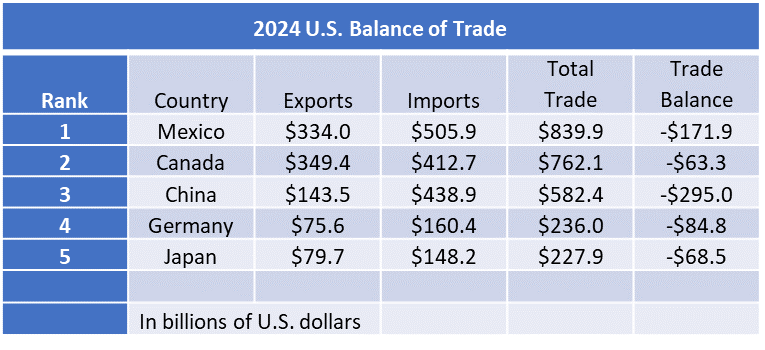
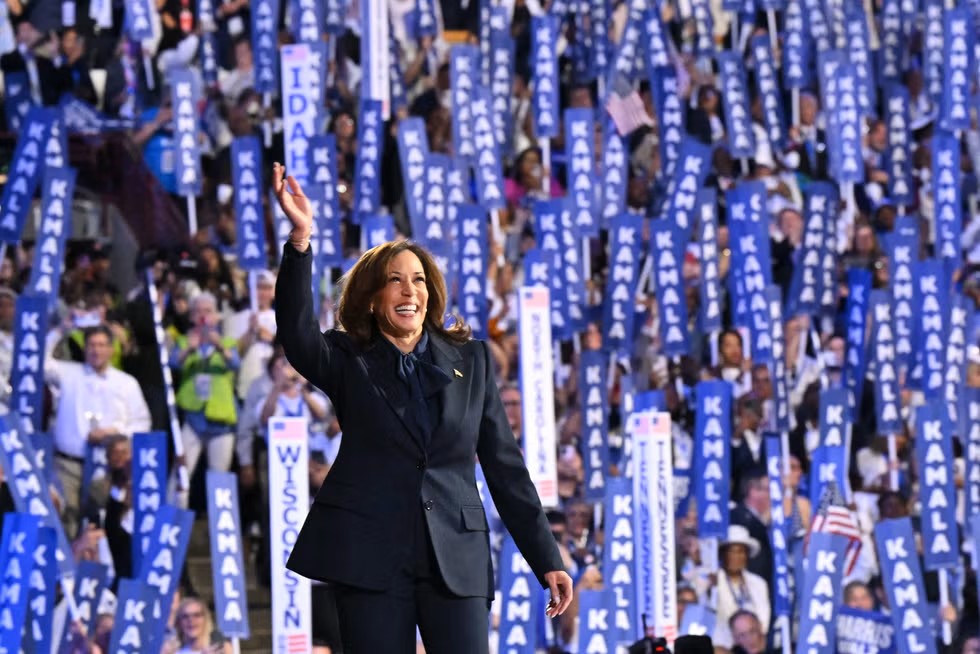

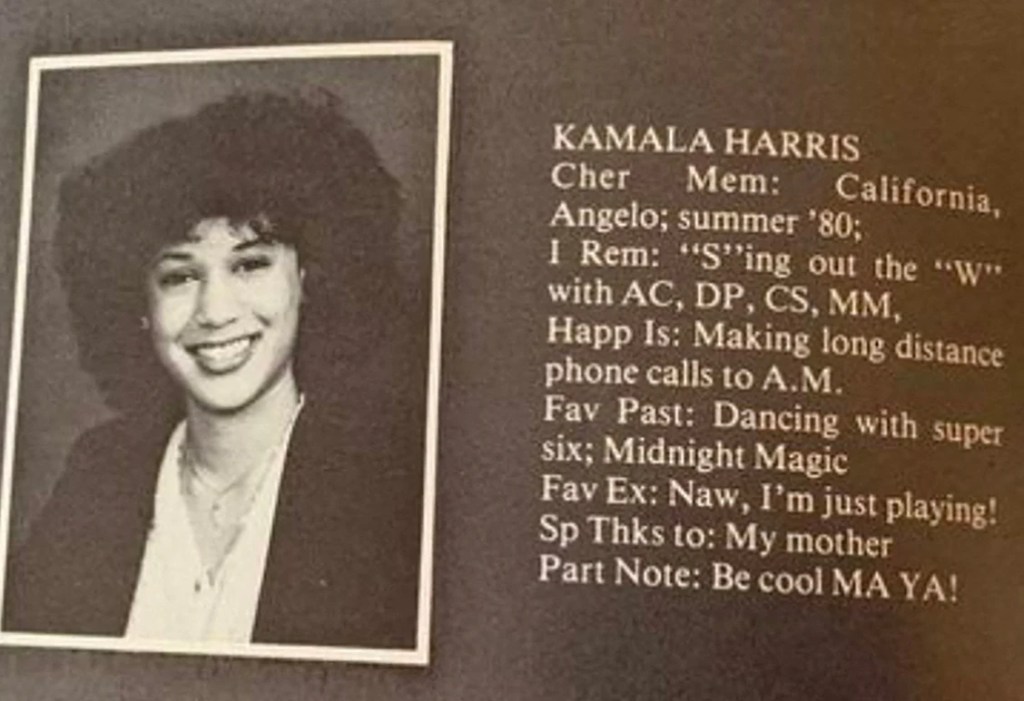
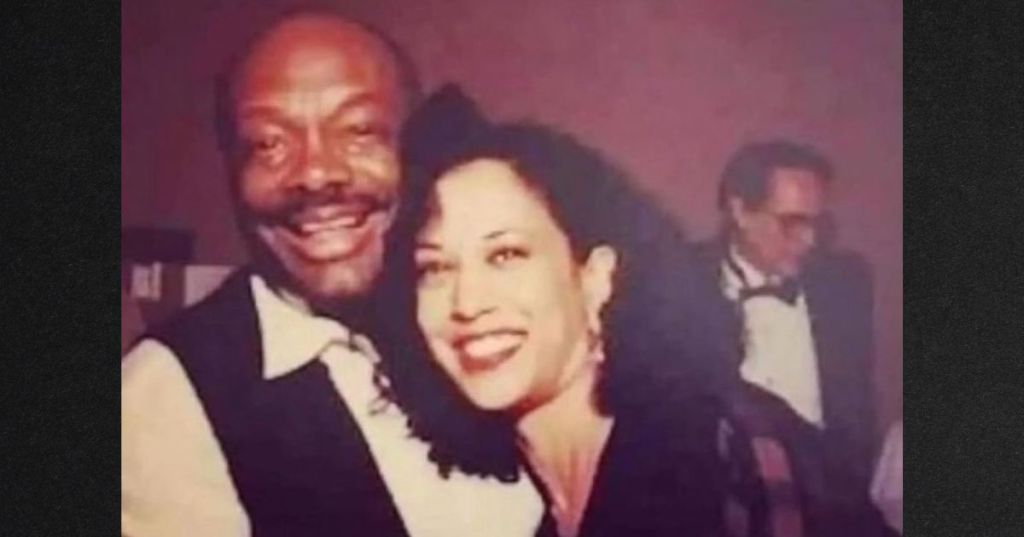
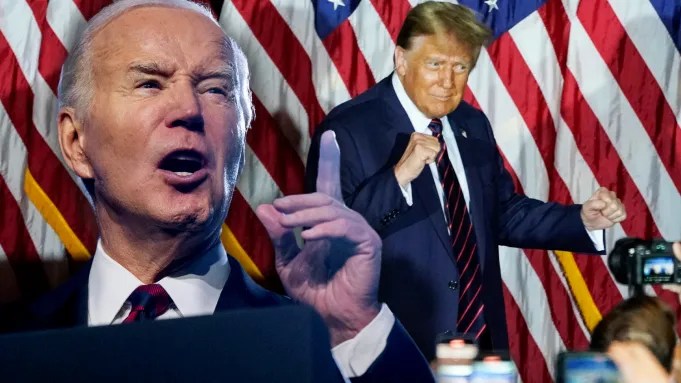
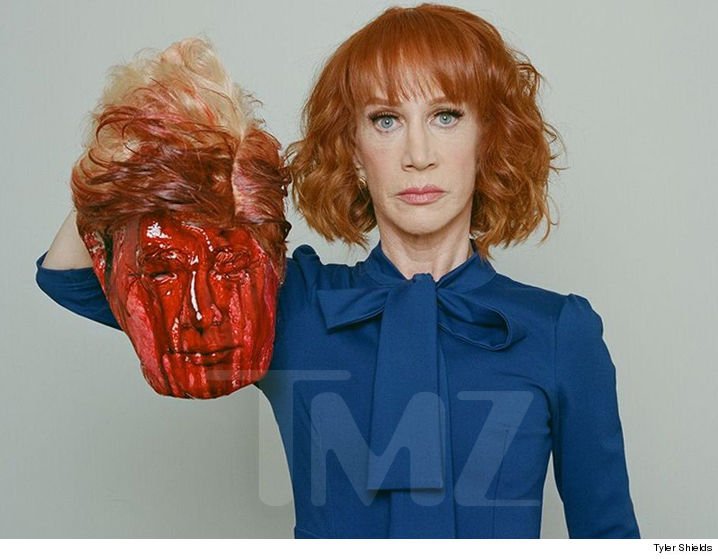
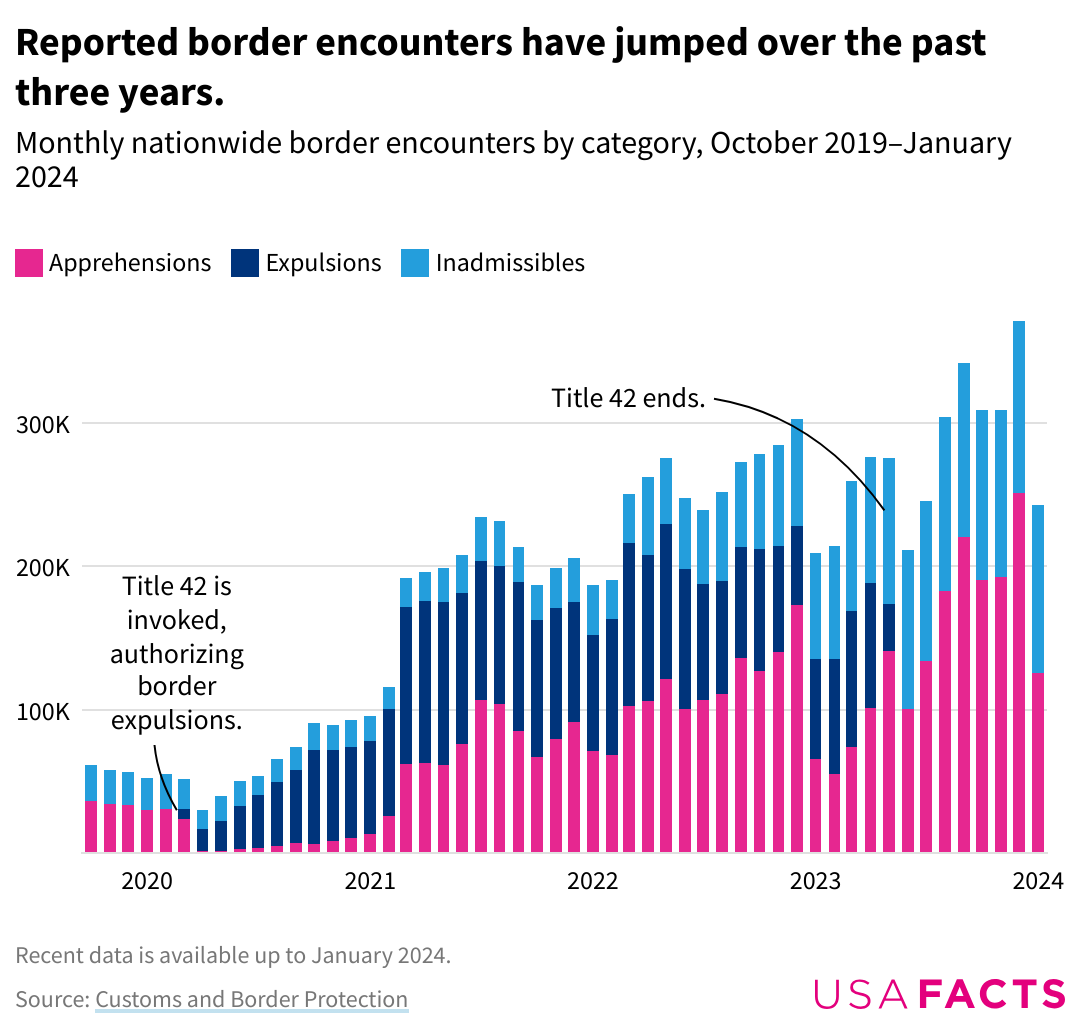

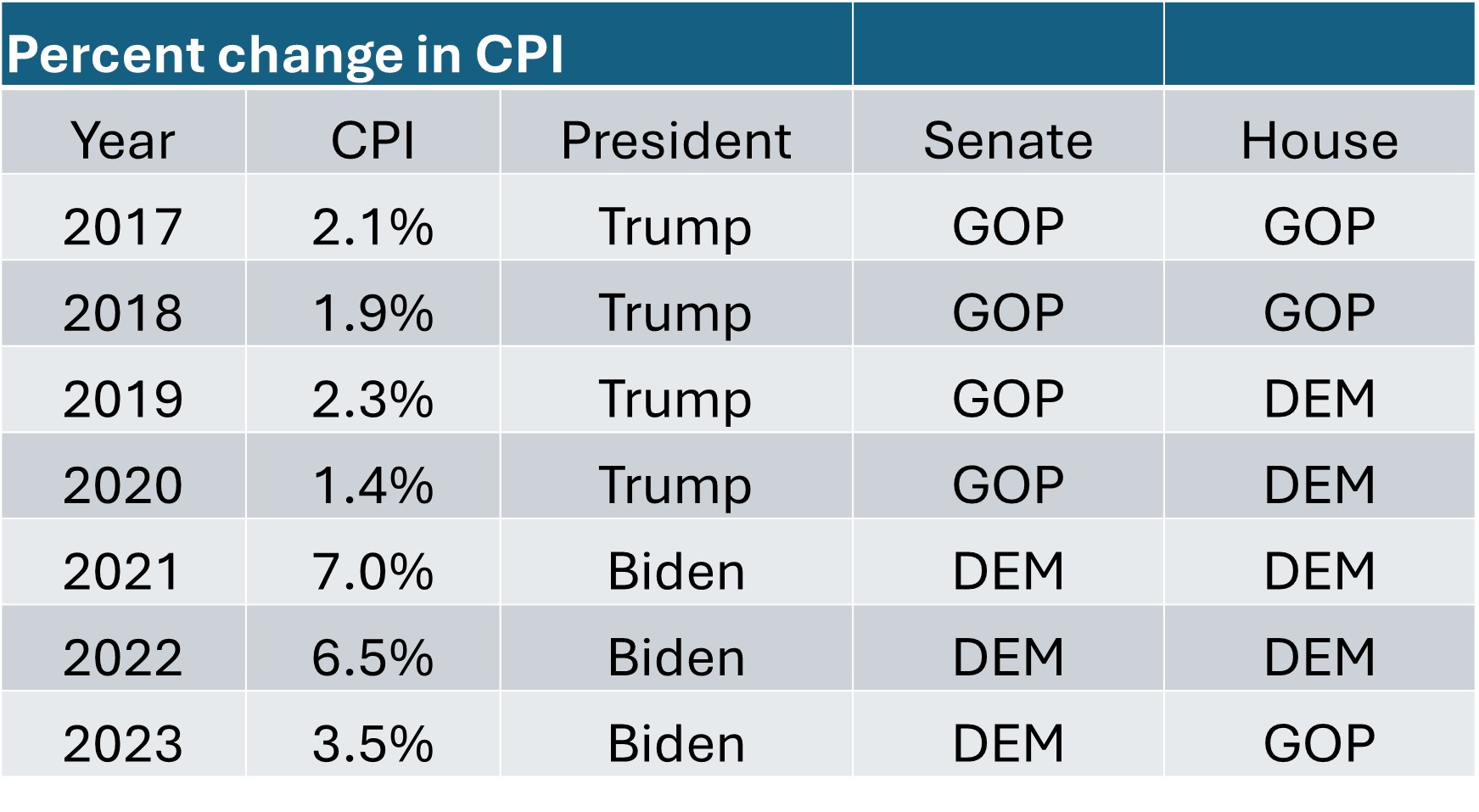

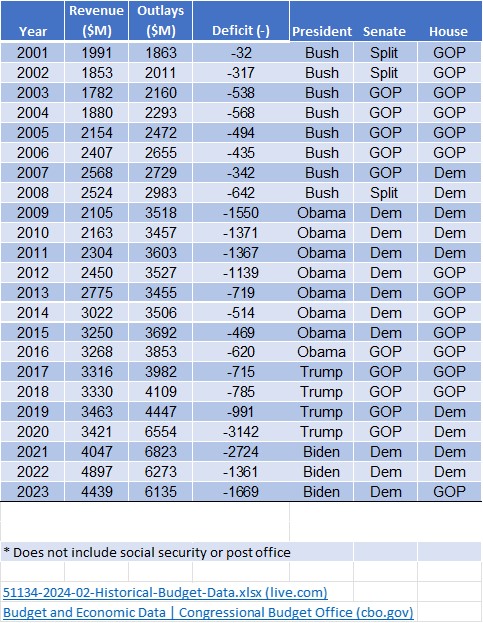
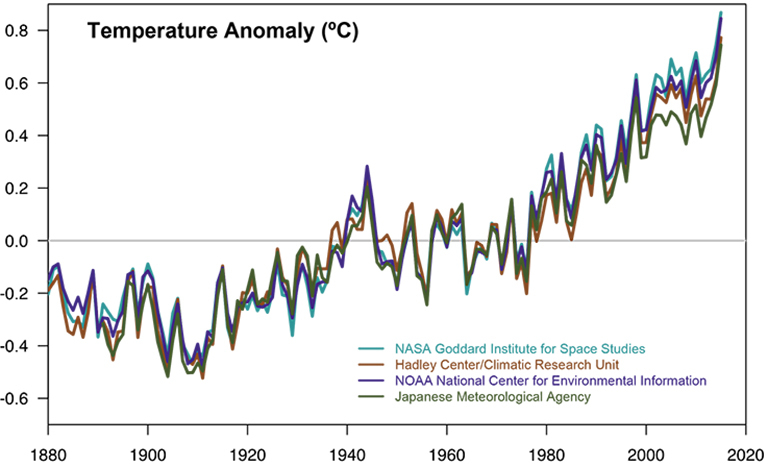


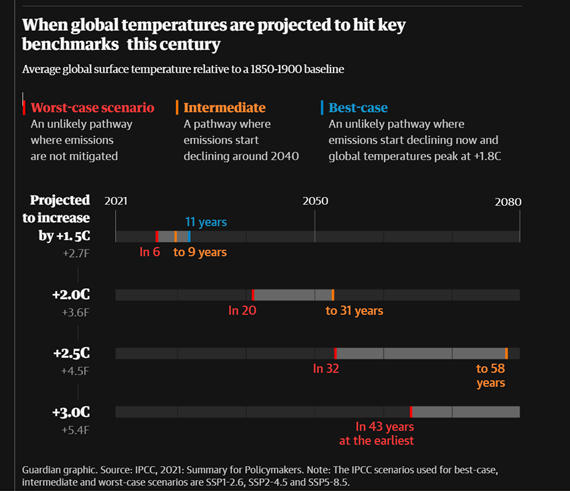

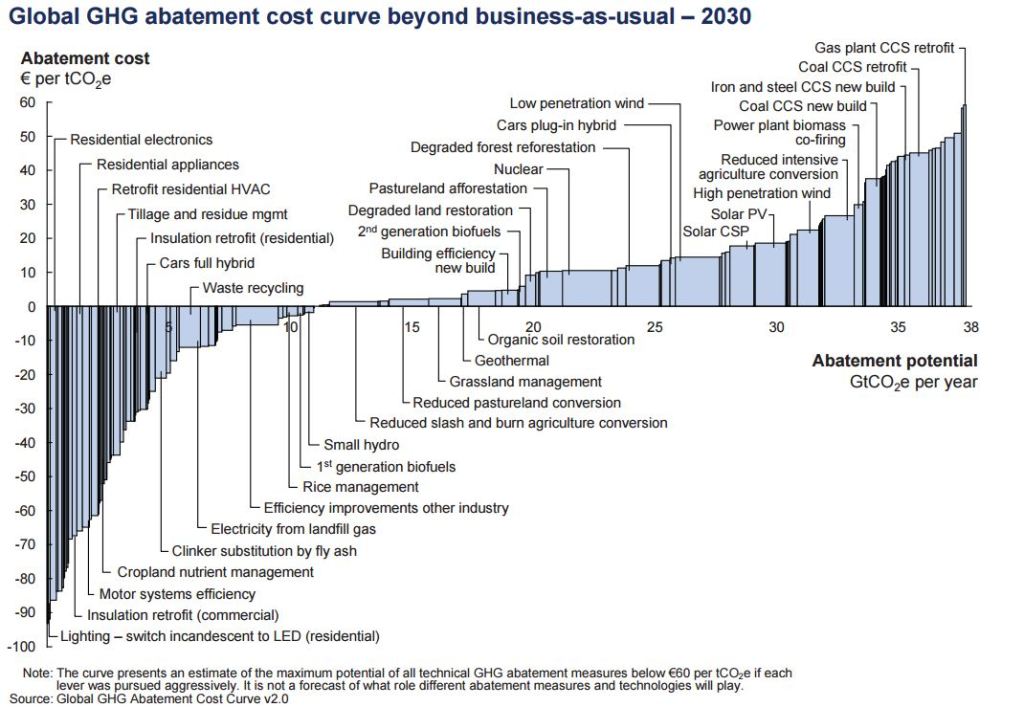
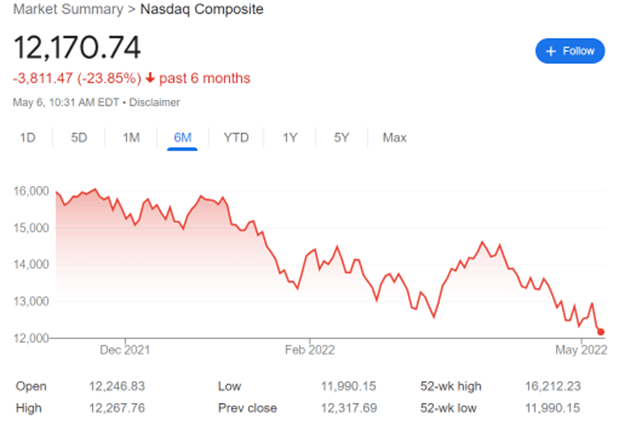
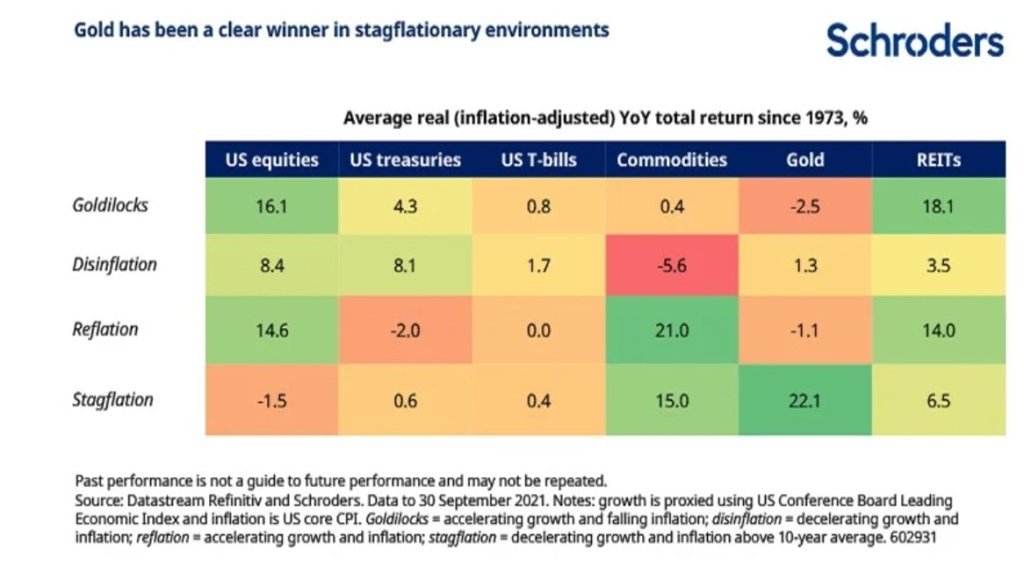


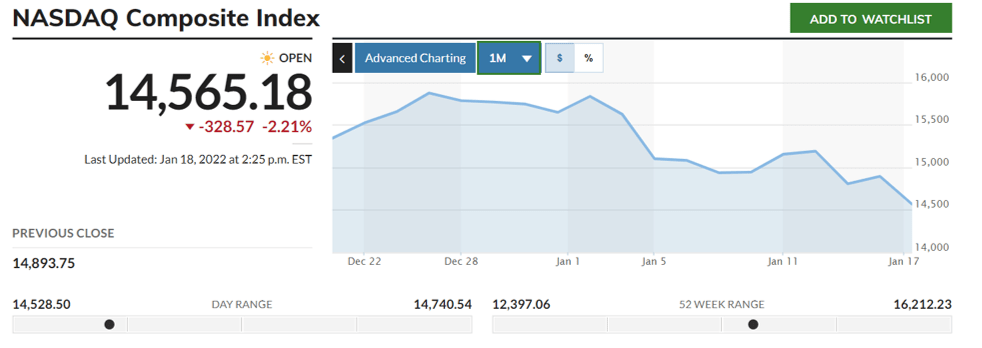

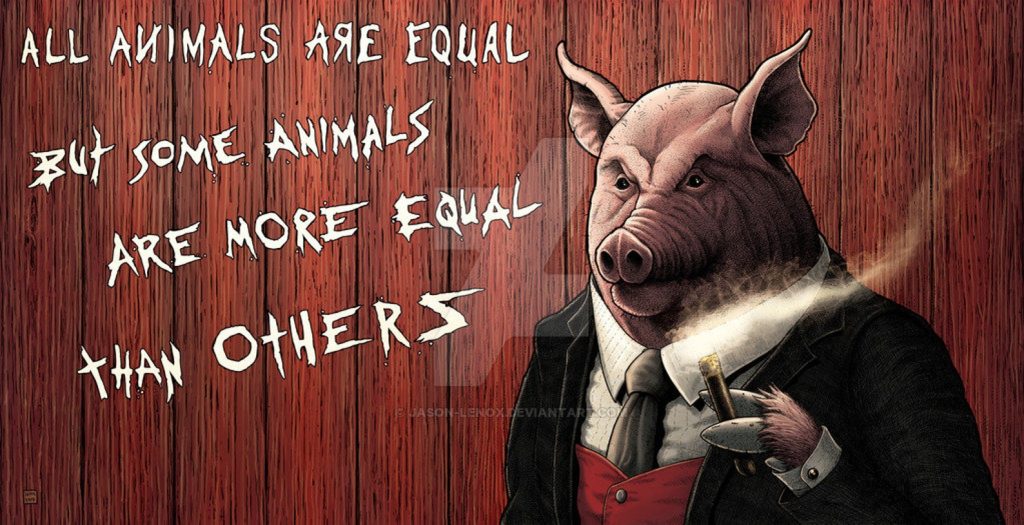
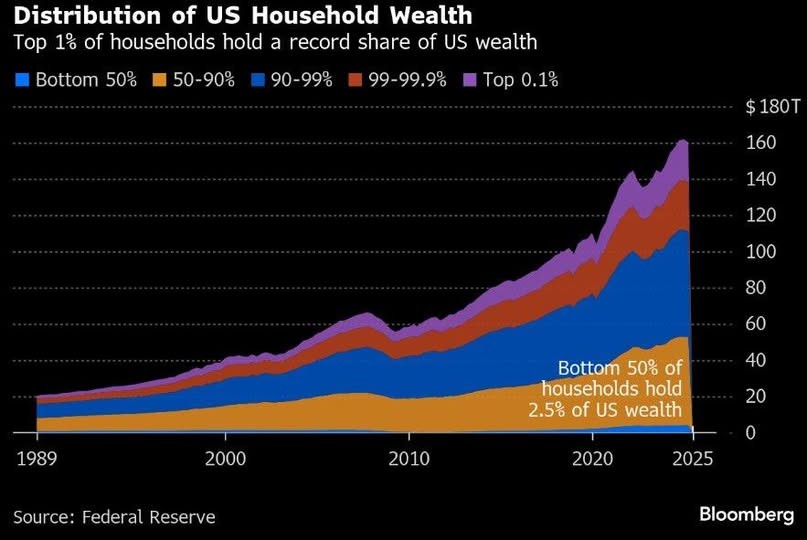

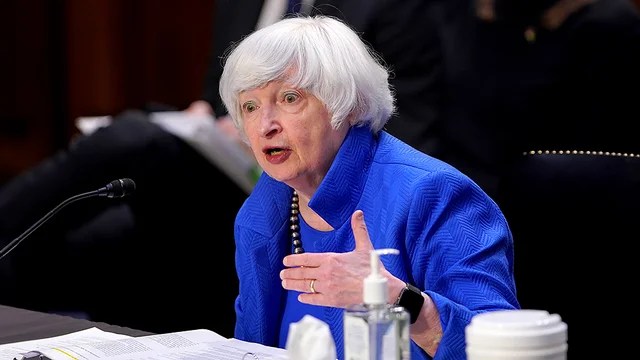
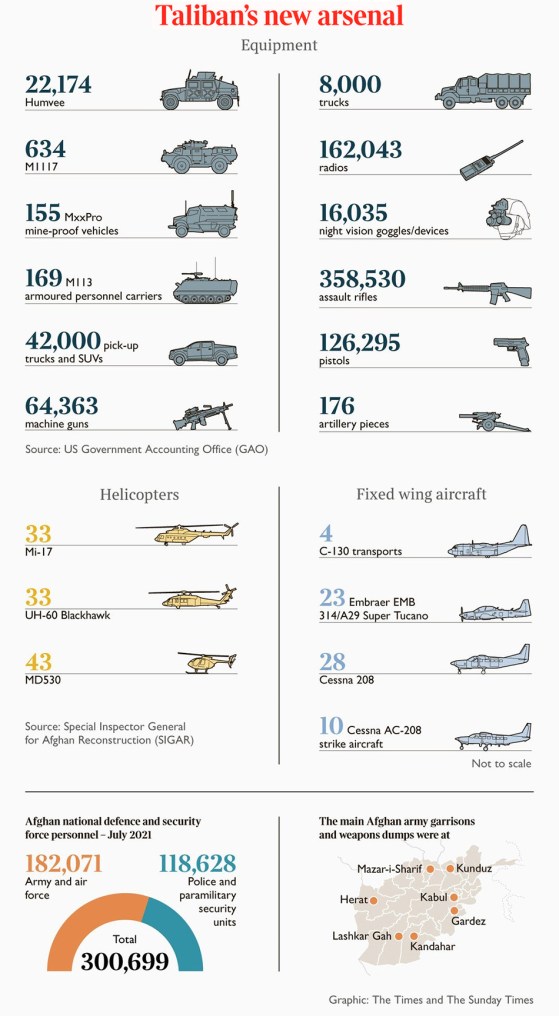

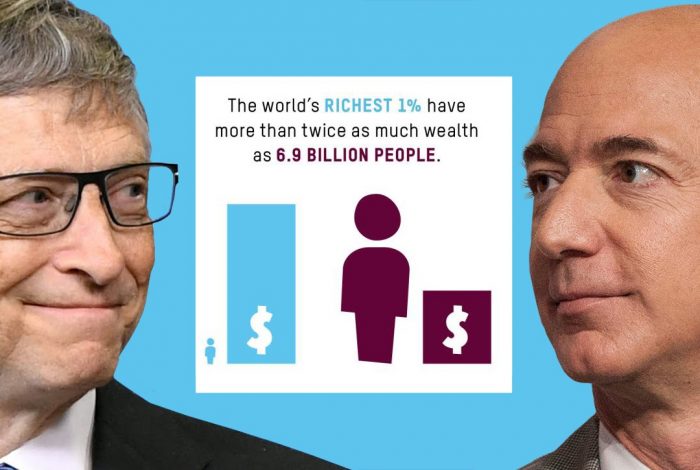
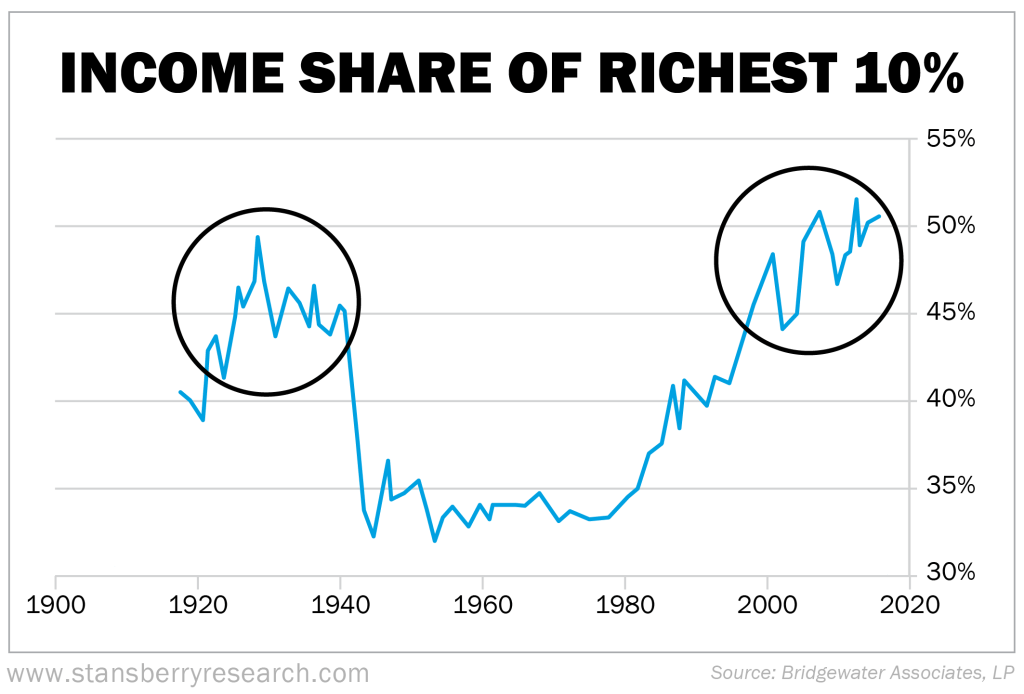
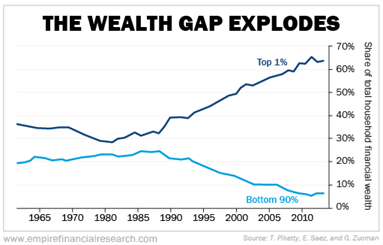
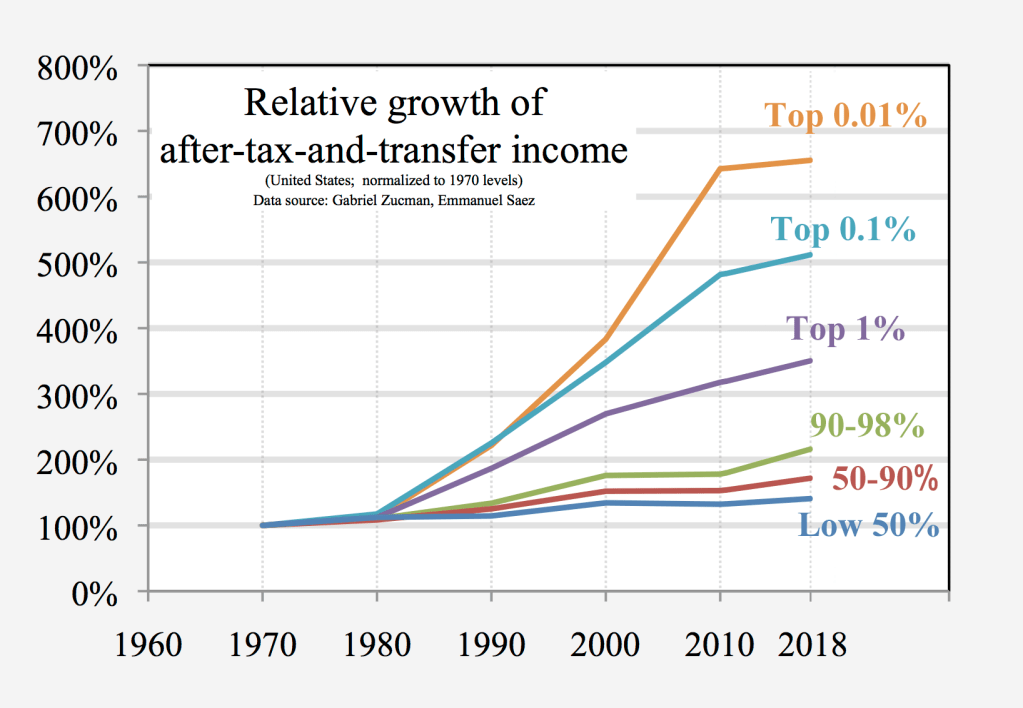



 Imagine, if you will, a utopian land in which the needs of all residents are provided by the ruling authority. Consider further that the government of this land has at its disposal an unlimited supply of funds to serve its residents even without imposing taxes.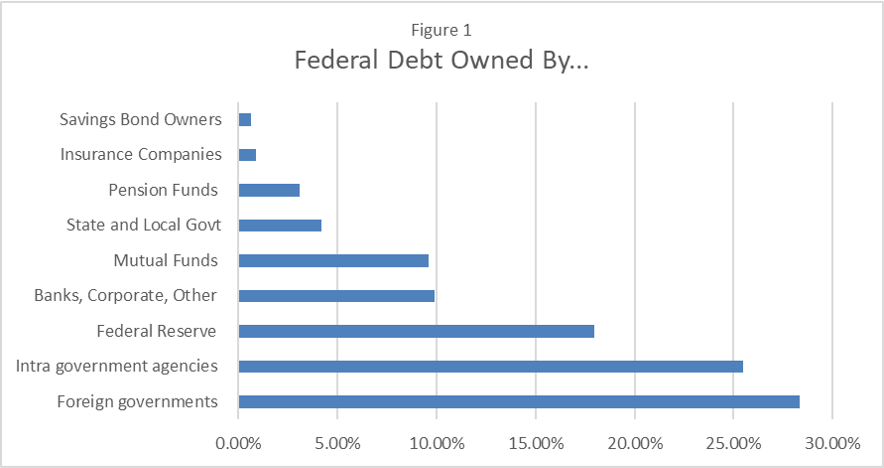
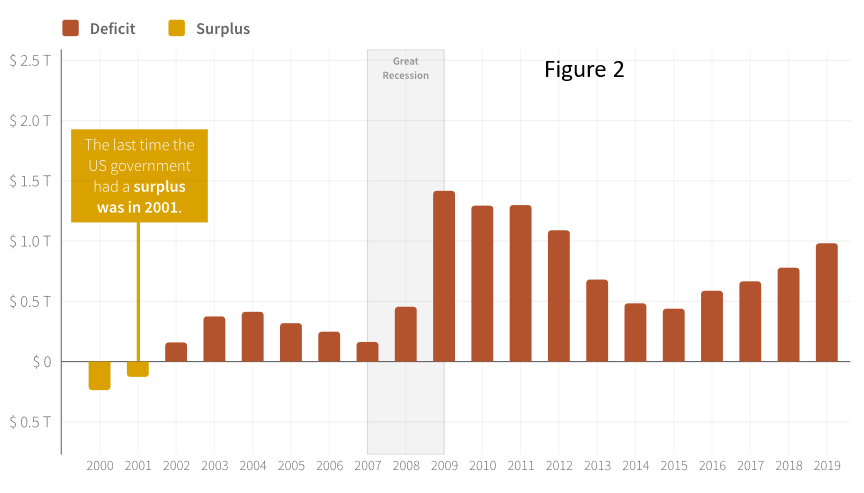
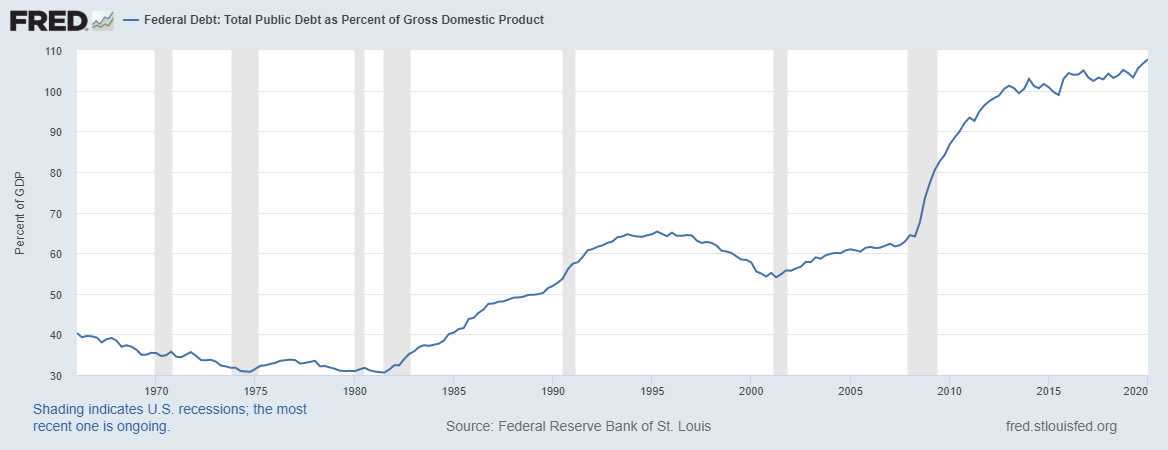
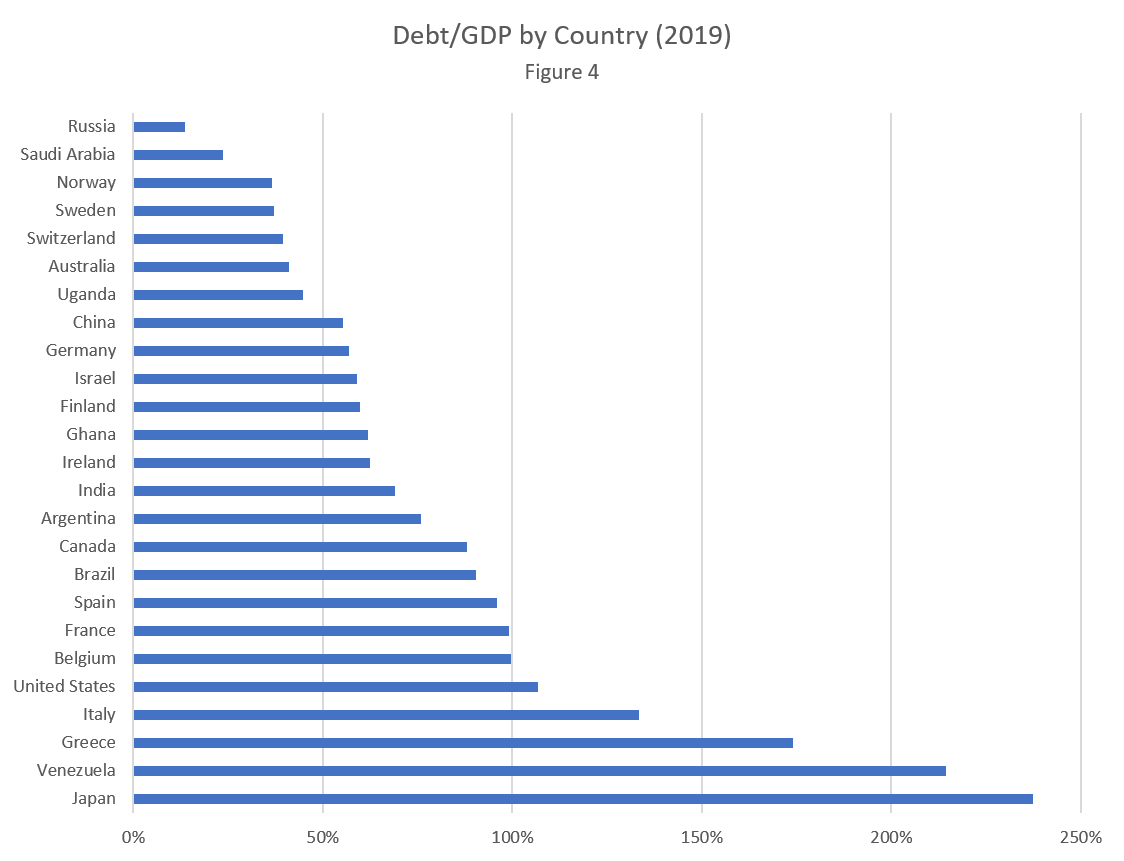
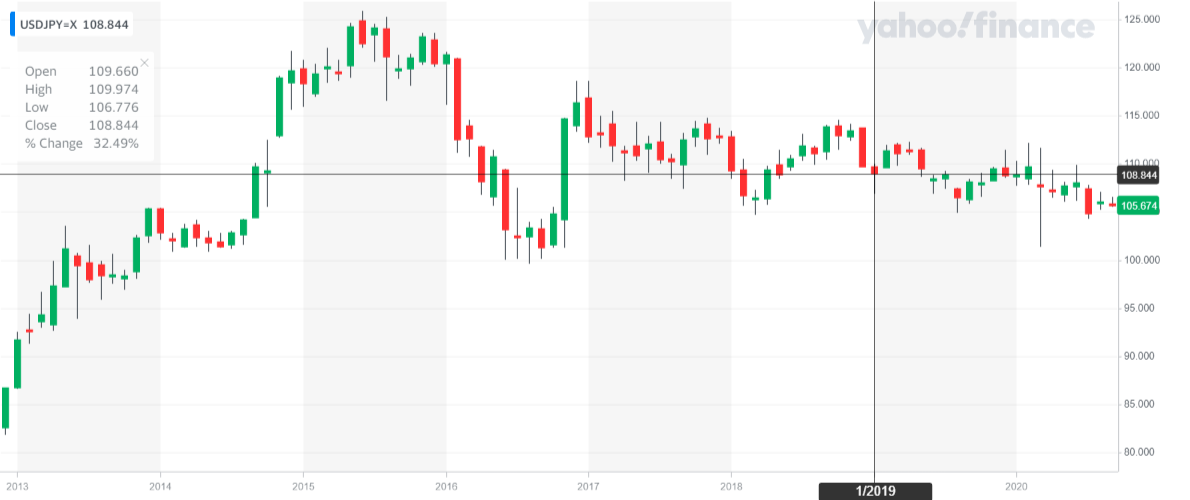
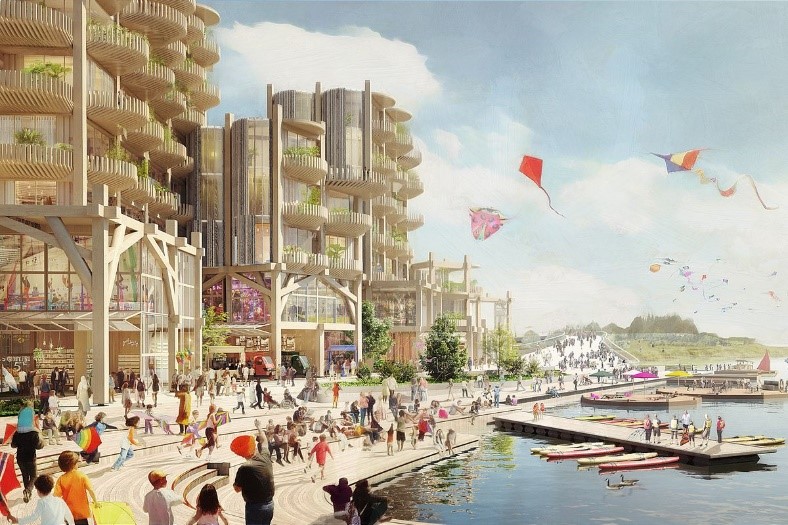
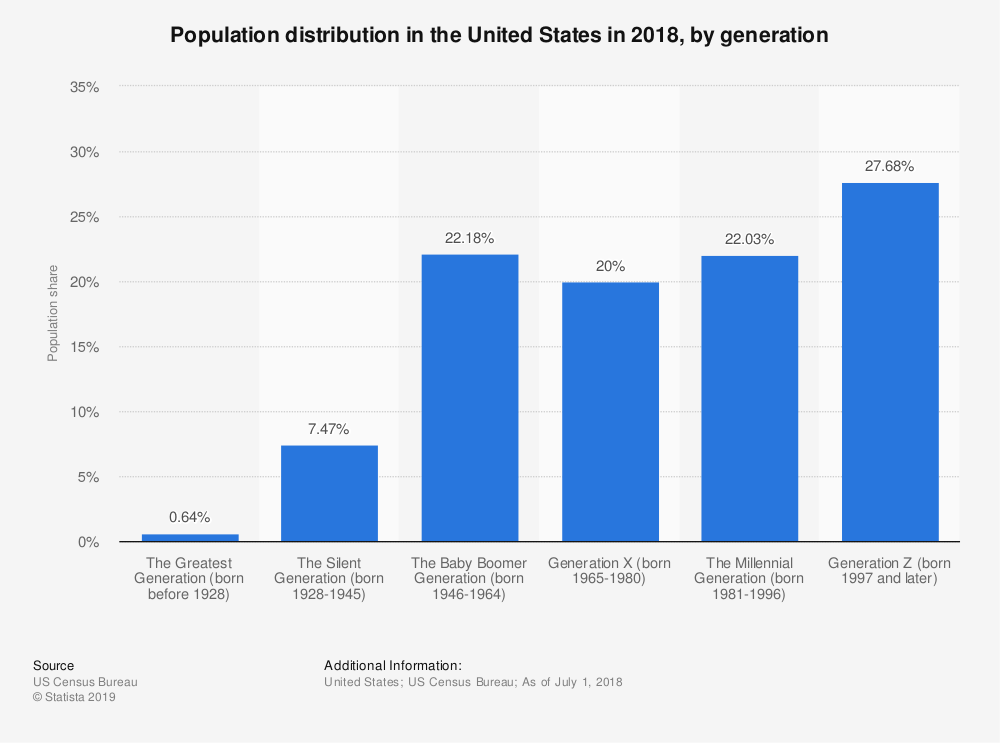
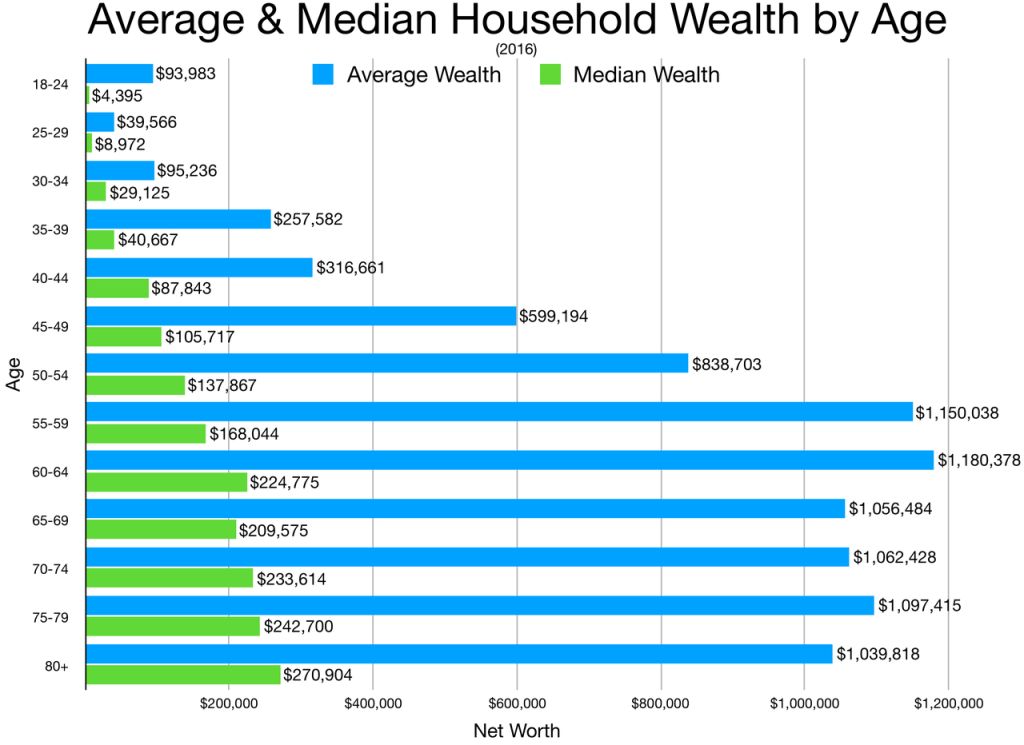

 The Ordinary Blog